What is continuous glucose monitoring (CGM)?
Continuous glucose monitoring (CGM) is a process that uses wearable technology to track glucose levels in real time, giving ongoing insights into how glucose changes throughout the day and night, often with fewer finger prick checks. By providing continuous data and trend information, CGM can help people make more informed decisions about food, activity, and insulin.1
Considering to use a CGM is an important step in understanding and managing diabetes more effectively. In this article, you’ll learn how CGMs work, the benefits they offer, and how they can help support everyday decisions around food, activity, and insulin.
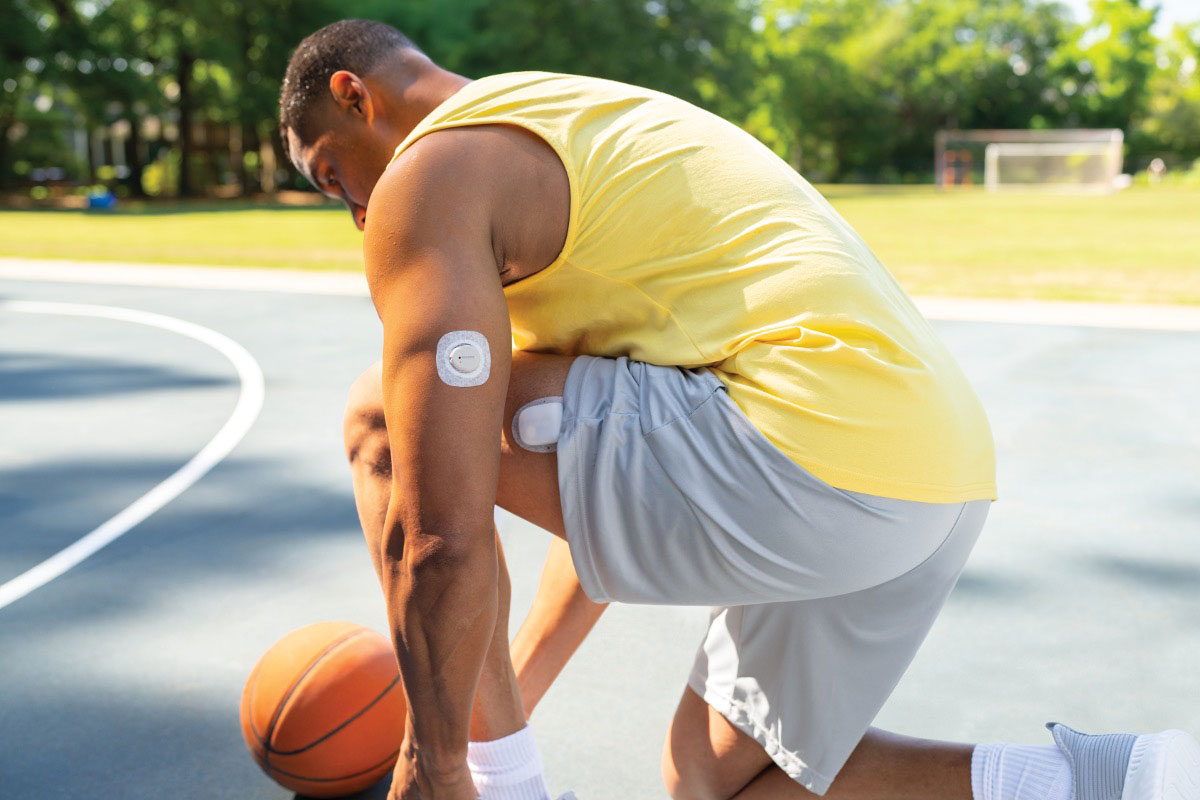
How does continuous glucose monitoring work?
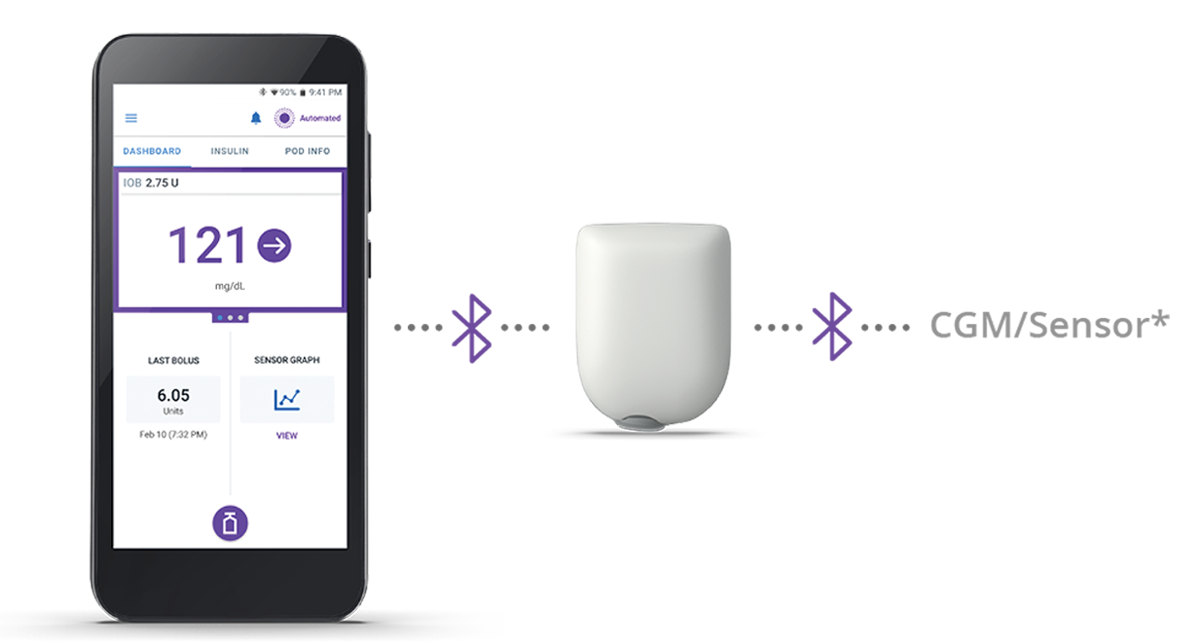
A CGM system continuously measures glucose levels and shares that information with a display device (such as a smartphone app or a dedicated receiver), allowing you to see not just your current glucose level, but also where it’s heading.
Most systems include three main components:
The sensor
A sensor is worn on the body and held in place with an adhesive patch. A thin, thread-like filament sits just under the skin and measures glucose in the interstitial fluid (the fluid around your cells) every few minutes.
The transmitter
The transmitter sends glucose readings wirelessly from the sensor to your display device, such as a smartphone app or dedicated receiver. In many systems, the transmitter is built into the sensor.
Smartphone app or receiver
Glucose data is displayed on a smartphone app or dedicated receiver. This allows you to:
- See your current glucose reading
- View trend arrows (rising, falling, steady)
- Review patterns over time
Some systems also allow data sharing with caregivers or healthcare providers.
Continuous glucose monitoring vs. fingerstick testing
CGM and fingerstick testing (using a blood glucose meter) both measure glucose levels, but they provide different types of information and are used in different ways. Fingerstick testing offers a single reading at a specific point in time, while CGM provides a more continuous view of glucose levels, including how they change throughout the day.
CGM reduces the need for frequent finger pricks, but occasional checks may still be needed, such as when symptoms don’t match readings.1
What are the benefits of continuous glucose monitoring?
CGM is designed to provide both day-to-day convenience and long-term health insights. By combining real-time data with trends, it can help people better understand and manage their diabetes.
Lifestyle benefits
- Quickly check glucose levels at any time
- See whether levels are rising, falling, or stable
- Access data on a smartphone or smartwatch
- Share glucose data with family or caregivers
- Receive alerts for high or low glucose levels, including overnight
Clinical benefits
Real-time glucose visibility can enable more timely action, which may help support the clinical benefits below. 2
- Reduced HbA1c in people with type 1 and type 2 diabetes
- Reduced episodes of hypoglycemia (especially in type 1 diabetes)
- Enhanced visibility into patterns linked to food, activity, and daily routines
What are the limitations of continuous glucose monitoring?
While CGM offers many benefits, it’s important to understand its limitations to set realistic expectations.
Accuracy and lag time
CGM measures glucose in interstitial fluid, not blood. This can cause a slight delay, especially when glucose changes quickly.
Skin irritation and replacement
Sensors must be worn on the skin and replaced regularly. Some people may experience mild skin irritation.
Cost and access
Access to the devices can depend on insurance coverage and individual health plans. Eligibility and out-of-pocket costs may vary based on your provider and policy.
Data overload
The amount of data available can feel overwhelming at first, especially for new users learning how to interpret trends.
Alarm fatigue
Frequent alerts for highs or lows can sometimes feel disruptive, particularly overnight.
Who should use continuous glucose monitoring?
A wide range of people living with diabetes can benefit from CGM, depending on their treatment plan and individual needs.2
People with type 1 diabetes
Continuous glucose monitoring is widely recommended for people with type 1 diabetes, as it can help improve glucose control, reduce hypoglycemia, and support daily decision-making.3
People with type 2 diabetes
For people using insulin, this type of monitoring may help improve glucose management and increase time in range. Some people who do not use insulin may also benefit depending on their goals.3
Children
CGM can help children and families monitor glucose levels more closely, including overnight, and reduce worry about low glucose events.
Caregivers
Many systems allow remote data sharing, enabling parents, partners, or caregivers to monitor glucose levels and receive alerts.
How does a CGM help with diabetes management?
Continuous glucose monitoring provides detailed insights that can support day-to-day diabetes decisions and long-term management.
It can help you:
- Understand how food affects glucose levels
- Inform adjustment of insulin dosing (with healthcare guidance)
- Monitor glucose during exercise or illness
- Identify patterns across different times of day
- Make more informed decisions about treating highs and lows
Over time, this information can help you and your healthcare team make more personalized adjustments to your care plan.
Continuous glucose monitoring and Pod therapy
CGM plays a key role in systems that combine glucose monitoring with insulin delivery. When paired with a compatible insulin pump, CGM data can be used to automatically adjust insulin in response to changing glucose levels.
Learn about CGM compatibility with Omnipod®.
How do CGMs work with insulin pumps?
Continuous glucose monitors can be used on their own or alongside an insulin pump. When combined, they form the foundation of automated insulin delivery (AID) systems.
CGM and insulin pump communication
In connected systems, the CGM sends glucose data directly to the pump or controller (or app if applicable).
Automated insulin delivery (AID) basics
An AID system uses a CGM, insulin pump, and algorithm to automatically adjust insulin delivery based on glucose levels.
Role of CGM in adjusting insulin
Monitors provide real-time data needed for the system to:
- Detect rising or falling glucose
- Communicate with the AID system to adjust basal insulin
What’s the difference between a flash glucose sensor and a continuous glucose monitor?
Continuous glucose monitors and flash glucose sensors both track glucose levels throughout the day, but they differ in how data is accessed and shared. Some systems automatically display glucose readings and alerts, while others require scanning the sensor to view current levels and trends.
Both technologies can support good diabetes management.
About Omnipod® 5
Omnipod 5 Automated Insulin Delivery System is an example of an automated insulin delivery system that connects a wearable, waterproof,* and tubeless insulin pump with a compatible continuous glucose monitor.
The Omnipod 5 algorithm is built right into the Pod. The system adjusts insulin delivery based on glucose readings and trends, while still allowing users to bolus for meals.
Frequently Asked Questions about CGMs
Does continuous glucose monitoring replace finger pricks?
How does a CGM differ from a blood glucose meter?
How often do you have to change a CGM sensor?
Where can I wear a CGM sensor?
Can I share my glucose data with friends and family?

Related Articles


Other topics
References and Disclaimers
*The Pod has an IP28 rating for up to 25 feet for 60 minutes. The Omnipod 5 Controller is not waterproof.
1.CDC. Continuous Glucose Monitors. Diabetes. Published November 13, 2025. https://www.cdc.gov/diabetes/treatment/continuous-glucose-monitors.html
2. American Diabetes Association. Continuous Glucose Monitors. diabetes.org. Published 2024. https://diabetes.org/advocacy/cgm-continuous-glucose-monitors
3. American Diabetes Association Professional Practice Committee; 7. Diabetes Technology: Standards of Care in Diabetes—2026. Diabetes Care 1 January 2026; 49 (Supplement_1): S150–S165. https://doi.org/10.2337/dc26-S007
The Omnipod® 5 Automated Insulin Delivery System is indicated for use by individuals with type 1 diabetes mellitus in persons 2 years of age and older and type 2 diabetes mellitus in persons 18 years of age and older. The Omnipod 5 System is intended for single patient, home use and requires a prescription. The Omnipod 5 System is compatible with the following U-100 insulins: NovoLog®, Humalog®, Admelog®, and Kirsty®.
Refer to the Omnipod 5 Automated Insulin Delivery System User Guide and www.omnipod.com/safety for complete safety information including indications, contraindications, warnings, cautions, and instructions. Warning: DO NOT start to use the Omnipod 5 System or change settings without adequate training and guidance from a healthcare provider. Initiating and adjusting settings incorrectly can result in over-delivery or under-delivery of insulin, which could lead to hypoglycemia or hyperglycemia. WARNING: SmartAdjust technology should NOT be used by anyone under the age of 2 years old. SmartAdjust technology should also NOT be used in people who require less than 5 units of insulin per day as the safety of the technology has not been evaluated in this population.
Available products subject to current insurance coverage and product indication for use. Insulet can only support onboarding for those customers within the product indication.