Clinical Implications
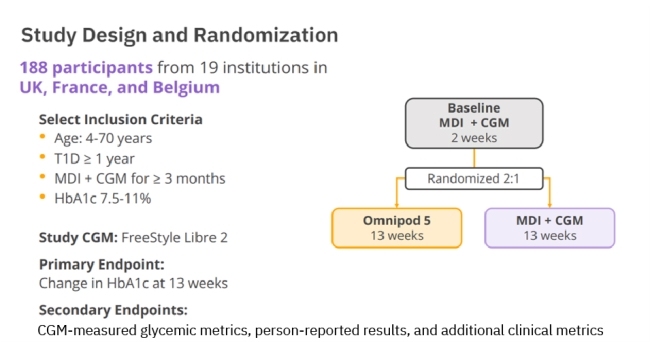
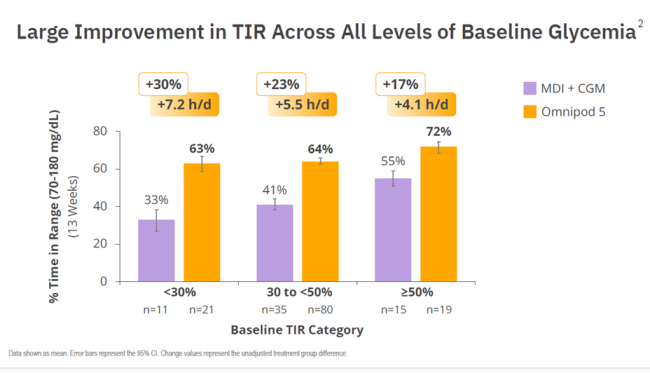
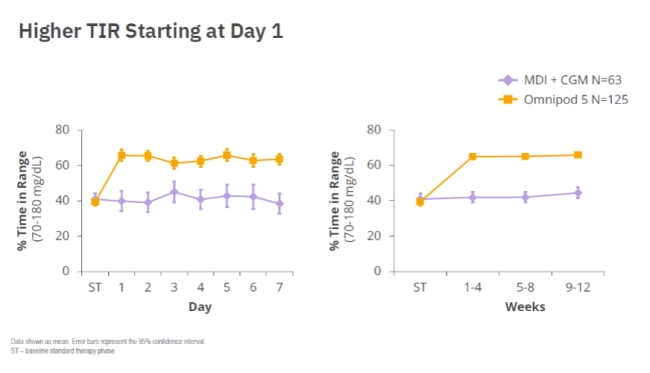
Results from the RADIANT trial showed the clinical efficacy of direct transition from MDI to Omnipod 5, and provided immediate glycemic benefits without increasing hypoglycemia. For clinicians, this evidence strongly supports Omnipod 5 as a first-line AID therapy, consistent with ADA Standards of Care.3
Omnipod® 5 offers an opportunity to simplify diabetes management while delivering measurable improvements in glycemic results from the very first day of use, for those adults and children with T1D struggling with achieving glycemic goals.
- Wilmot EG, Beltrand J, Guerci B, et al. Tubeless automated insulin delivery versus multiple daily injections in children and adults with type 1 diabetes with elevated HbA1c (RADIANT): a multicentre, international, parallel-group, open-label, randomised, controlled trial. Lancet Diabetes Endocrinol. 2026;14(4):305-316. doi:10.1016/S2213-8587(25)00364-X
- Wilmot E, et al. Oral Presentation. ADA; June 19-22, 2025; Chicago, IL. Insulet Data on file. RF-052026-00028
- American Diabetes Association Professional Practice Committee for Diabetes. 7. Diabetes technology: Standards of Care in Diabetes—2026. Diabetes Care 2026;49 (Suppl. 1):
The Omnipod 5 Automated Insulin Delivery System is indicated for use by individuals with type 1 diabetes mellitus in persons 2 years of age and older and type 2 diabetes mellitus in persons 18 years of age and older. The Omnipod® 5 System is intended for single patient, home use and requires a prescription. The Omnipod® 5 System is compatible with the following U-100 insulins: NovoLog®, Humalog®, Kirsty®, and Admelog®. Warning: SmartAdjust™ technology should NOT be used by anyone under the age of 2 years old. SmartAdjust™ technology should also NOT be used in people who require less than 5 units of insulin per day as the safety of the technology has not been evaluated in this population. Refer to the Omnipod® 5 Automated Insulin Delivery System User Guide and www.omnipod.com/safety for complete safety information including indications, contraindications, warnings, cautions, and instructions.
The sensor housing, FreeStyle, Libre, and related brand marks are marks of Abbott and used with permission. For full FreeStyle Libre 3 Plus Sensor safety information, please visit www.freestyle.abbott/us-en/safety-information.