Within Range: Demystifying Diabetes Tech Blog for Healthcare Providers

Understanding real-world evidence and its importance in diabetes management
People living with type 1 diabetes (T1D) manage their condition in everyday settings—school and work, or during exercise, and mealtimes. And because real-life diabetes

Automated Insulin Delivery (AID) systems are transforming the management of type 1 diabetes (T1D). With real-time glucose monitoring and automatic insulin delivery adjustments, more patients are able to achieve tighter glycaemic control with reduced burden.1 Healthcare professionals (HCPs) like
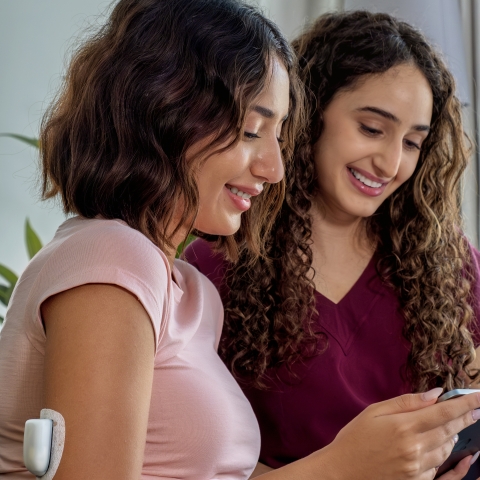
Gave People With T1D More Than Five Extra Hours In Range Per Day
A direct switch from MDI to the Omnipod 5 AID (automated insulin delivery; hybrid closed-loop) System produced clinically significant glucose improvements within 13 weeks, signalling a practical leap forward in improved
Categories

A Smarter Way to Support Personalised Insulin Delivery
For many people living with diabetes, particularly children and young people, mealtimes present a daily challenge.

The development and implementation of Automated Insulin Delivery (AID) systems have significantly advanced the management of type 1 diabetes.

As a healthcare professional, you understand that diabetes management needs vary significantly from patient to patient.
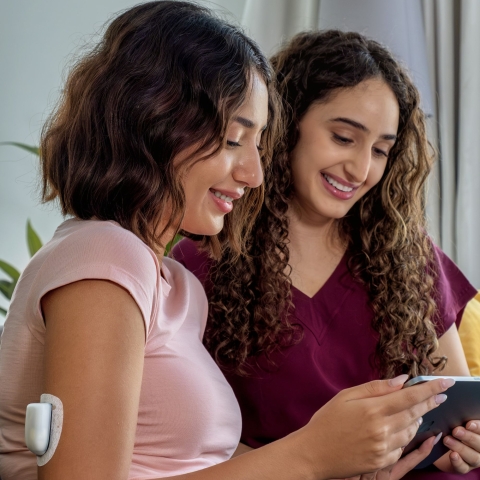
Every week, clinicians field the same questions from people considering pump therapy: “how will a tubeless insulin pump work in my daily life?”, “what training will I need?”, “how quickly can I get started?”.
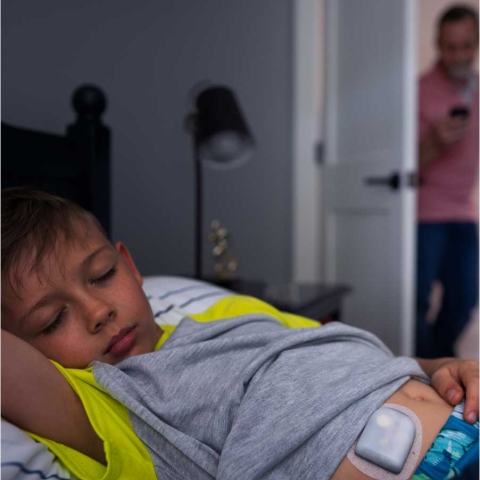
Reducing the Burden of Multiple Daily Injections (MDI): Strategies, Support, and Advancing Technologies
MDI remains a widely used approach to insulin delivery in type 1 diabetes (T1D) management.1 MDI involves a complex regimen of bolus and basal injections, typically ≥3 bolus and 1
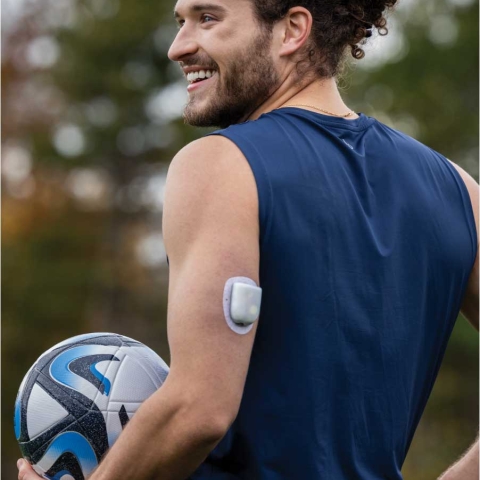
Why Line-of-Sight Between Pod and CGM Sensor is Crucial
In automated insulin delivery (AID) (also known as hybrid closed-loop) systems, reliable connectivity between continuous glucose monitor (CGM) sensors and the insulin delivery device is essential.

The Omnipod 5 Automated Insulin Delivery (AID) System is a transformative step in diabetes care. The system merges the benefits and simplicity of a wearable, tubeless design with AID technology.
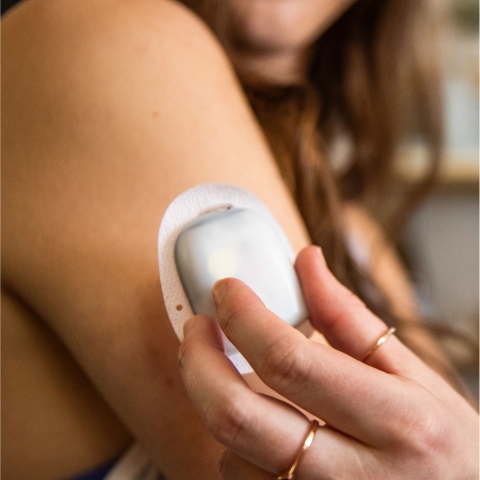
For individuals living with diabetes, wearable technologies like such as continuous glucose monitors (CGMs) and insulin pumps are transformative tools that simplify disease management. However, for 25–40% of users, skin reactions present a common yet underappreciated challenge.

Real-World Data Supports Omnipod 5 Automated Insulin Delivery System for Improved Glycaemic Outcomes1
Evidence from the 2023 real-world study by Marks BE, et al. highlights the significant impact the Omnipod 5 Automated In

Managing type 1 diabetes has never been more innovative and personalised, thanks to advancements in automated insulin delivery (AID) systems.

When making treatment decisions for type 1 diabetes (T1D), healthcare professionals increasingly rely on real-world data to understand how therapies perform outside of clinical trials. A recent study— Aleppo G et al. Diabetes Ther. 2023.

Helping people with type 1 diabetes (T1D) stay active has long been a balancing act. Exercise can improve metabolic health and quality of life but also increases the risk of glycaemic variability and hypoglycaemia.1,2