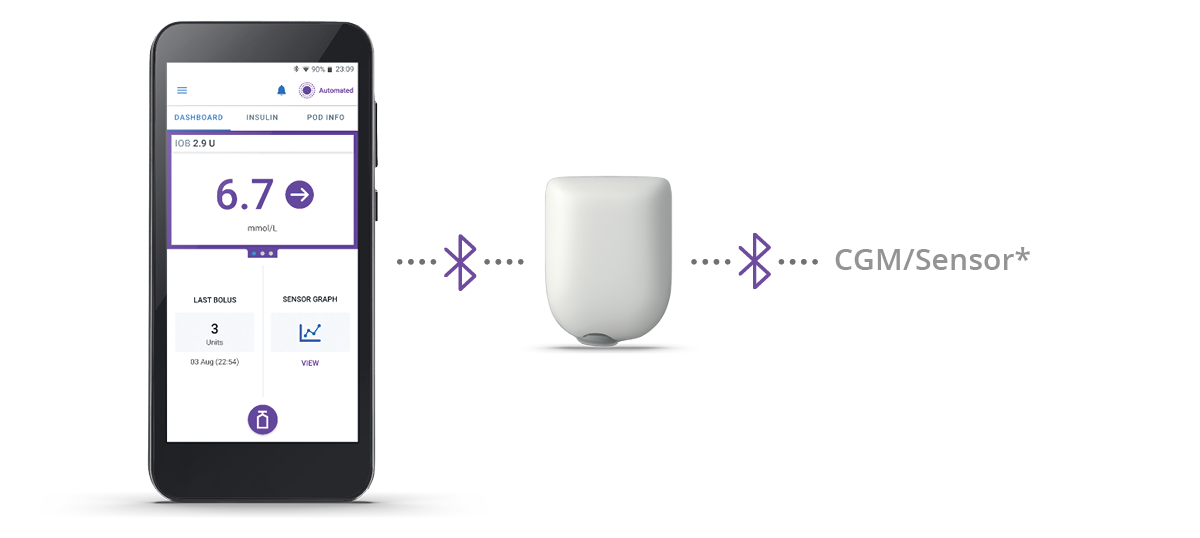
The system’s customisable glucose targets allow for management tailored to the patient’s daily schedule. This adaptability reduces the burden on patients and caregivers, offering peace of mind and making day-to-day diabetes management more manageable.1,2
Additionally, Omnipod 5 simplifies data sharing and your ability to monitor patients’ progress through automatic and wireless uploads to the Glooko® platform. ‡ This feature enables healthcare teams to review patient data in real time, facilitating timely adjustments and more effective consultations.
Clinical Guidelines and Equitable Access
Hybrid closed-loop systems like Omnipod 5 are now a recommended option for managing type 1 diabetes under the UK National Institute for Health and Care Excellence (NICE) guidelines.3 These systems are particularly advised for children, young people, and adults experiencing challenges such as suboptimal glycaemia or problematic hypoglycaemia.3 NICE estimates that over 150,000 individuals with type 1 diabetes in the UK will gain access to these systems within the next five years.4
Equitable access is crucial. Research indicates that individuals from lower socioeconomic groups and ethnically diverse populations often face barriers to adopting advanced diabetes technologies.5 Keep this in mind in your practice to help address these disparities and ensure that all eligible patients can benefit from hybrid closed-loop systems like Omnipod 5.
Streamlined Education and Implementation
Transitioning to Omnipod 5 requires structured education to build confidence in patients and families.6 Tailored strategies, like pre-session workbooks and interactive training, prepare new users for the system, reducing in-clinic training time.7 Providing personalized support can address language barriers and other needs.7 Using standardized pump settings based on total daily insulin (TDI) can streamline the process, enabling a smoother transition to AID.6
As a healthcare professional, you are essential to guiding patients through the initiation and optimisation of Omnipod 5.
See How Omnipod 5 Transforms Diabetes Care in Real Life
Case 1: Early Adoption of Omnipod 5 Empowers a Family
An 8-year-old boy with type 1 diabetes started on Omnipod 5 shortly after his diagnosis. His initial HbA1c was alarmingly high at 108 mmol/mol (12%).
Watch the webinar to learn how the system’s automation allowed the family to manage glucose levels with minimal manual intervention. The flexibility of customisable glucose targets and the Activity Feature proved invaluable, particularly during periods of high activity. This case highlights how early adoption of Omnipod 5 can empower families and improve clinical outcomes.
Case 2: Omnipod 5 Helps a Patient Overcome Health Challenges
A 19-year-old male with a history of poorly managed diabetes and recurrent diabetic ketoacidosis presented a unique challenge.
Watch the webinar to learn how simplified carbohydrate counting strategies were introduced to address difficulties with consistent meal bolusing. By leveraging Omnipod 5’s automation, the patient experienced improved glycemic outcomes and a renewed sense of control over his diabetes.