10 Common Type 1 Diabetes Nutrition Myths Debunked
Type 1 diabetes is a complex autoimmune condition. There are a lot of misconceptions and misinformation about the condition, especially when it comes to type 1 diabetes and nutrition guidelines.
Let’s separate fact from fiction and debunk some common diabetes nutrition myths!
The information is not intended as medical advice. Please speak to your diabetes care team in relation to your specific health needs.
Myth 1: People with type 1 diabetes must follow a special diet.
A person with type 1 diabetes can eat everything. Just like anyone else - the focus should be on eating a varied, nutrient dense diet made primarily of whole foods, with occasional treats.
It may take some time to find a balance between food, insulin and movement, as you will have to manually dose the insulin that your body, or the body of the person you care for, no longer produces.
But you can absolutely enjoy all types of foods with type 1 diabetes. People can choose to follow a specific type of diet, such as low carb, if they wish.
Thanks to advances in information, medication and technology over recent years, you can also enjoy flexibility around the timing of meals. Speak to your diabetes care team for tailored advice.

Myth 2: Sugar is off-limits for people with type 1 diabetes.
Contrary to this myth, sugary drinks, snacks and dextrose tablets are actually essential for a person with type 1 diabetes to treat low glucose levels - also known as hypoglycaemia, or hypo.
And just like people without type 1 diabetes, the occasional sugary treat can form part of a balanced diet. Foods like fruits and dairy also have natural sugars, so there are nutritional benefits to including those in your diet too.
Food labels are the easiest way to work out how many carbs are in a food, so that you can calculate insulin doses accordingly. Speak to your diabetes team for further advice.
Myth 3: People with type 1 diabetes shouldn't have snacks.
It’s important for anyone to eat regular, balanced meals, but people living with type 1 diabetes can enjoy snacks just like everyone else!
Choosing certain types of snacks may be easier to manage in relation to glucose levels, but enjoying occasional sweet treats is also totally ok.
You may need to give an insulin dose depending on the type and size of snack. As with mealtimes, calculating these doses will become easier over time.
Myth 4: People with type 1 diabetes shouldn't eat carbohydrates.

The main function of carbohydrates is to provide energy to the body1, which everyone needs to function. Complex carbohydrates are an important fuel source as part of a balanced diet.
This is no different if you live with type 1 diabetes. You just need to take the right amount of insulin with your food (or drink) to account for the carbohydrate content in the meal.
Myth 5: You can’t drink alcohol if you have type 1 diabetes.

Living with type 1 diabetes doesn't mean giving up everything you enjoy, and that includes having a drink or two.
Alcohol can affect your blood sugar levels in unpredictable ways, so it's important to approach it carefully.
Myth 6: 'Diabetic’ foods are the best choice for people with type 1 diabetes.
Diabetic’ foods are not necessarily healthier, and the advice is to choose regular foods instead2.
Foods labelled specifically ‘diabetic’ are usually more expensive, and they often have sweeteners, which for some can have a laxative effect in high quantities3. This isn’t ideal!
Focusing on whole, unprocessed foods is generally considered a better approach, with a little of what you fancy - including sweet treats.
Myth 7: Exercise is risky for people with type 1 diabetes.
Exercise is recognised as a valuable tool for overall health. There will be some extra planning involved for a person with type 1 diabetes due to its impact on glucose levels, but it’s not correct to say exercise should be avoided - far from it!
There are specific benefits to exercising with type 1 diabetes. Take a look at this introduction to exercise and diabetes for more information.
Myth 8: Type 1 diabetes is caused by eating too much sugar.

Type 1 diabetes is not caused by eating too much sugar, nor is a diagnosis of type 1 diabetes anything to do with lifestyle4. Type 1 diabetes is triggered when the immune system mistakenly attacks the cells in the pancreas that produce insulin.
It’s also not accurate to say that type 2 diabetes is caused by eating too much sugar3.
Myth 9: Cinnamon can cure type 1 diabetes.

This is a common myth, but there are no foods that can cure type 1 diabetes. Currently, insulin is the only therapy for type 1 diabetes5.
Myth 10: Only children are diagnosed with type 1 diabetes.
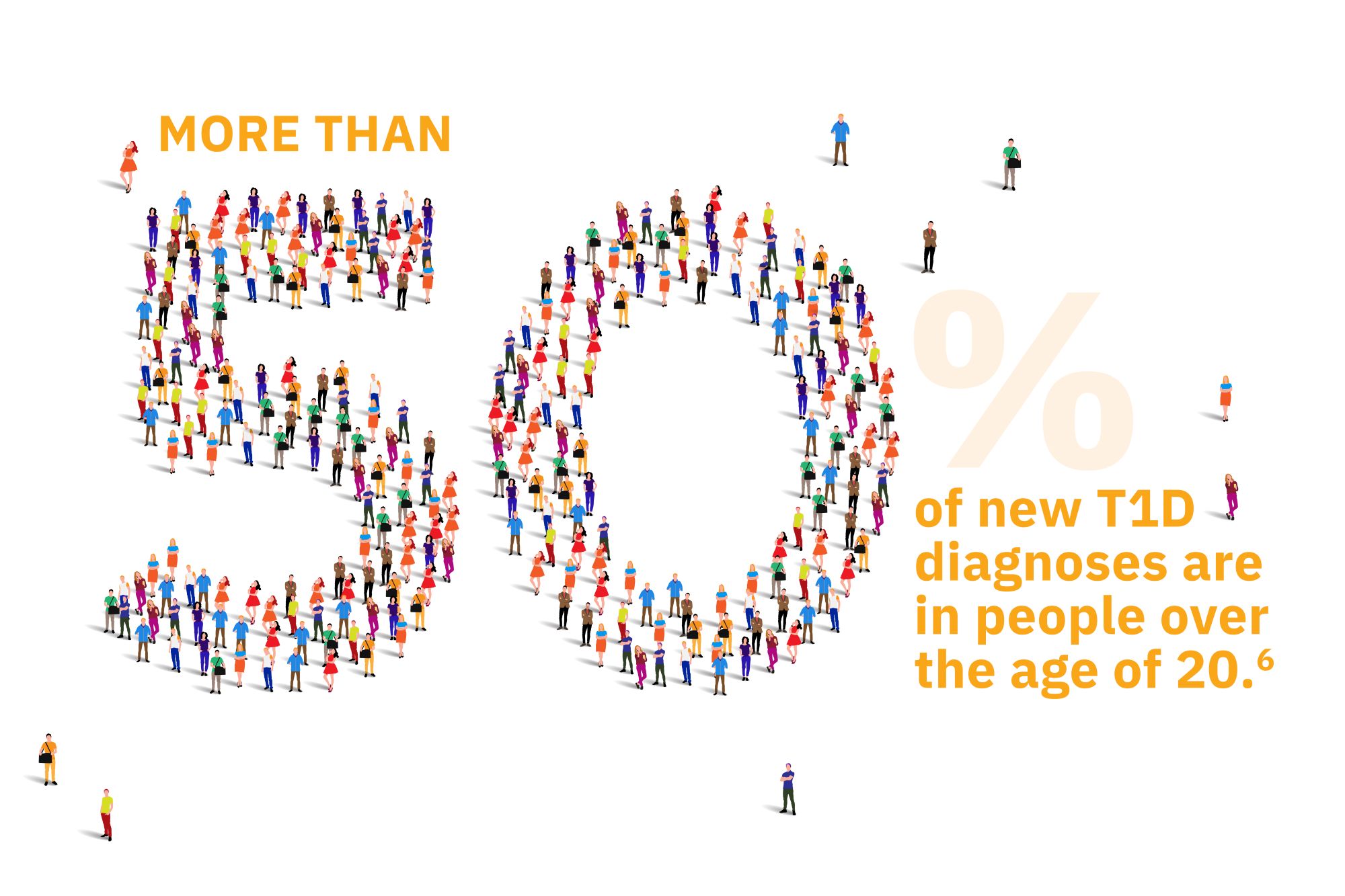
Type 1 diabetes was once known as ‘juvenile diabetes’, but that is no longer the case because people can and are increasingly diagnosed as adults.
How can Omnipod help?
With built-in customisable insulin delivery settings and a bolus calculator, Omnipod tubeless insulin pump therapy can make it easier to manage your glucose levels around mealtimes.
The Omnipod 5 System offers automated continuous insulin delivery, adjusting your insulin doses every 5 minutes based on CGM readings to help keep you in range day and night7,8.

Related Articles



Other topics
References and Disclaimers
1 National Library of Medicine. Physiology, Carbohydrates. Available at: https://www.ncbi.nlm.nih.gov/books/NBK459280/
2 Diabetes UK. I have type 1 diabetes – what can I eat? Available at: https://www.diabetes.org.uk/living-with-diabetes/eating/i-have-type-1-diabetes
3 British Heart Foundation. 8 diabetes myths you shouldn’t believe. Available at: https://www.bhf.org.uk/informationsupport/heart-matters-magazine/nutrition/myths-about-diet-and-diabetes
4 Diabetes UK. Sugar and diabetes. Available at: https://www.diabetes.org.uk/living-with-diabetes/eating/sugar-and-diabetes
5 Wake Health. 6 Common Myths About Type 1 Diabetes. Available at: https://www.wakehealth.edu/stories/common-myths-about-type-1-diabetes
6 BreakthroughT1D. Incidence and prevalence. Available at: https://www.breakthrought1d.org/t1d-basics/incidence-prevalence/
7 Brown S. et al. Diabetes Care (2021). Study in 240 people with T1D aged 6 - 70 years involving 2 weeks standard diabetes therapy followed by 3 months Omnipod 5 use in Automated Mode. Average time in Target Glucose range (from CGM) for standard therapy vs Omnipod 5 in adults/adolescents and children = 64.7% vs. 73.9%; 52.5% vs. 68.0%.