Omnipod® 5 with Dexcom Integration
Insulet® and Dexcom are proud partners providing continued care in automated insulin delivery to our Podder® and Warrior communities.
Omnipod 5 and Dexcom G7 work together to help you to stay in range, day and night1,2
- Omnipod 5 is the first and only wearable, tubeless, automated insulin delivery (AID) system in Canada, that works with the Dexcom G7 Sensor.
- Omnipod 5 and your Dexcom Sensor stay connected, communicating every 5 minutes and smoothly responding to predicted glucose levels by automatically adjusting insulin delivery.
- Omnipod 5 has been shown to increase time in range and decrease HbA1c, while helping to protect against highs and lows, day and night1-3
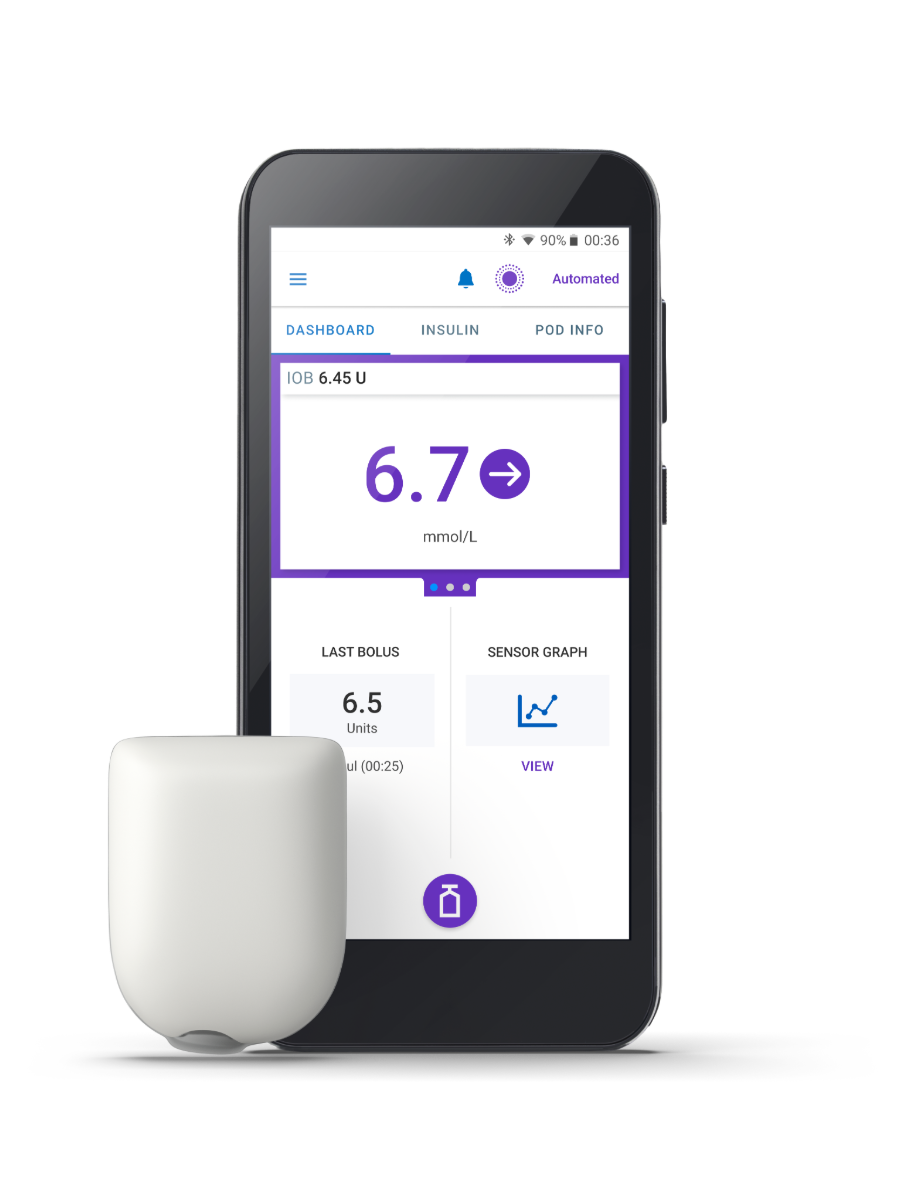
Share the load with a system that’s always adjusting*, so you don’t have to.
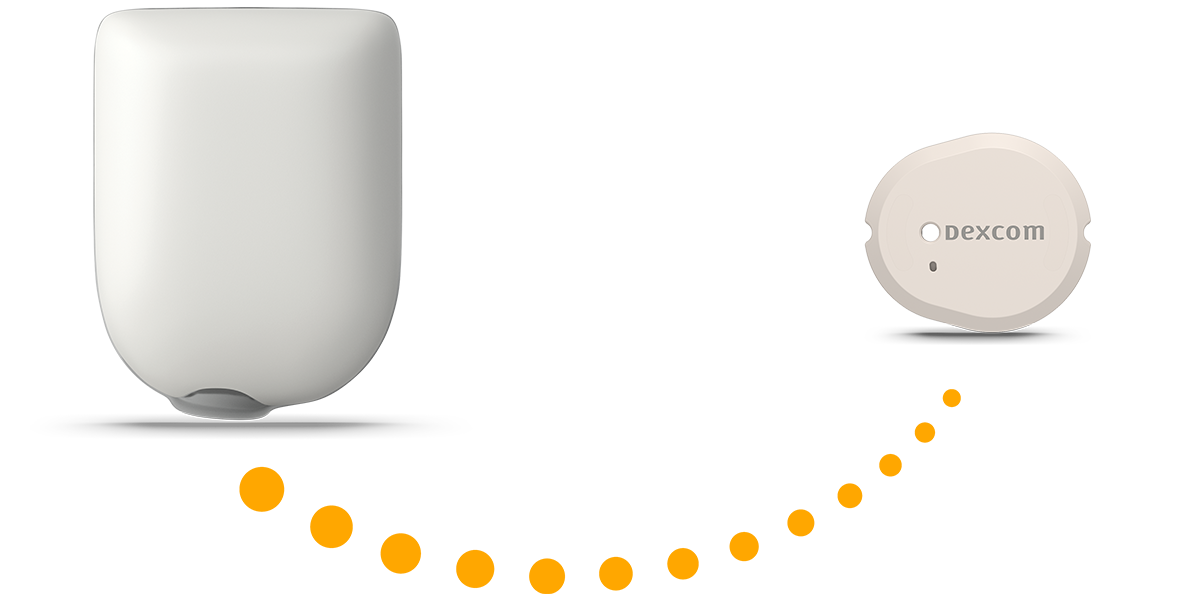
How Omnipod 5 works with Dexcom G7
- Spend more time in Automated Mode with a shortened 30-minute CGM warmup period* vs. Dexcom G6.
- Up to 10 days of CGM wear time*
- English and French language options
- The Dexcom G7 is indicated for ages 2+
- Compatible with Dexcom Clarity and Dexcom Follow Mobile Apps
- Must be used with Dexcom mobile app on a compatible smartphone. The Omnipod 5 with Dexcom G7 is not compatible with Dexcom receiver.
Finger pricks required for diabetes treatment decisions if symptoms or expectations do not match readings.
Learn more about Dexcom G7 CGM Systems on Dexcom's website.
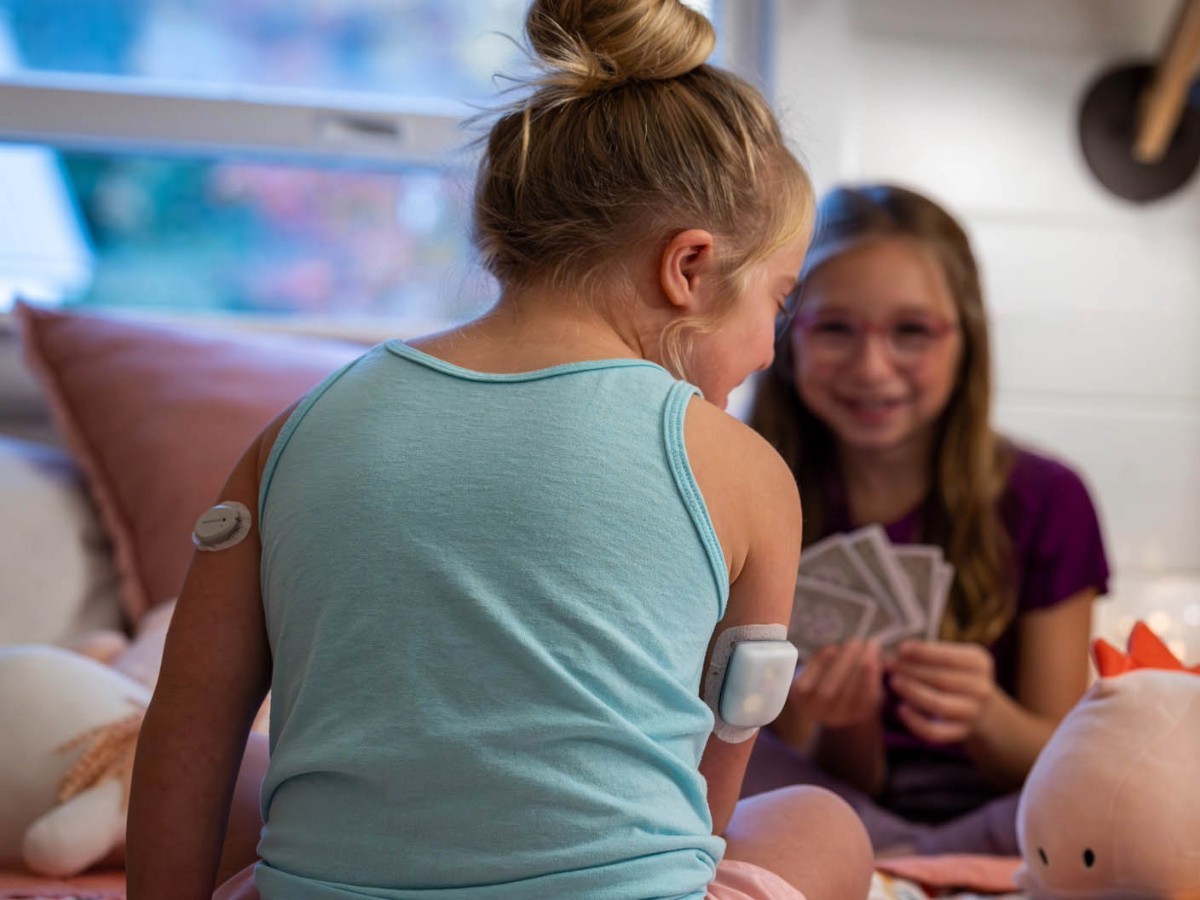
Get started with Omnipod 5
Learn More About Omnipod 5
Video Tutorials

Explore Omnipod 5 FAQs: Omnipod 5 with Dexcom CGM sensors for more information.
*When used in automated mode with Dexcom G7, the Omnipod 5 System makes adjustments to insulin delivery every 5 minutes based on the user's current CGM value, glucose values predicted 60 minutes in the future, glucose trend, and past insulin delivery to bring glucose to a user defined target.
†For a list of compatible devices, visit www.dexcom.com/compatibility
1. Brown S. et al. Diabetes Care. 2021;44:1630-1640. Prospective pivotal trial in 240 participants with T1D aged 6 - 70 yrs. Study included a 14-day standard therapy (ST) phase followed by a 3-month Omnipod 5 hybrid closed-loop (HCL) phase. Mean time in range (3.9-10.0 mmol/L or 70-180mg/dL) in adults/adolescents as measured by CGM: ST = 64.7%, 3-mo Omnipod 5 = 73.9%, P<0.0001. Mean time in range (3.9-10.0 mmol/L or 70-180mg/dL) in children as measured by CGM: ST = 52.5%, 3-mo Omnipod 5 = 68.0%, P<0.0001. Mean HbA1c: ST vs. Omnipod 5 use in adults/adolescents (14-70 yrs) and children (6-13.9 yrs), respectively (7.16% vs 6.78% or 55 mmol/mol vs. 51 mmol/mol, P<0.0001; 7.67% vs 6.99% or 60mmol/mol vs 53 mmol/mol), P<0.0001. Mean time >10.0 mmol/L or >180mg/dL (12AM-<6AM) as measured by CGM in adults/adolescents and children ST vs. 3-mo Omnipod 5: 32.1% vs. 20.7%; 42.2% vs 20.7%, P<0.0001, respectively. Mean time >10.0 mmol/L or >180mg/dL (6AM-<12AM) as measured by CGM in adults/adolescents and children ST vs. 3-mo Omnipod 5: 32.6% vs. 26.1%; 46.4% vs 33.4%, P<0.0001, respectively. Mean time <3.9 mmol/L or <70 mg/dL (12AM-<6AM) as measured by CGM in adults/adolescents and children ST vs. 3-mo Omnipod 5: 3.64% vs. 1.17%, P<0.0001; 2.51% vs. 1.78, P=0.0456, respectively. Mean time <3.9 mmol/L or <70 mg/dL (6AM-<12AM) as measured by CGM in adults/adolescents and children ST vs. 3-mo Omnipod 5: 2.64% vs. 1.37%, P<0.0001; 2.13% vs. 1.98%, P=0.2545, respectively.
2. Sherr J. et al. Diabetes Care. 2022; 45:1907-1910. Single-arm multicenter clinical trial in 80 pre-school children (aged 2-5.9 yrs) with T1D. Study included a 14-daystandard therapy (ST) phase followed by a 3-month AID phase with Omnipod 5 system. Mean HbA1c as measured in very young children, ST vs. Omnipod 5 use:7.4% vs 6.9% or 57 mmol/ml vs. 53 mmol/mol; (P<0.0001). Mean time in range (3.9-10.0 mmol/L or 70-180mg/dL) as measured by CGM in children ST vs. 3-mo Omnipod 5: 57.2% vs 68.1%, P<0.0001. Mean time >10.0 mmol/L or >180mg/dL (12AM-<6AM) as measured by CGM in children ST vs. 3-mo Omnipod 5: 38.4% vs. 16.9%, P<0.0001, respectively. Mean time >10.0 mmol/L or >180mg/dL (6AM-<12AM) as measured by CGM in children ST vs. 3-mo Omnipod 5: 39.7% vs. 33.7%, P<0.0001, respectively. Mean time <3.9 mmol/L or <70 mg/dL (12AM-<6AM) as measured by CGM in children ST vs. 3-mo Omnipod 5: 3.41% vs. 2.13%, P=0.0185. Mean time <3.9 mmol/L or <70 mg/dL (6AM-<12AM) as measured by CGM in children ST vs. 3-mo Omnipod 5: 3.44% vs. 2.57%, P=0.0799.
3. Renard E et al. Diabetes Care. 2024. doi:10.2337/dc24-1550. A 13-week randomised control trial conducted among 194 adults (age 18-70 years) with type 1 diabetes in France and the U.S., comparing the safety and effectiveness of the Omnipod 5 Automated Insulin Delivery (AID) System versus conventional non-AID pump therapy and CGM (control). Mean change in HbA1c at 13-weeks: Control = -0.68% or -7.4 mmol/mol, Omnipod 5 = -1.24% or -13.6 mmol/mol. Mean adjusted difference Omnipod 5—control = -0.58% or -6.3 mmol/mol, P<0.0001.