What is Omnipod?
The Omnipod® 5 and Omnipod DASH® systems offer customisable continuous insulin delivery through a wearable and waterproof‡ patch pump, called a Pod.
With no multiple daily injections to interrupt your day, and no tubes to cause unwanted tangles, it’s time to discover the freedom of Pod Therapy.
Unlock the Power of Omnipod
Meet our tubeless, wearable Pod lineup
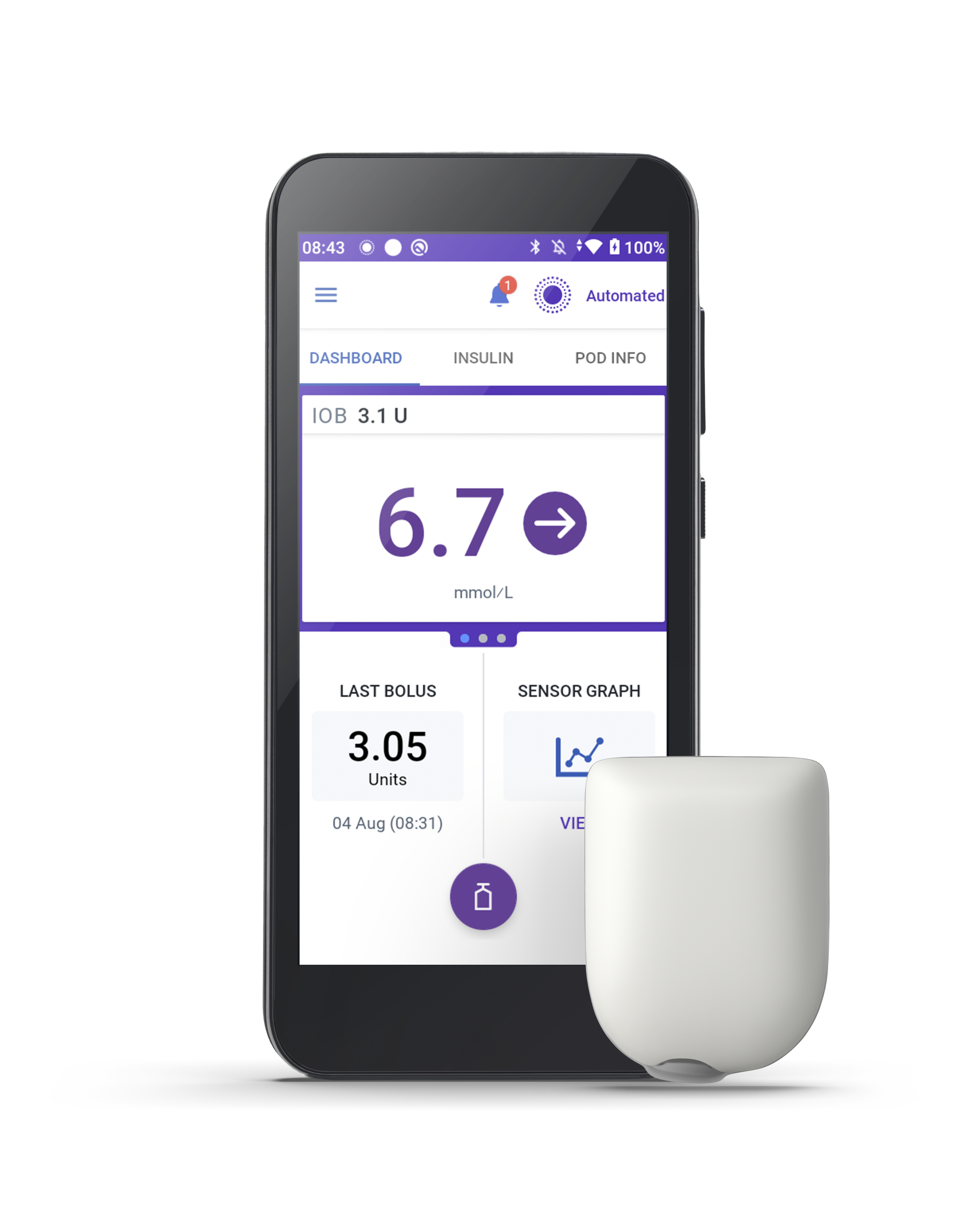
Omnipod 5: Our Automated Insulin Delivery System
Omnipod 5 is Australia’s first and only tubeless automated insulin delivery (AID) system that works with the leading sensor brands*.
Omnipod 5 makes automated† insulin adjustments every five minutes based on compatible glucose sensor readings*, to improve time in range while lowering HbA1c1,2. With a choice of sensor integration, you can experience the freedom of an Automated Insulin Delivery System without switching from your preferred sensor.
Omnipod DASH®: Simple, Tubeless Insulin Delivery
Simplify Life® with Omnipod DASH. Place the Pod on your body almost anywhere you would inject insulin for up to three days (72 hours) of continuous insulin delivery.
The Personal Diabetes Manager (PDM) communicates wirelessly with the Pod, so you can adjust your insulin doses discreetly and easily wherever you are, without the need for tubing.
Why Choose Omnipod?
Omnipod is designed to keep diabetes management simple and discreet.
Built for everyday wear
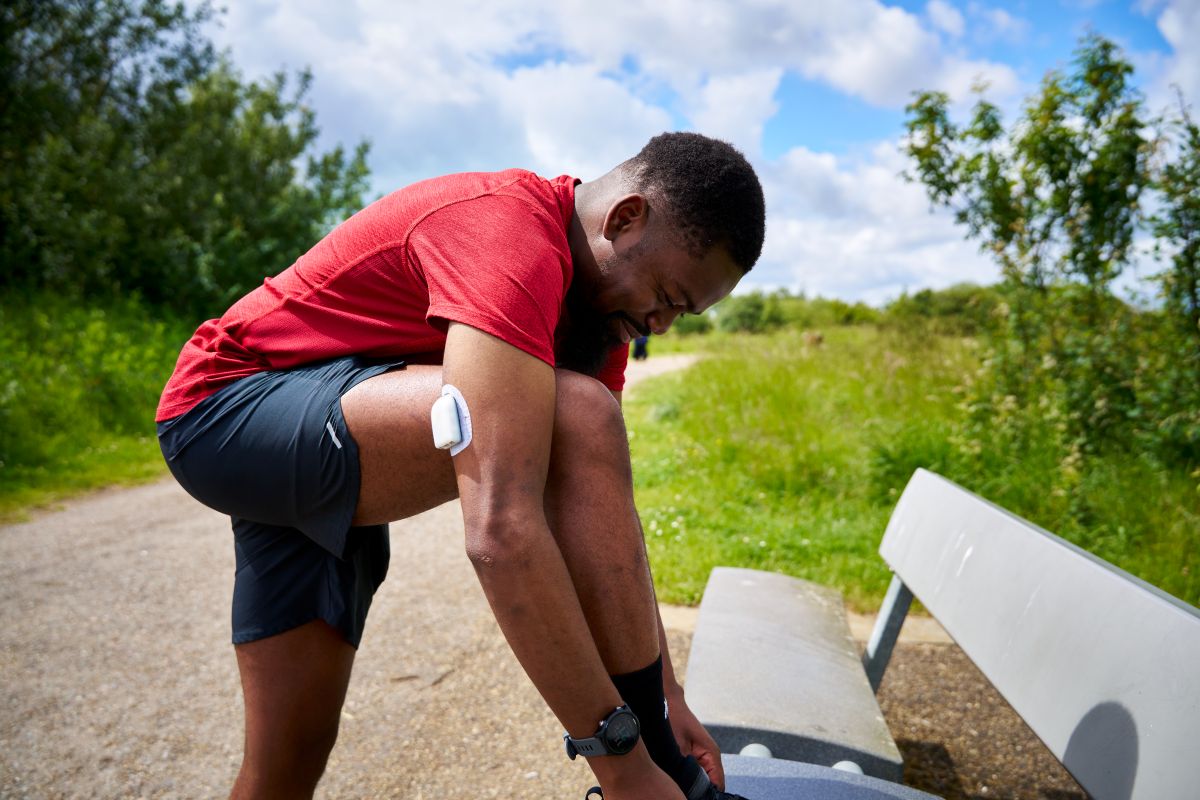
Tubeless
No tubes, no tangles.

Wearable
Place the Pod almost anywhere you’d normally inject insulin.
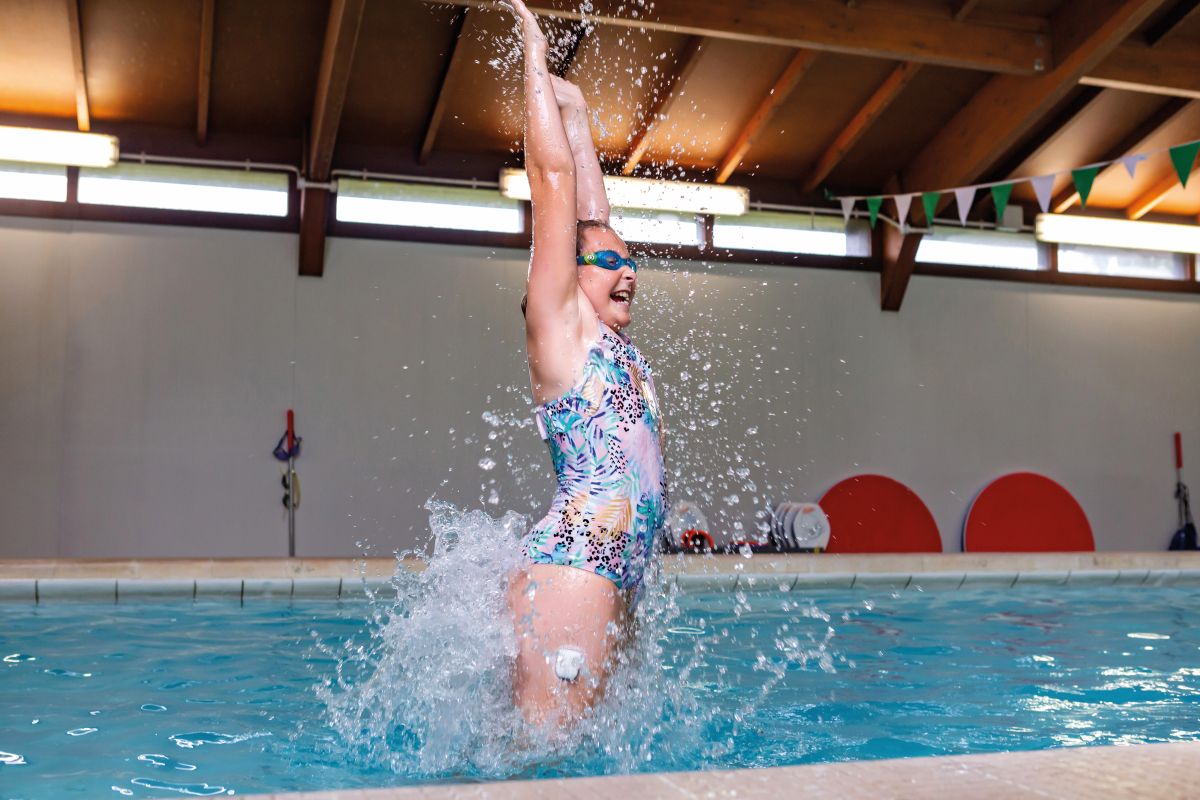
Waterproof‡
Shower, swim, or exercise without removing it.
Designed to support your diabetes management

Up to 3 days of continuous insulin delivery
Controlled through a handheld device with a built-in SmartBolus Calculator, taking the headache out of mealtime maths.

Personalised dosing
Controlled through a handheld device with a built-in SmartBolus Calculator, taking the headache out of mealtime maths.
‡ The Pod has a waterproof IP28 rating for up to 7.6 metres for 60 minutes. The PDM/Controller is not waterproof.
*Chiang et al. Diabetes Care. 2014:37:2034-2054. 14 injections/3 days based on people with T1D on MDI taking ≥ 3 bolus and 1-2 basal injections/day multiplied by 3 days.

Explore whether Omnipod is right for you and how to access it
Choosing an insulin pump is a big decision, and it helps to feel informed and confident. If you’re exploring your options, you can learn more about what life with Omnipod is like, decide whether it feels right for you, and find out how to access it.
Hear from our Podders
Omnipod 5 reduces the burden of diabetes, it increases your quality of life and I couldn’t have even imagined something like this when I was first diagnosed.
Lydia P.
Podder® since 2014
I've been on Omnipod 5 for around 8 to 10 months now, and there's no looking back. It's completely changed my life.
Joshua P
Podder® since 2025
I was diagnosed later in life in my mid 60s. The Pod makes a difference, it helps relieve me from stress, I am calmer.
Barbara G.
Podder® since 2025
1. Brown S. et al. Diabetes Care. 2021;44:1630-1640. Prospective pivotal trial in 240 participants with T1D aged 6 - 70 yrs. Study included a 14-day standard therapy (ST) phase followed by a 3-month Omnipod 5 hybrid closed-loop (HCL) phase. Mean time in range (3.9-10.0 mmol/L or 70-180mg/dL) in adults/adolescents as measured by CGM: ST = 64.7%, 3-mo Omnipod 5 = 73.9%, P<0.0001. Mean time in range (3.9-10.0 mmol/L or 70-180mg/dL) in children as measured by CGM: ST = 52.5%, 3-mo Omnipod 5 = 68.0%, P<0.0001. Mean HbA1c: ST vs. Omnipod 5 use in adults/adolescents (14-70 yrs) and children (6-13.9 yrs), respectively (7.16% vs 6.78% or 55 mmol/mol vs. 51 mmol/mol, P<0.0001; 7.67% vs 6.99% or 60mmol/mol vs 53 mmol/mol), P<0.0001. Mean time >10.0 mmol/L or >180mg/dL (12AM-<6AM) as measured by CGM in adults/adolescents and children ST vs. 3-mo Omnipod 5: 32.1% vs. 20.7%; 42.2% vs 20.7%, P<0.0001, respectively. Mean time >10.0 mmol/L or >180mg/dL (6AM-<12AM) as measured by CGM in adults/adolescents and children ST vs. 3-mo Omnipod 5: 32.6% vs. 26.1%; 46.4% vs 33.4%, P<0.0001, respectively. Mean time <3.9 mmol/L or <70 mg/dL (12AM-<6AM) as measured by CGM in adults/adolescents and children ST vs. 3-mo Omnipod 5: 3.64% vs. 1.17%, P<0.0001; 2.51% vs. 1.78, P=0.0456, respectively. Mean time <3.9 mmol/L or <70 mg/dL (6AM-<12AM) as measured by CGM in adults/adolescents and children ST vs. 3-mo Omnipod 5: 2.64% vs. 1.37%, P<0.0001; 2.13% vs. 1.98%, P=0.2545, respectively.
2. Sherr J. et al. Diabetes Care. 2022; 45:1907-1910. Single-arm multicenter clinical trial in 80 pre-school children (aged 2-5.9 yrs) with T1D. Study included a 14-daystandard therapy (ST) phase followed by a 3-month AID phase with Omnipod 5 system. Mean HbA1c as measured in very young children, ST vs. Omnipod 5 use:7.4% vs 6.9% or 57 mmol/ml vs. 53 mmol/mol; (P<0.0001). Mean time in range (3.9-10.0 mmol/L or 70-180mg/dL) as measured by CGM in children ST vs. 3-mo Omnipod 5: 57.2% vs 68.1%, P<0.0001. Mean time >10.0 mmol/L or >180mg/dL (12AM-<6AM) as measured by CGM in children ST vs. 3-mo Omnipod 5: 38.4% vs. 16.9%, P<0.0001, respectively. Mean time >10.0 mmol/L or >180mg/dL (6AM-<12AM) as measured by CGM in children ST vs. 3-mo Omnipod 5: 39.7% vs. 33.7%, P<0.0001, respectively. Mean time <3.9 mmol/L or <70 mg/dL (12AM-<6AM) as measured by CGM in children ST vs. 3-mo Omnipod 5: 3.41% vs. 2.13%, P=0.0185. Mean time <3.9 mmol/L or <70 mg/dL (6AM-<12AM) as measured by CGM in children ST vs. 3-mo Omnipod 5: 3.44% vs. 2.57%, P=0.0799.