What Is Omnipod®?

Tubeless: Forget the tubes of traditional insulin pumps.
Wearable: Place the Pod almost anywhere you’d normally inject insulin.
Waterproof‡: Wear your Pod in the shower, swimming pool or sea!
Each wearable Pod gives you up to three days (72 hours) of continuous insulin delivery or automated insulin delivery, avoiding the inconvenience and interruptions of up to 14 injections* per Pod.
You’re in control with personalised insulin doses, delivered in just a few finger taps via the Pod’s handheld companion, while the built-in Bolus Calculator takes the headache out of mealtime maths.
Simplify diabetes management with Omnipod!
‡The Pod has a waterproof IP28 rating for up to 7.6 metres for 60 minutes. The PDM/Controller is not waterproof.
*Chiang et al. Diabetes Care. 2014:37:2034-2054. 14 injections/3 days based on people with T1D on MDI taking ≥ 3 bolus and 1-2 basal injections/day multiplied by 3 days.
Unlock the Power of Pod Therapy
Meet our tubeless, wearable Omnipod lineup
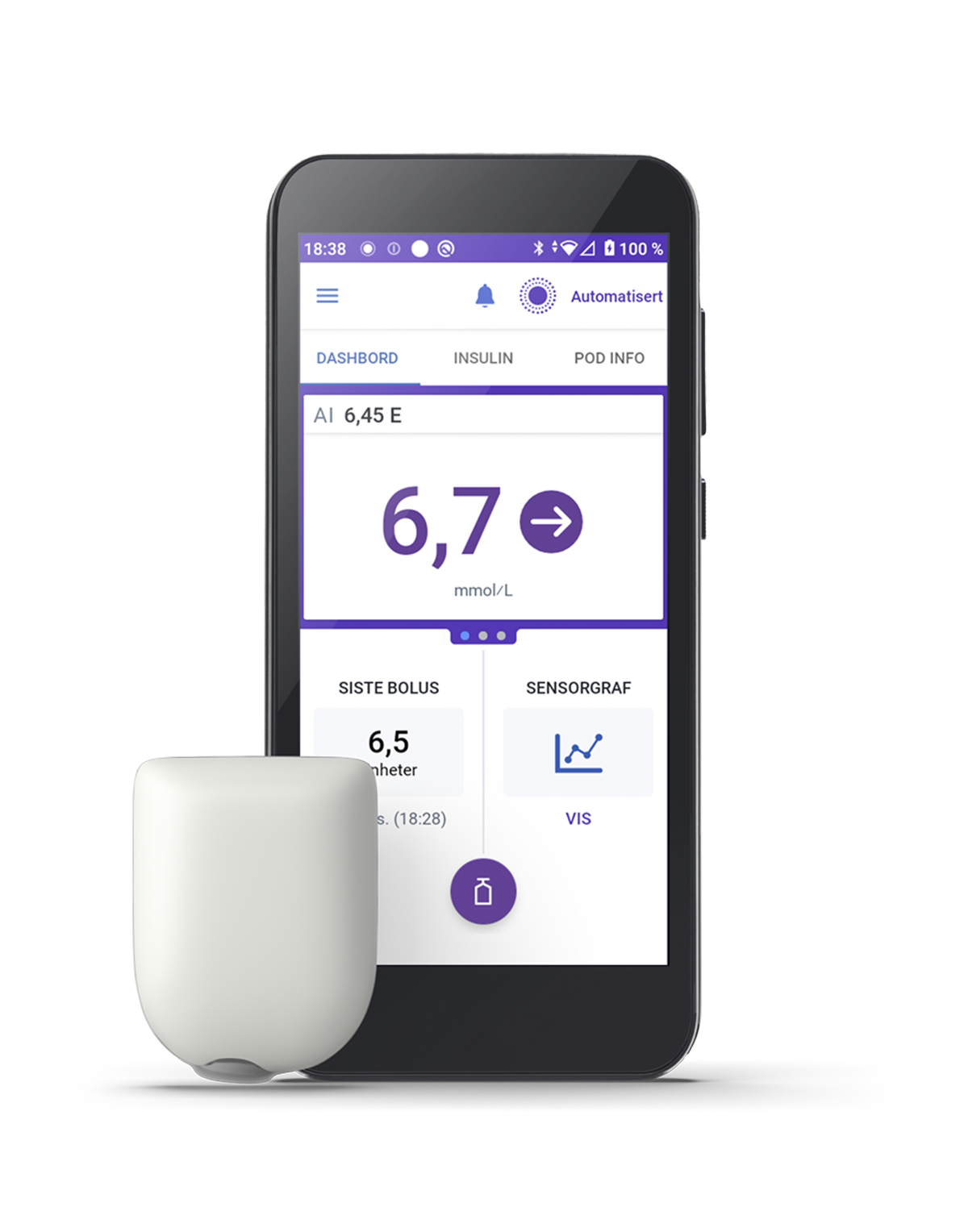
Pod shown without the necessary adhesive. Stats shown on screen image are for illustrative purposes only.
Omnipod 5 is compatible with the Dexcom G7 sensor and FreeStyle Libre 2 Plus sensor! It’s the first and only tubeless automated insulin delivery (AID) system that works with the leading sensor brands*.
Discover Omnipod 5
Omnipod 5 makes automated† insulin adjustments every five minutes based on continuous glucose monitor (CGM) readings, to improve time in range while lowering HbA1c1,2. With a choice of sensor integration, you can experience the freedom of AID without switching from your preferred sensor.
And there’s so much more to Omnipod 5 that can help you to level up your life!
- SmartAdjust™ technology automatically increases, decreases, or pauses insulin every five minutes based on your customised Target Glucose —helping to protect against highs and lows, day and night1,2. Share the load with the system that never sleeps.
- Activity feature helps you to sweat without the stress. When enabled, Activity Mode reduces insulin delivery when glucose typically goes low, for example when exercising.
- SmartBolus Calculator: Omnipod 5 is the first tubeless AID system with a SmartBolus calculator, informed with sensor value and trend, so you don’t have to do the maths.
Say hello to Omnipod DASH®
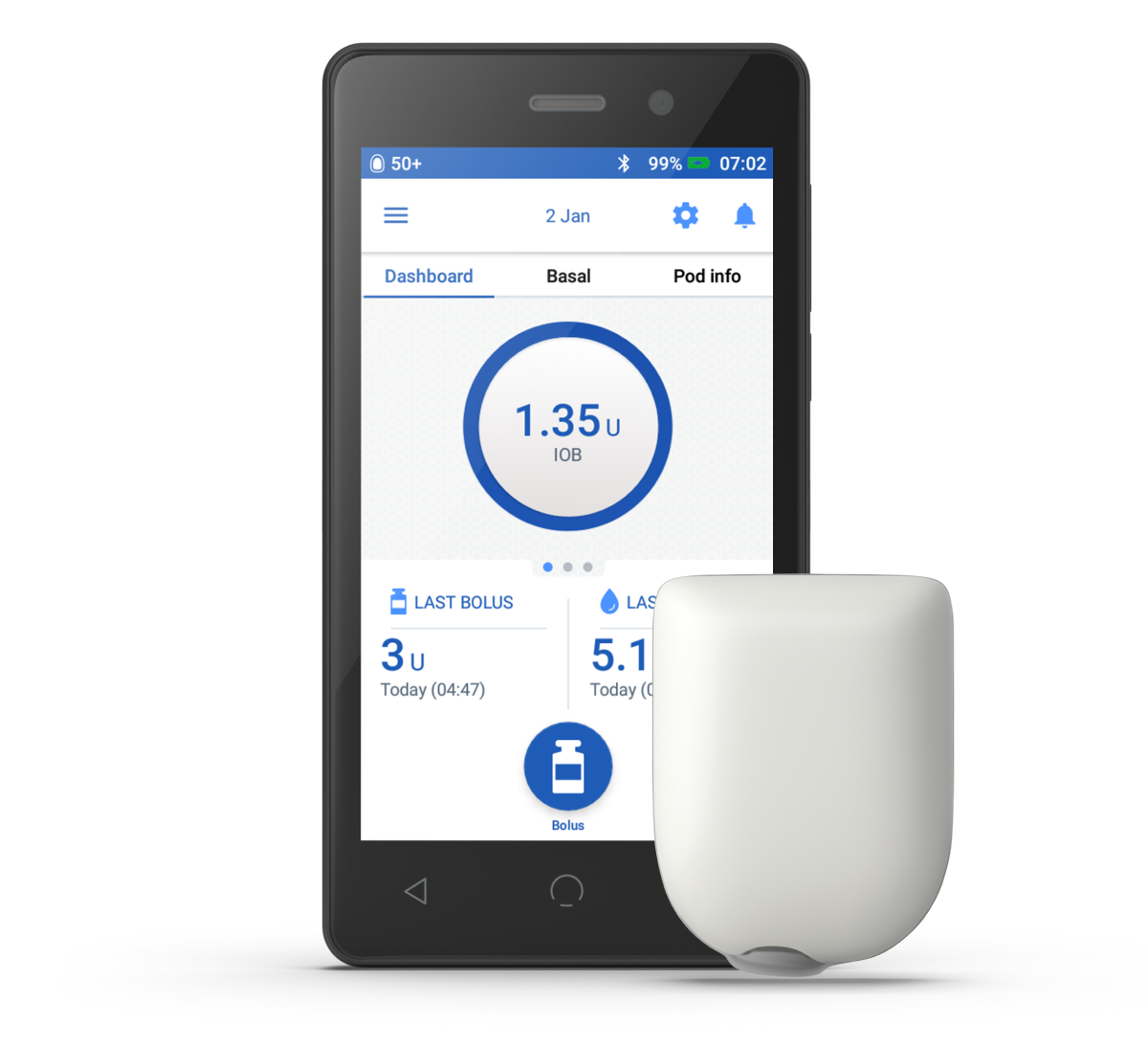
Simplify Life™ with Omnipod DASH. Place the Pod on your body almost anywhere you would inject insulin for up to three days (72 hours) of continuous insulin delivery.
The Personal Diabetes Manager (PDM) communicates wirelessly with the Pod, so you can adjust your insulin doses discreetly and easily wherever you are, without the need for tubing.
Say yes to life with Omnipod DASH and discover life, uninterrupted!
Hear from our users
Omnipod 5 working its magic in the background means she has more time to have fun and worry less about Diabetes.
Rebecca
Ava's Mum
Looking for more information?
Check out our library of resources to continue learning about Omnipod:
* Automated mode requires compatible sensor. Compatible sensors are sold and prescribed separately. Sensor availability may vary per country or region
1. Brown S. et al. Diabetes Care. 2021;44:1630-1640. Prospective pivotal trial in 240 participants with T1D aged 6 - 70 yrs. Study included a 14-day standard therapy (ST) phase followed by a 3-month Omnipod 5 hybrid closed-loop (HCL) phase. Mean time in range (3.9-10.0 mmol/L or 70-180mg/dL) in adults/adolescents as measured by CGM: ST = 64.7%, 3-mo Omnipod 5 = 73.9%, P<0.0001. Mean time in range (3.9-10.0 mmol/L or 70-180mg/dL) in children as measured by CGM: ST = 52.5%, 3-mo Omnipod 5 = 68.0%, P<0.0001. Mean HbA1c: ST vs. Omnipod 5 use in adults/adolescents (14-70 yrs) and children (6-13.9 yrs), respectively (7.16% vs 6.78% or 55 mmol/mol vs. 51 mmol/mol, P<0.0001; 7.67% vs 6.99% or 60mmol/mol vs 53 mmol/mol), P<0.0001. Mean time >10.0 mmol/L or >180mg/dL (12AM-<6AM) as measured by CGM in adults/adolescents and children ST vs. 3-mo Omnipod 5: 32.1% vs. 20.7%; 42.2% vs 20.7%, P<0.0001, respectively. Mean time >10.0 mmol/L or >180mg/dL (6AM-<12AM) as measured by CGM in adults/adolescents and children ST vs. 3-mo Omnipod 5: 32.6% vs. 26.1%; 46.4% vs 33.4%, P<0.0001, respectively. Mean time <3.9 mmol/L or <70 mg/dL (12AM-<6AM) as measured by CGM in adults/adolescents and children ST vs. 3-mo Omnipod 5: 3.64% vs. 1.17%, P<0.0001; 2.51% vs. 1.78, P=0.0456, respectively. Mean time <3.9 mmol/L or <70 mg/dL (6AM-<12AM) as measured by CGM in adults/adolescents and children ST vs. 3-mo Omnipod 5: 2.64% vs. 1.37%, P<0.0001; 2.13% vs. 1.98%, P=0.2545, respectively.
2. Sherr J. et al. Diabetes Care. 2022; 45:1907-1910. Single-arm multicenter clinical trial in 80 pre-school children (aged 2-5.9 yrs) with T1D. Study included a 14-daystandard therapy (ST) phase followed by a 3-month AID phase with Omnipod 5 system. Mean HbA1c as measured in very young children, ST vs. Omnipod 5 use:7.4% vs 6.9% or 57 mmol/ml vs. 53 mmol/mol; (P<0.0001). Mean time in range (3.9-10.0 mmol/L or 70-180mg/dL) as measured by CGM in children ST vs. 3-mo Omnipod 5: 57.2% vs 68.1%, P<0.0001. Mean time >10.0 mmol/L or >180mg/dL (12AM-<6AM) as measured by CGM in children ST vs. 3-mo Omnipod 5: 38.4% vs. 16.9%, P<0.0001, respectively. Mean time >10.0 mmol/L or >180mg/dL (6AM-<12AM) as measured by CGM in children ST vs. 3-mo Omnipod 5: 39.7% vs. 33.7%, P<0.0001, respectively. Mean time <3.9 mmol/L or <70 mg/dL (12AM-<6AM) as measured by CGM in children ST vs. 3-mo Omnipod 5: 3.41% vs. 2.13%, P=0.0185. Mean time <3.9 mmol/L or <70 mg/dL (6AM-<12AM) as measured by CGM in children ST vs. 3-mo Omnipod 5: 3.44% vs. 2.57%, P=0.0799.