Lessons Learned from Real-World Experience Managing Diabetes with Omnipod 5

The Omnipod® 5 Automated Insulin Delivery (AID) system represents a significant leap in diabetes management, offering a wearable, tubeless insulin pump that integrates directly with a sensor. Healthcare professionals (HCPs) are now witnessing how the system adjusts insulin delivery every 5 minutes, improving glycaemic outcomes while simplifying the lives of patients with type 1 diabetes.1,2

This article will focus on insights gathered from HCPs who have already been using the system for patients in their real-world practice. For an in-depth expert discussion on real-world experiences, along with best practices and onboarding strategies, explore the webinar linked below.

Key Features of the Omnipod 5 System

Omnipod 5 is designed to simplify insulin delivery by automating insulin delivery every 5 minutes. The device communicates directly with the sensor and adapts insulin delivery every five minutes based on glucose levels. It can increase, decrease, or pause insulin administration depending on the sensor data. This adaptive approach makes it ideal for patients with fluctuating insulin needs, offering a streamlined experience for both you and your patients.3
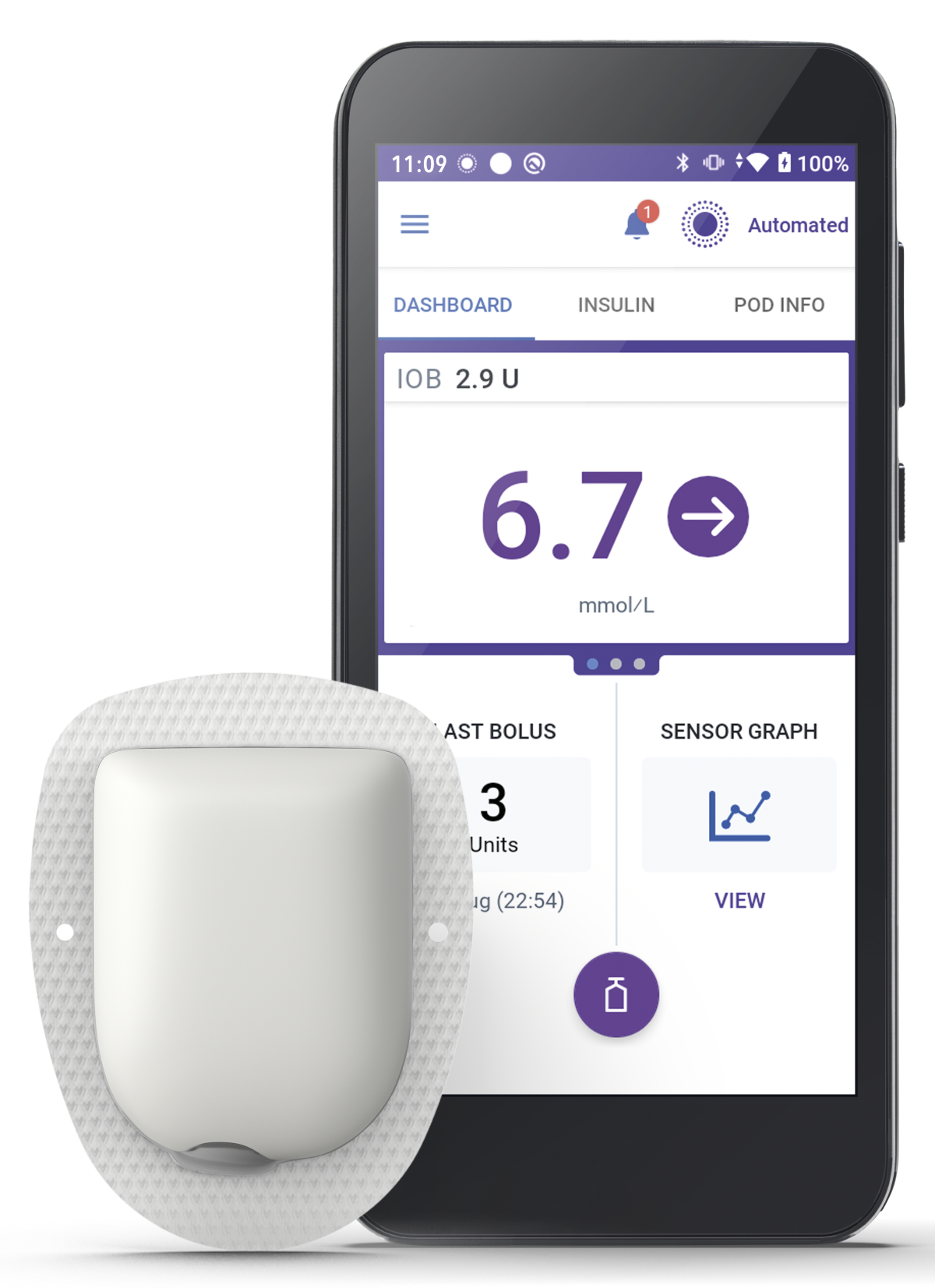

Omnipod 5 with adhesive and device Omnipod 5 with adhesive and device
Podder Phoenix Podder Phoenix

Real-World Case Studies

Case Study: Improving Glycaemic Control in Adolescents

In a recent case, a 10-year-old patient with type 1 diabetes transitioned from multiple daily injections (MDI) to Omnipod 5. Prior to switching, his time in range (TIR) was only 60%, with significant fluctuations in glucose levels throughout the day. 
Watch the webinar and learn how the patient's TIR changed within two months, after initiating Omnipod 5. The mother of the child expressed satisfaction with the system, noting that it provided peace of mind and more consistent glucose levels overnight.

Managing Postprandial Hyperglycaemia

A common challenge with type 1 diabetes management is postprandial hyperglycaemia, especially after consuming foods with high carbohydrate content. In many cases, it helps to strengthen the insulin-to-carb ratios to deliver more bolus insulin and prevent hyperglycaemia after meals. In the case of the aforementioned 10-year-old patient, HCPs adjusted his insulin-to-carb ratio after noticing elevated glucose levels following meals. 

Watch the webinar and learn how the system’s ability to administer correction boluses helped manage these fluctuations.

Remote Monitoring and Follow-up

Many clinics have successfully adopted a hybrid model of in-person and remote follow-ups to support patients. HCPs recommend scheduling the first follow-up within 10–14 days after initiation, followed by additional check-ins at four to six weeks and quarterly thereafter. Remote monitoring, supported by platforms like Glooko, allows for timely interventions when necessary.†,‡ 

Adapting to Patients’ Needs

The customisable nature of Omnipod 5 allows you and your patients to tailor the system to individual patient preferences and needs. Whether it is adjusting glucose targets throughout the day or tweaking bolus settings for better control during meals, Omnipod 5 provides the flexibility to meet patients where they are in their diabetes journey.

In addition, the ability to use up to 8 segments and different glucose targets throughout the day is an advantage for those with varying insulin needs during different times, such as overnight.

Embracing Simplified Diabetes Management

Omnipod 5’s real-world performance has shown significant improvements in glycaemic control, particularly in challenging cases. By minimizing time in both hyperglycaemia and hypoglycaemia and automating insulin delivery, it provides HCPs and patients alike with a more streamlined and effective approach to diabetes management.3,4

For HCPs, embracing tools like Omnipod 5 is a step toward simplifying life with diabetes while ensuring optimal patient outcomes.

For a deeper dive into the insights discussed, view the full webinar featuring leading experts in diabetes management.


The Omnipod 5 Automated Insulin Delivery System is a single hormone insulin delivery system intended to deliver U-100 insulin subcutaneously for the management of type 1 diabetes in persons aged 2 and older requiring insulin. The Omnipod 5 System is intended for single patient use. The Omnipod 5 System is indicated for use with NovoLog®/NovoRapid®, Humalog®, Trurapi®/Truvelog®/Insulin aspart Sanofi®, Kirsty®, and Admelog/Insulin lispro Sanofi U-100 insulin. Refer to the Omnipod® 5 Automated Insulin Delivery System User Guide and www.omnipod.com/safety for complete safety information including indications, contraindications, warnings, cautions, and instructions.

Must be connected to Wi-Fi or cellular data, and Omnipod 5 users must have Wi-Fi or cellular data access to receive updates in Glooko.

Glooko is not intended to provide treatment decisions or to be used as a substitute for professional healthcare advice.

1. Brown S. et al. Diabetes Care. 2021;44:1630-1640. Prospective pivotal trial in 240 participants with T1D aged 6 - 70 yrs. Study included a 14-day standard therapy (ST) phase followed by a 3-month Omnipod 5 hybrid closed-loop (HCL) phase. Mean time in range (3.9-10.0 mmol/L or 70-180mg/dL) in adults/adolescents as measured by CGM: ST = 64.7%, 3-mo Omnipod 5 = 73.9%, P<0.0001. Mean time in range (3.9-10.0 mmol/L or 70-180mg/dL) in children as measured by CGM: ST = 52.5%, 3-mo Omnipod 5 = 68.0%, P<0.0001. Mean time in hyperglycaemic range (>10.0 mmol/L or >180mg/dL) as measured by CGM in adults/adolescents and children ST vs. 3-mo Omnipod 5: 28.9% vs. 22.8%; 44.8% vs 29.7%, P<0.0001, respectively. Mean time in hypoglycaemic range (<3.9 mmol/L or <70 mg/dL) as measured by CGM in adults/adolescents and children ST vs. 3-mo Omnipod 5: 2.89% vs. 1.32%, P<0.0001; 2.21% vs. 1.78, P=0.8153, respectively.

2. Sherr J. et al. Diabetes Care. 2022; 45:1907-1910. Single-arm multicenter clinical trial in 80 pre-school children (aged 2-5.9 yrs) with T1D. Study included a 14-day standard therapy (ST) phase followed by a 3-month AID phase with Omnipod 5 system. Mean time in range (3.9-10.0 mmol/L or 70-180mg/dL) as measured by CGM in children ST vs. 3-mo Omnipod 5: 57.2% vs 68.1%, P<0.0001. Mean time in hyperglycaemic range (>10.0 mmol/L or >180mg/dL) as measured by CGM in children ST vs. 3-mo Omnipod 5: 39.4% vs. 29.5%, P<0.0001, respectively. Mean time in hypoglycaemic range (<3.9 mmol/L or <70 mg/dL) as measured by CGM in children ST vs. 3-mo Omnipod 5: 3.43% vs. 2.46%, P=0.0204.

3. Forlenza G, et al. Diabetes Technol Ther. 2024. 26(8):514-525. Retrospective analysis of real-world data from 28,612 adults with type 1 diabetes using Omnipod 5 at the Target Glucose of 110 mg/dL demonstrated that 49.8% had a TIR of >70%. Omnipod 5 results based on users with ≥90 days CGM data, ≥75% of days with ≥220 readings available.

4. Renard E, et al. Diabetes Care. 2024. doi:10.2337/dc24-1550. A 13-week randomised controlled trial conducted among 194 adults (age 18-70 years) with type 1 diabetes in France and the U.S., comparing the safety and effectiveness of the Omnipod 5 Automated Insulin Delivery (AID) System versus conventional non-AID pump therapy and CGM (control). Mean time in range (3.9-10.0 mmol/L or 70-180mg/dL) at 13-weeks as measured by CGM: Control = 43.8%, Omnipod 5 = 61.2%. Mean adjusted difference Omnipod 5 vs. control = 17.5%, P<0.0001. Mean time in hypoglycaemic range (<3.9 mmol/L or <70mg/dL) at 13-weeks as measured by CGM: control =1.75%, Omnipod 5 = 1.18%. Mean adjusted difference Omnipod 5—control = -0.36%, P=0.005. Mean time in hyperglycaemic range (>10.0 mmol/L or >180mg/dL) at 13-weeks as measured by CGM: Control = 54.5%, Omnipod 5 = 37.6%. Mean adjusted difference Omnipod 5—control = -16.8%, P<0.0001.