Omnipod® 5
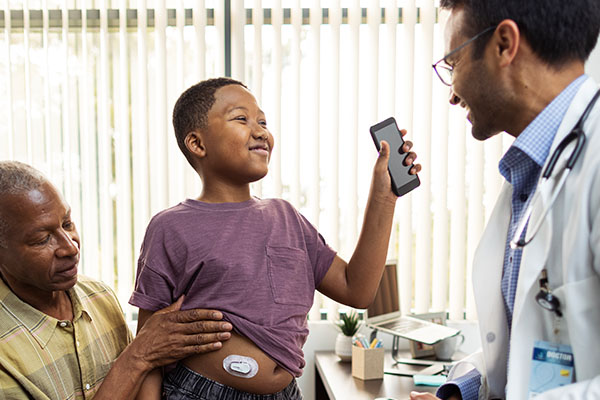
Omnipod® 5 ajusta automáticamente la administración de insulina cada 5 minutos sin necesidad de catéter ni conjeturas manuales. Es un sistema de administración automática de insulina (AID) sin catéter que se integra con las principales marcas de sensores, para personas con diabetes mellitus tipo 1 (DM1) a partir de 2 años de edad.
Cómo funciona el sistema Omnipod® 5
Omnipod ®5 ayuda a automatizar la administración de insulina día y noche1,2 con tan solo tres sencillos componentes que funcionan de manera continua: el Pod, un sensor compatible y un Controlador.
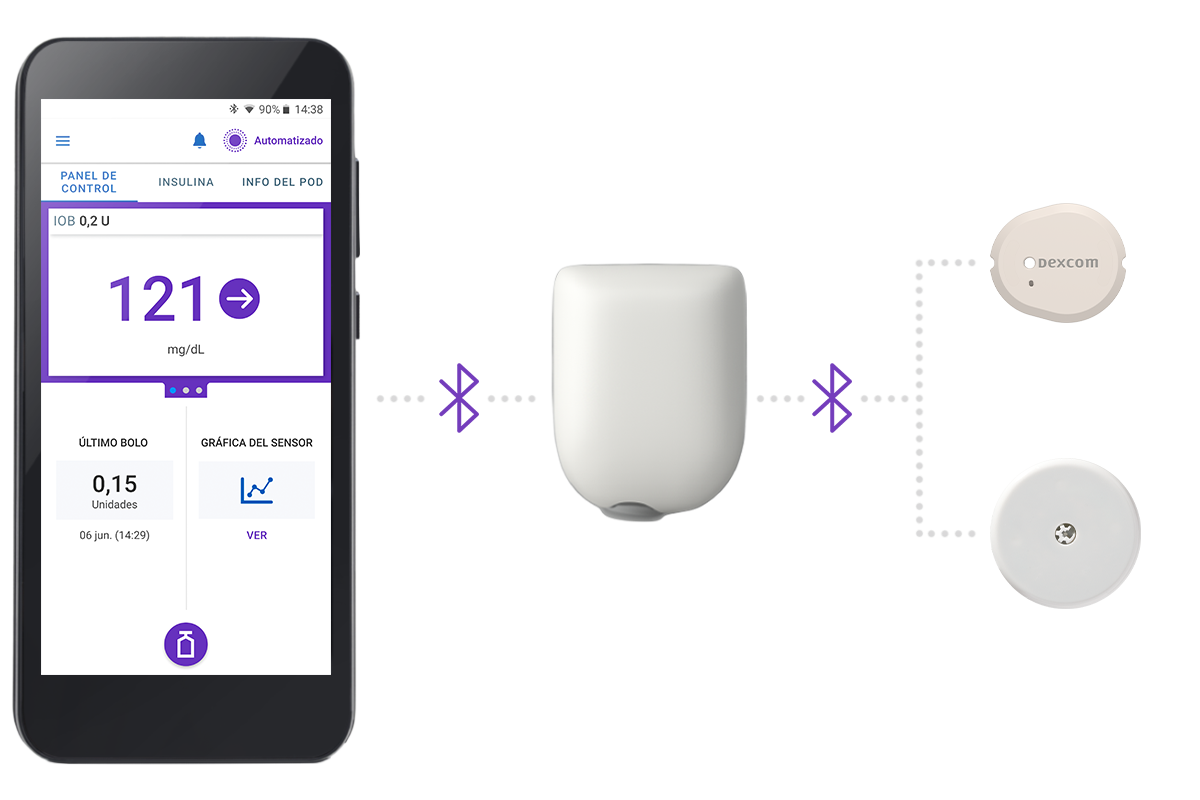
El algoritmo está integrado en el Pod: la administración automática de insulina puede continuar sin tener el Controlador cerca
Omnipod® 5 es compatible con el sistema de monitorización continua de glucosa Dexcom G7 y con el sensor FreeStyle Libre 2 Plus.
Conozca el sistema Omnipod® 5
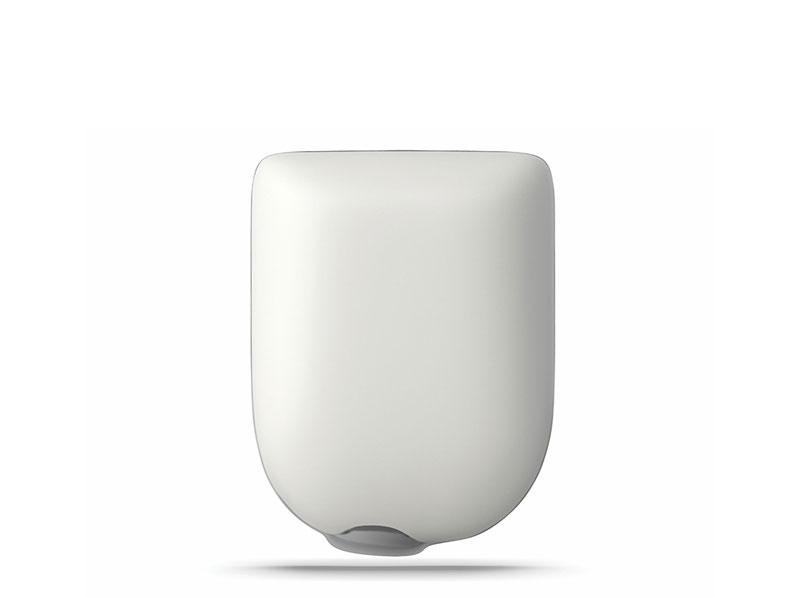
Pod
Un Pod** sin catéter e impermeable que se adhiere a distintas partes del cuerpo y que puede ajustar automáticamente§ la administración de insulina durante un periodo de hasta de 3 días (72 horas).
El algoritmo está integrado en el Pod: la administración automática de insulina puede continuar sin tener el Controlador cerca.
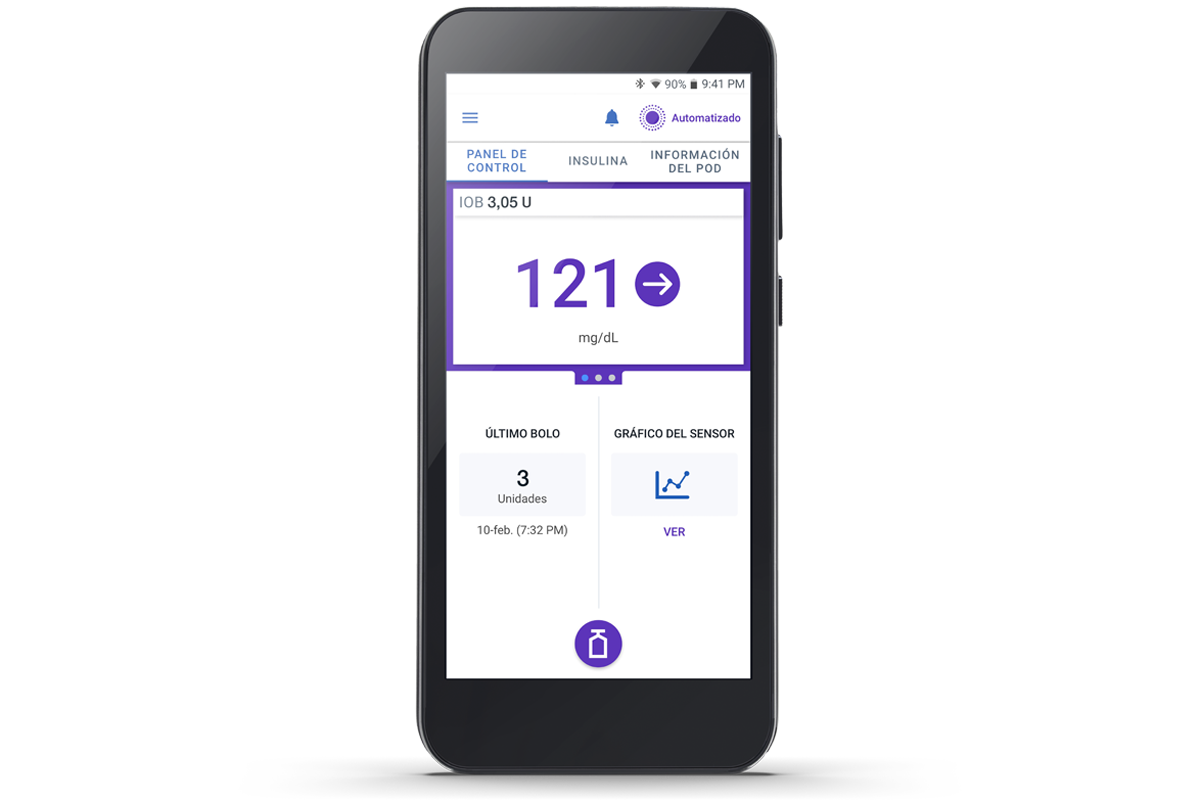
Controlador Omnipod® 5
Controla y monitoriza el Pod a través de Bluetooth®.
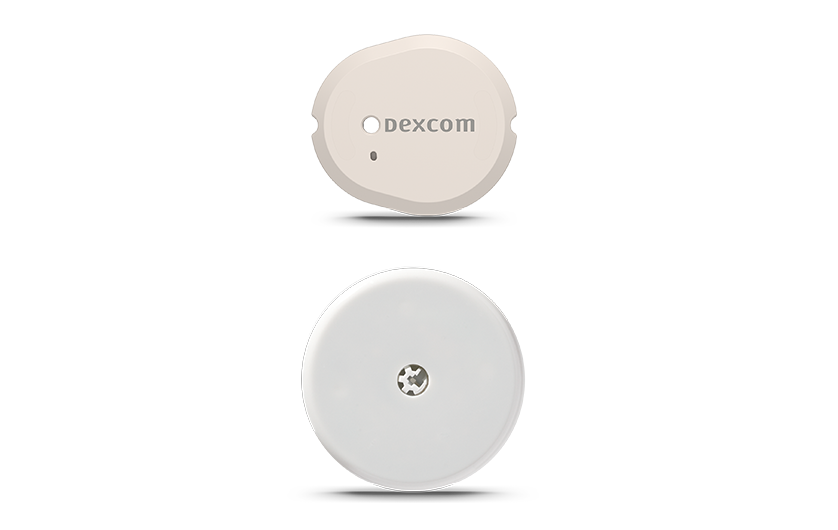
Sensor
Envía continuamente los valores de glucosa al Pod para que los pacientes dispongan de los datos en tiempo real sin necesidad de hacer punciones digitales†.
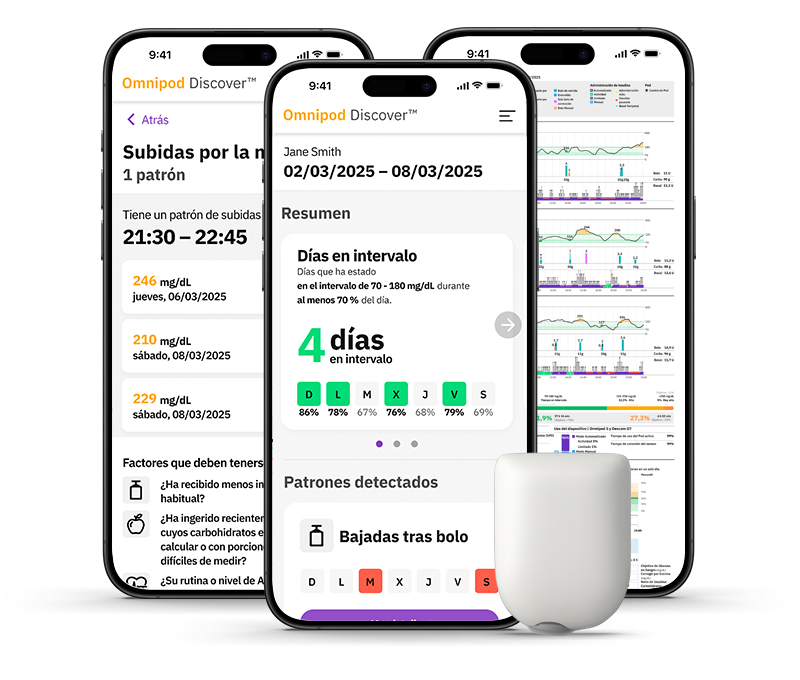
Omnipod DiscoverTM
Una aplicación web que le permite a usted y a los pacientes que utilizan Omnipod® 5 ver cómo el ajuste del Pod y el comportamiento del bolo afectan a los niveles de glucosa en sangre, lo que les permite desarrollar de forma conjunta estrategias de gestión de la diabetes.
Nuestro algoritmo de Omnipod® 5 está diseñado para personalizar la administración de insulina
El algoritmo de Omnipod® 5 se ajusta automáticamente a las necesidades personales de los pacientes aumentando, disminuyendo o pausando la administración de insulina cada cinco minutos, lo que puede ayudar a evitar las subidas y las bajadas de glucosa1,2.

Predice
la glucosa con hasta 60 minutos de anticipación

Ajusta
la insulina utilizando el objetivo de glucosa seleccionado

Administra
dosis de insulina cada 5 minutos (según sea necesario)
Evidencia: resultados clínicos y de calidad de vida con Omnipod® 5
Mejora de los resultados clínicos
Omnipod® 5 mejoró el control glucémico en adultos, adolescentes y niños con DM1 en distintos estudios1,2..
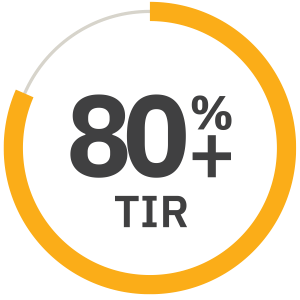
80 % del tiempo en rango (TIR)
Más del 80 % del tiempo en rango con ajustes optimizados3

Reducción significativa de la HbA1c
En niños muy pequeños (2-5 años), niños (6-13 años), adolescentes y adultos (14-70 años) en un 0,5 %, 0,7 % y 0,4 % (6,0, 7,8 y 4,2 mmol/mol) respectivamente1,2.
HbA1c = hemoglobina glucosilada

Reducción del tiempo en hiperglucemia
Reducción del tiempo en hiperglucemia en un 33 % en niños4 y en un 24 % en adultos y adolescentes5.

Reducción del tiempo en hipoglucemia
En un entorno real, los usuarios de Omnipod® 5 pasaron un 1 % del tiempo en hipoglucemia6.
Mejoró de la calidad de vida de los pacientes en estudios clínicos7,8.
Niños
Los padres de niños que utilizaron Omnipod® 5 informaron de mejoras en la calidad de vida, la calidad del sueño, la confianza para evitar la hipoglucemia y el bienestar mental7,8.
Pacientes adultos
Los adultos que utilizaban Omnipod® 5 notificaron mejoras en la angustia causada por la diabetes, el estrés con la comida y la confianza para evitar la hipoglucemia7,8.
Qué pacientes pueden beneficiarse de Omnipod® 5

- Pacientes que encuentran complejo el manejo de la diabetes
- Pacientes que tienen dificultades para mantener el control glucémico
- Pacientes que se sienten agobiados por el manejo de la diabetes
Comience a apoyar a los pacientes candidatos a Omnipod® 5
Omnipod® 5 está diseñado para ofrecer mejoras significativas en el tiempo en rango y reducciones de la hipoglucemia en todos los grupos de edad. Con Omnipod® 5 sus pacientes candidatos podrán acceder a un sistema AID sin catéter que admita patrones de glucosa diarios más predecibles.
Características adicionales diseñadas para la vida diaria
Alimentos Personalizados
Permite a los pacientes crear hasta 50 entradas de carbohidratos personalizadas que utilizará la calculadora SmartBolus, lo que permite un registro de carbohidratos más sistemático y eficiente en las comidas repetidas.
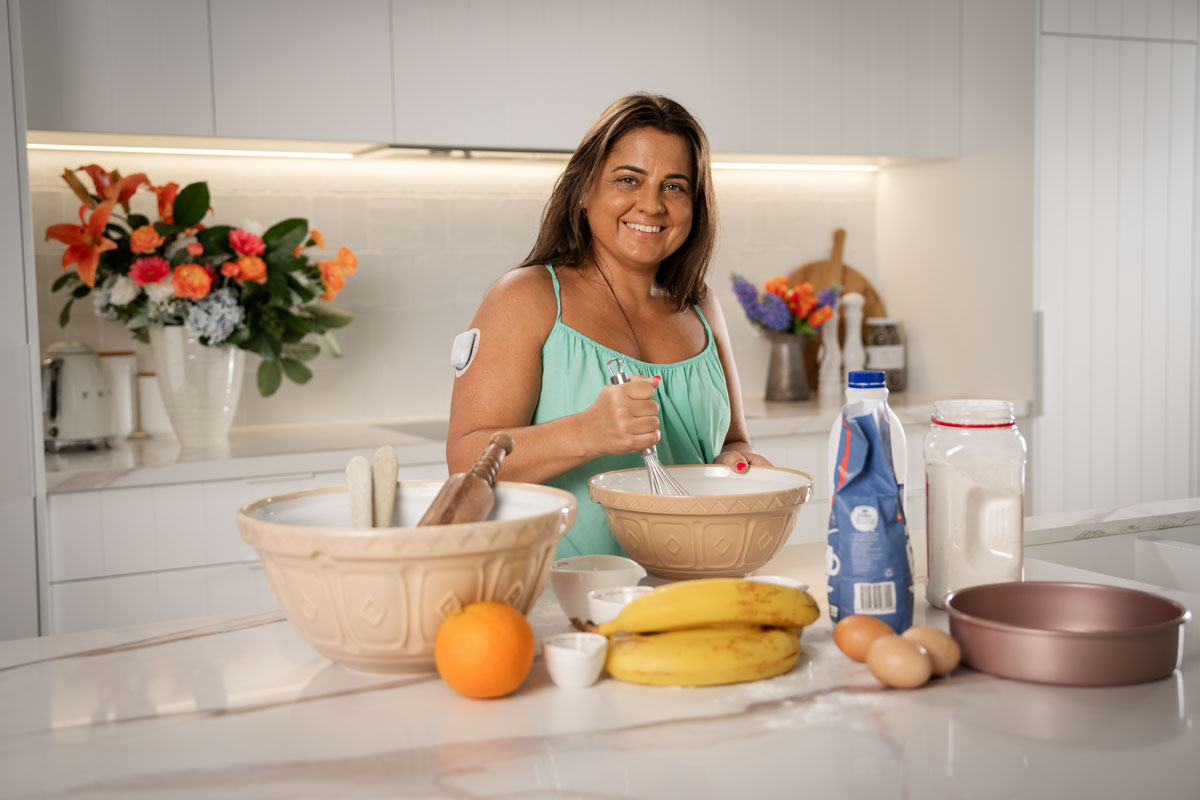
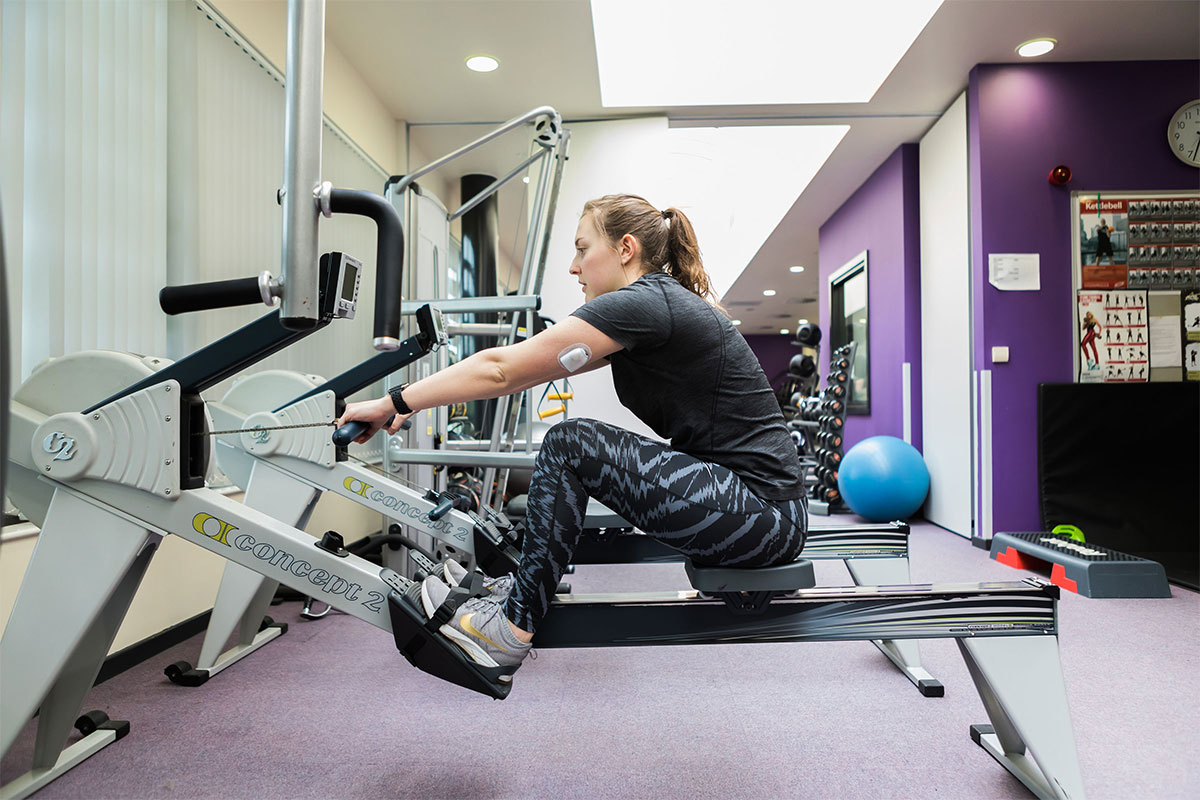
Función de Actividad
Cuando está activada, nuestra función de Actividad reduce la administración de insulina en los momentos en los que la glucosa suele bajar, como durante el ejercicio.
Ideal para:
- ejercicio
- fiestas de pijamas
- días de enfermedad
- momentos en los que sus pacientes simplemente quieren una administración de insulina más suave
Por qué elegir Omnipod® 5 para sus pacientes

Mejora del tiempo en rango (TIR) en una media del 22 % en comparación con MDI en adultos y niños9.

Pod sin catéter e impermeable** para simplificar la vida diaria con diabetes.
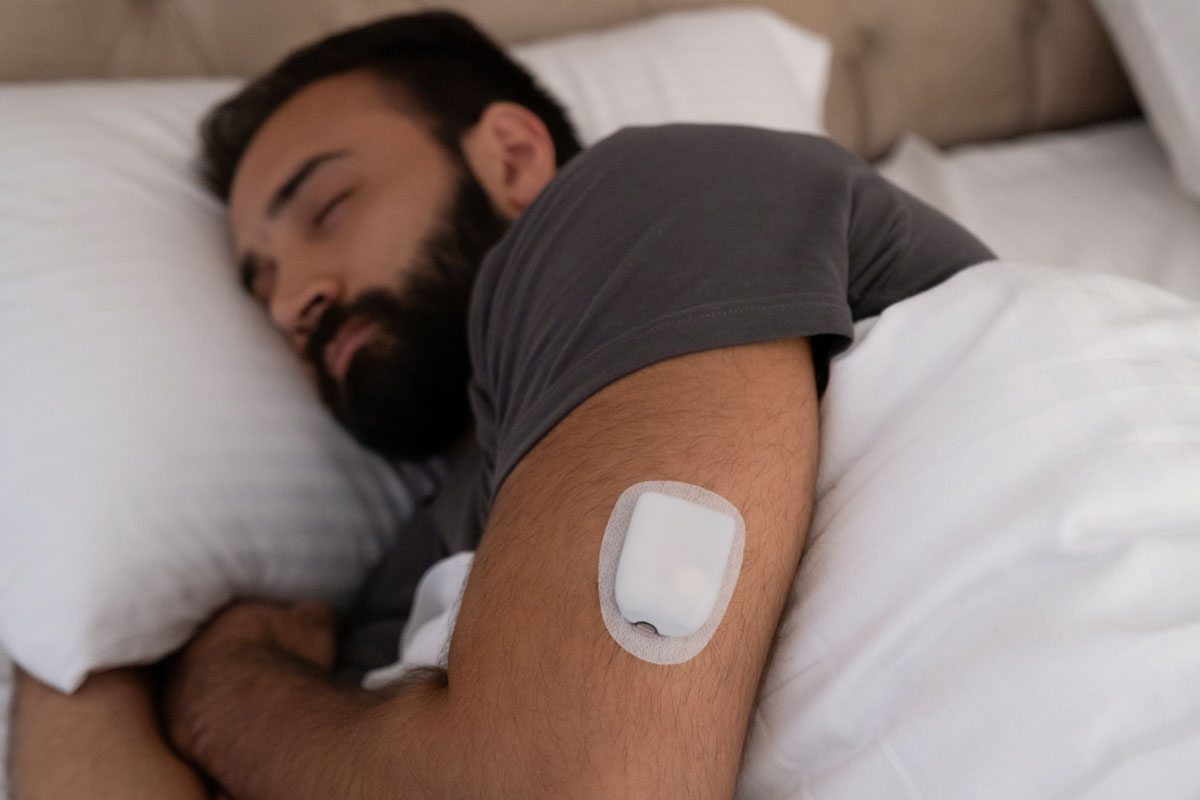
Administración automática de insulina cuando se integra con sensores de MCG compatibles.
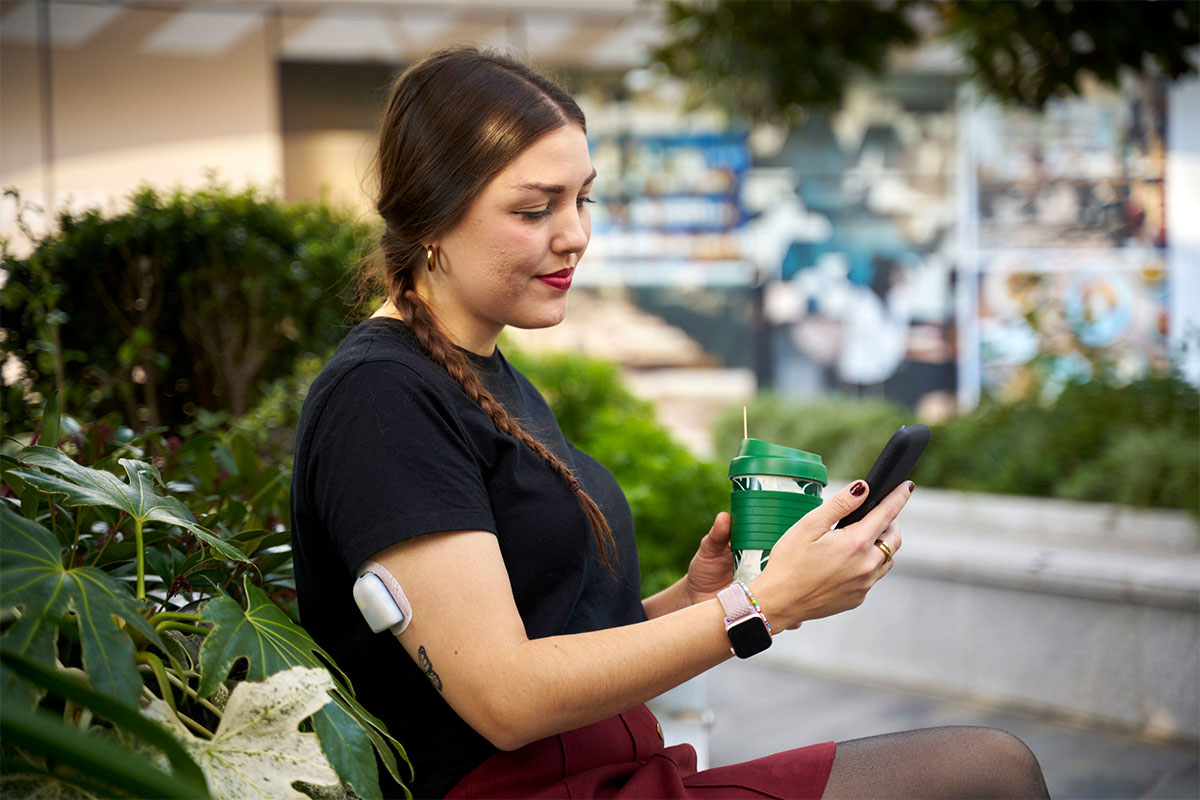
Gestión simplificada de los datos de diabetes y visibilidad de las tendencias, gracias a Omnipod Discover™.
¿Necesita más información? Obtenga la información que necesita para ayudar a sus pacientes
Póngase en contacto con su responsable de zona de Insulet para obtener información especializada sobre el producto, orientación práctica y conversaciones relevantes para ayudar a sus pacientes con DM1.
** El Pod tiene una clasificación IP28 para un máximo de 7,6 metros (25 pies) durante un máximo de 60 minutos. El Controlador Omnipod 5 no es impermeable. Consulte en la guía del usuario del fabricante del sensor la clasificación relativa a la impermeabilidad del sensor.
§ Para usar el Modo Automatizado, se requiere un sensor compatible.
† Las punciones digitales son necesarias para tomar decisiones sobre el tratamiento de la diabetes si los síntomas o las expectativas no coinciden con las mediciones.
2. Sherr J. et al. Diabetes Care. 2022; 45:1907-1910. Single-arm multicenter clinical trial in 80 pre-school children (aged 2-5.9 yrs) with T1D. Study included a 14-day standard therapy (ST) phase followed by a 3-month AID phase with Omnipod 5 system. Mean time in hyperglycaemic range (>10.0 mmol/L or >180mg/dL) as measured by CGM in children ST vs. 3-mo Omnipod 5: 39.4% vs. 29.5%, P<0.0001, respectively. Mean time in hypoglycaemic range (<3.9 mmol/L or <70 mg/dL) as measured by CGM in children ST vs. 3-mo Omnipod 5: 3.43% vs. 2.46%, P=0.0204. Mean time in range (3.9-10.0 mmol/L or 70-180mg/dL) in very young children (2 - 5.9 yrs) as measured by CGM: ST = 57.2%, 3-mo Omnipod 5 = 68.1%, P<0.0001. Mean HbA1c: ST vs. Omnipod 5 use: 7.4% vs 6.9% or 57 mmol/mol vs 53 mmol/mol, P<0.05.
3. Retrospective RWE data on file. 2025. Results shown for users with optimized settings including sufficient CGM data (≥75% of days with ≥220 readings), ≥90% time in Automated Mode, ≥5 bolus/day and an average Target Glucose of 110-115 mg/dL (6.1-6.4 mmol/L). Optimized settings: ISF x TDI ≤1500, I:C Ratio x TDI ≤350. RF-062025-00014.
4. Study in 112 people with T1D aged 6 – 13.9 years involving 2 weeks standard diabetes therapy followed by 3 months Omnipod 5 use in Automated Mode. Average time with high blood glucose (from CGM): standard therapy = 45.3%, 3-month Omnipod 5 = 30.2%. Brown S. et al. Diabetes Care (2021).
5. Brown S. et al. Diabetes Care (2021) Study in 128 people with T1D aged 14 - 70 years involving 2 weeks standard diabetes therapy followed by 3 months Omnipod 5 use in Automated Mode. Average time with high blood glucose (from CGM): standard therapy = 32.4%, 3-month Omnipod 5 = 24.7%. Study funded by Insulet.
6. Forlenza G, et al. Diabetes Technol Ther. 2024. 26(8):514-525. Retrospective analysis of real-world data from 69,902 individuals with type 1 diabetes using Omnipod 5 had a median time below range (<3.9 mmol/L or <70 mg/dL) of 0.97%. Omnipod 5 results based on users with ≥90 days CGM data, ≥75% of days with ≥220 readings available.
7. Hood KK et al. Diabetes Obes Metab. 2024. Study of 81 children aged 6-11.9 with type 1 diabetes using standard therapy (ST) for 2 weeks followed by 3-months of the Omnipod 5 System. Mean caregiver self-reported Hypoglycemia Confidence Scale score ST vs Omnipod 5: 3.34 vs 3.59, p-value <0.0001, respectively. During the Omnipod 5 pivotal trial, parents of children aged 6-11.9 years (N=82) experienced an improvement in emotional distress levels and mental well-being survey scores after 3 months of Omnipod 5 use compared to standard therapy: mean P-PAID-C score = 40.7 vs. 47.4; mean WHO-5 score = 72.9 vs. 67.5, respectively. During the Omnipod 5 pivotal trial, adults aged 18-70 (N=115) experienced an improved diabetes distress survey score after 3 months of AID use: mean: 1.48 vs. 1.64 (P < 0.001). During the Omnipod 5 pivotal trial, parents of children aged 6-11.9 years (N=82) experienced an improvement in emotional distress levels and mental well-being survey scores after 3 months of Omnipod 5 use compared to standard therapy: mean P-PAID-C score = 40.7 vs. 47.4; mean WHO-5 score = 72.9 vs. 67.5, respectively. During the Omnipod 5 pivotal trial, parents of children 6-11.9 years (N=82) experienced an improvement in sleep quality survey score after 3 months of Omnipod 5 use compared to standard therapy: mean PSQI Overall Sleep Quality Subscore = 0.70 vs 1.12, respectively.
8. Polonsky WH et al. Diabetes Res Clin Pract 2022;190:109998. Study of 115 adults aged 18-70 years with type 1 diabetes using standard therapy (ST) for 2 weeks followed by 3-months of the Omnipod 5 System. Mean self-reported Hypoglycemia Confidence Scale score ST vs Omnipod 5: 3.52 vs 3.65, p-value = 0.0002, respectively. Adults aged 18-70 (N=115) experienced reduction in eating distress score in T1-DDS survey after 3 months of Omnipod 5 use vs baseline: 1.73 vs. 1.97, (P=0.0003), respectively.
9. Wilmot E, et al. Lancet (2026). A 13-week randomized, parallel-group clinical trial conducted among 188 participants (age 4-70) [51% HbA1c≥ 8% (64 mmol/mol)] with type 1 diabetes in France, Belgium, and the U.K., comparing the safety and effectiveness of the Omnipod 5 System versus multiple daily injections with CGM. Time in range (70-180 mg/dL or 3.9-10mmol/L) with OP5 improved by 22% (43% MDI vs. 65% OP5, p<0.001). Time below range (<70 mg/dL or <3.9mmol/L) with OP5 was non-inferior to MDI (2.27% MDI vs. 2.56%, p=0.2). Data on file. 2025. RF-042025-00015.