Omnipod® 5

Omnipod 5 automatically adjusts your insulin delivery every 5 minutes without tubes or manual guesswork. It's the first and only tubeless Automated Insulin Delivery System (AID) system that integrates with leading sensor brands, for people living with type 1 diabetes, aged 2 and above.
How the Omnipod 5 System works
Omnipod 5 helps automate insulin delivery day and night1,2 with just 3 simple parts working in a continuous loop, the Pod, a compatible sensor, and a Controller.
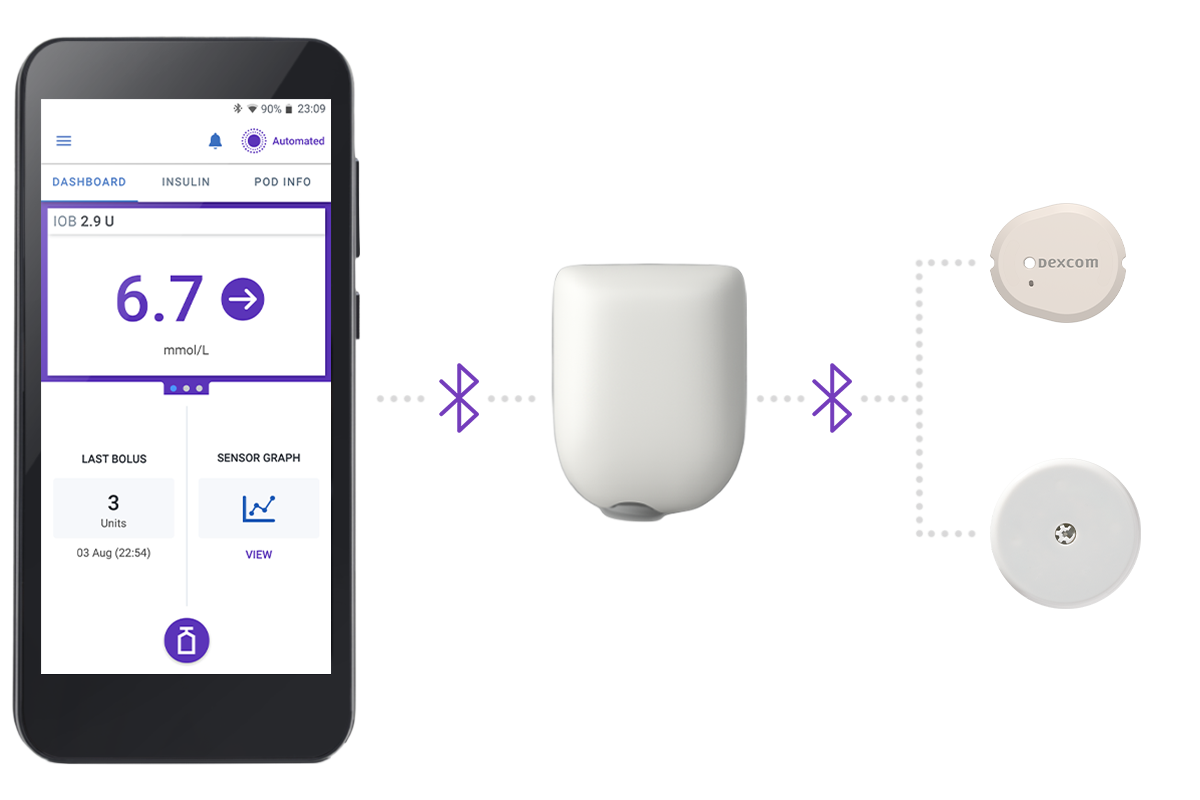
Omnipod 5 is compatible with Dexcom G7 CGM System and FreeStyle Libre 2 Plus Sensor.
Dexcom is in the process of discontinuing Dexcom G6 to focus on delivering the next generation of sensor. Omnipod 5 will continue to support integration with Dexcom G6 for as long as this sensor remains available. For more information, please visit www.dexcom.com or contact Dexcom support.
Meet the Omnipod 5 System

Pod
A tubeless, wearable, waterproof Pod** worn on-body that can automatically§ adjust insulin delivery for up to 3 days (72 hours).
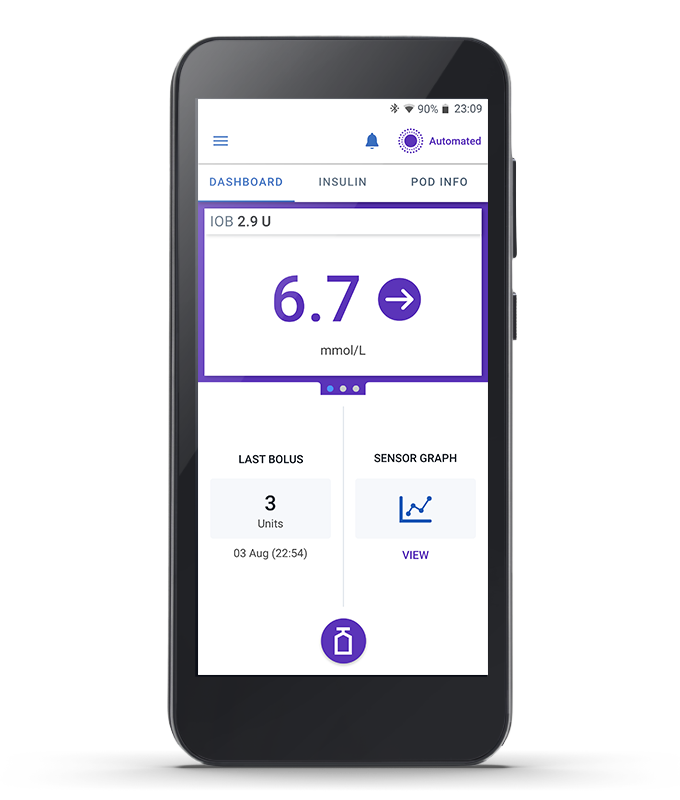
Omnipod 5 Controller
Controls and monitors the Pod via Bluetooth®.
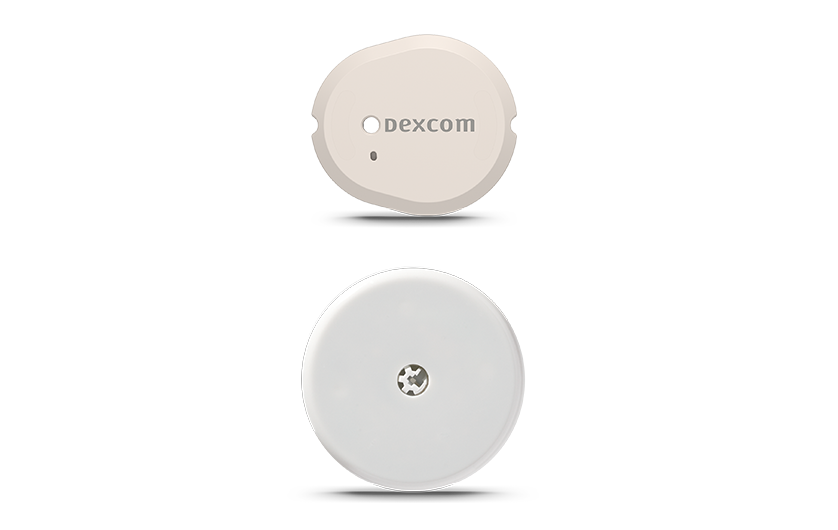
Sensor*
Continuously sends glucose values to the Pod, so your patients can get real-time data without the finger pricks†.
Our Omnipod 5 algorithm is designed to personalise insulin delivery
The Omnipod® 5 algorithm automatically adjusts to your patients’ personal needs by increasing, decreasing, or pausing insulin delivery every five minutes – which may help protect against highs and lows.1,2

Predicts
Glucose 60 minutes into the future

Adjusts
Glucose 60 minutes into the future

Delivers
Insulin doses every 5 minutes (as needed)
Which patients may benefit from Omnipod® 5
- Patients who find diabetes management complex
- Patients struggling to maintain glycaemic control
- Patients who feel burdened by diabetes management
Evidence: clinical and quality of life outcomes with Omnipod 5
Improved clinical outcomes
Omnipod 5 improved glycaemic control in adults, adolescents and children with T1D in pivotal studies. 1,2
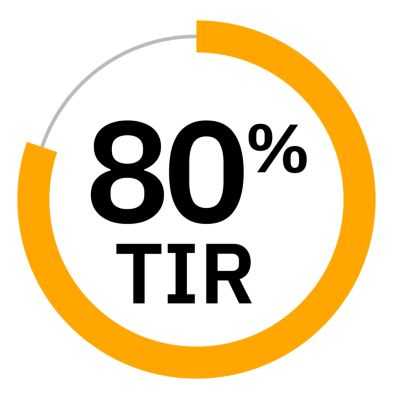
80% time in range (TIR)
Over 80% Time in Range with optimised settings3
3 Retrospective RWE data on file. 2025. Results shown for users with optimized settings including sufficient CGM data (≥75% of days with≥220 readings), ≥90% time in Automated Mode, ≥5 bolus/day and an average Target Glucose of 110-115 mg/dL (6.1-6.4 mmol/L). Optimized settings: ISF x TDI ≤1500, I:C Ratio x TDI ≤350. RF-062025-00014.

HbA1c was significantly reduced
in very young children (2.0–5.9 years), children (6–13.9 years), adults and adolescents (14–70 years) by 0.5%, 0.7% and 0.4% (6.0, 7.8 and 4.2 mmol/mol) respectively1,2
HbA1c = glycated hemoglobin

Reduced time in hyperglycaemia
reduced time in hyperglycaemia by 33% in children4 and 24% in adults and adolescents5

Low time in hypoglycaemia
In a real-world setting, Omnipod 5 users spent 1% time in hypoglycaemia6
Improved patients’ quality of life in clinical studies7,8
Children
Parents of children using Omnipod 5 reported improvements in quality of life, sleep quality, confidence avoiding hypoglycemia, and mental well-being7,8
Adults
Adults using Omnipod 5 reported improvements in diabetes distress, stress eating and confidence avoiding hypoglycemia7,8
Start supporting eligible patients with Omnipod® 5
Omnipod® 5 is designed to deliver meaningful improvements in Time in Range and reductions in hypoglycaemia across age groups. Enable eligible patients to access a tubeless AID system that supports more predictable daily glucose patterns.
Additional features designed for daily life
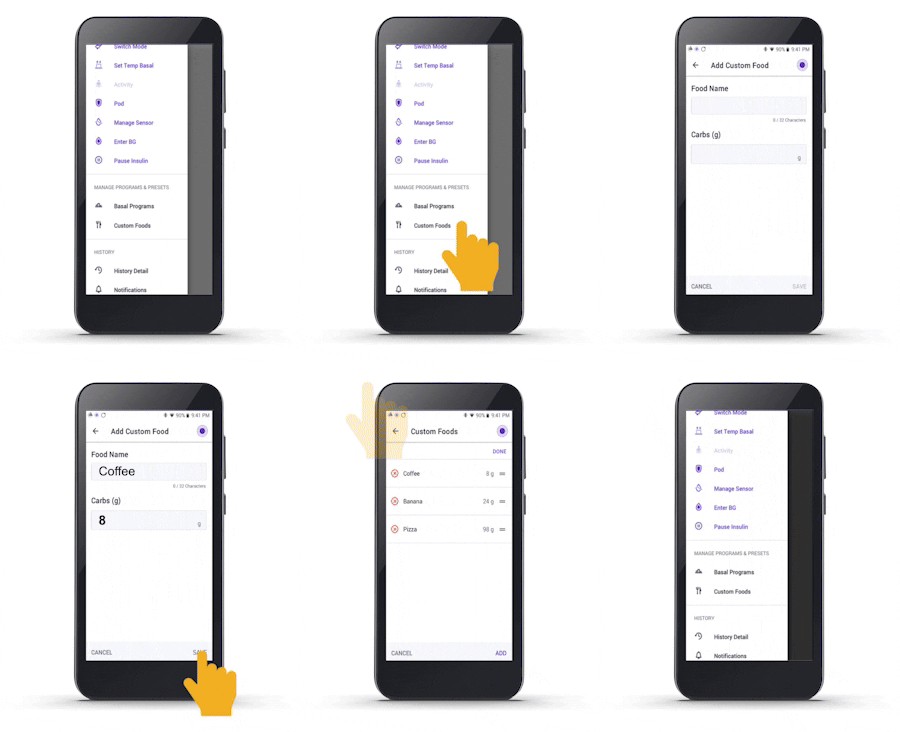
Custom Foods
Enables patients to create up to 50 personalised carb entries used by the SmartBolus Calculator, supporting more consistent and efficient carbohydrate recording across repeat meals.
Activity Feature
When enabled, our Activity feature reduces insulin delivery when glucose typically goes low, like when exercising.
Ideal for:
- exercise
- sleepovers
- sick days
- times when your patients simply want gentler insulin delivery
Why Omnipod® 5 for your patients

Improved Time in Range (TIR) by an average of 22% vs MDI for adults and children.9

Tubeless and waterproof Pod** to simplify daily living with diabetes.
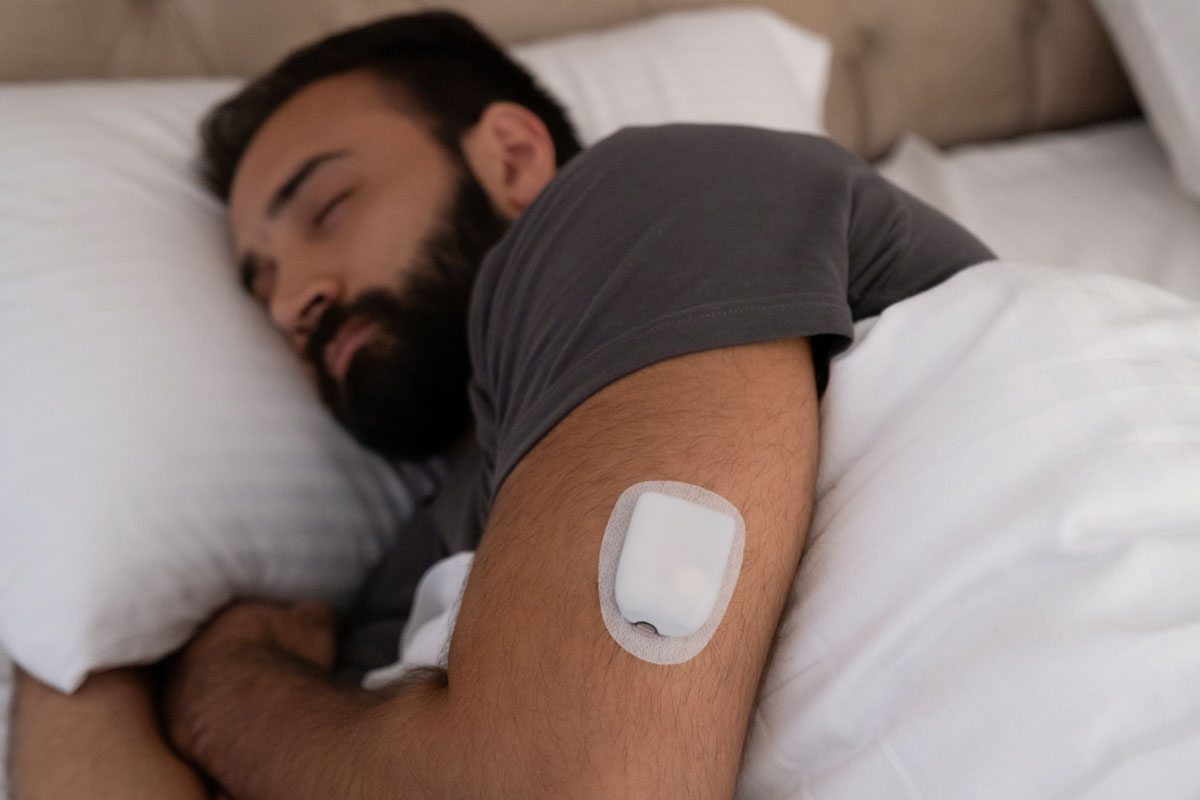
Automated insulin delivery when integrated with compatible CGM sensors.
Insights from real patients
When I first put Omnipod on, I felt free. There were no wires coming off me.
Lochlan
Podder® since 2023
You can almost forget about having type one wearing this pump...it's given me the first idea of what it's like to live with a working pancreas.
Pete Davies
Podder® since 2024
Omnipod has helped me gain confidence in so many areas of my life, it makes me feel like I have something in my corner helping me everyday.
Temi
Podder® since 2021
Prescribing guidance for Omnipod® 5
When you are ready to initiate treatment for appropriate candidates, we provide clear prescribing guidance to help you get started.
**The Pod has an IP28 rating for up to 7.6 metres (25 feet) for up to 60 minutes. The Omnipod 5 Controller is not waterproof. Please consult Sensor manufacturer user guide for Sensor waterproof rating.
§ Automated Mode requires compatible sensor
†Fingerpricks required for diabetes treatment decisions if symptoms or expectations do not match readings.
2. Sherr J. et al. Diabetes Care. 2022; 45:1907-1910. Single-arm multicenter clinical trial in 80 pre-school children (aged 2-5.9 yrs) with T1D. Study included a 14-day standard therapy (ST) phase followed by a 3-month AID phase with Omnipod 5 system. Mean time in hyperglycaemic range (>10.0 mmol/L or >180mg/dL) as measured by CGM in children ST vs. 3-mo Omnipod 5: 39.4% vs. 29.5%, P<0.0001, respectively. Mean time in hypoglycaemic range (<3.9 mmol/L or <70 mg/dL) as measured by CGM in children ST vs. 3-mo Omnipod 5: 3.43% vs. 2.46%, P=0.0204. Mean time in range (3.9-10.0 mmol/L or 70-180mg/dL) in very young children (2 - 5.9 yrs) as measured by CGM: ST = 57.2%, 3-mo Omnipod 5 = 68.1%, P<0.0001. Mean HbA1c: ST vs. Omnipod 5 use: 7.4% vs 6.9% or 57 mmol/mol vs 53 mmol/mol, P<0.05.
3. Retrospective RWE data on file. 2025. Results shown for users with optimized settings including sufficient CGM data (≥75% of days with ≥220 readings), ≥90% time in Automated Mode, ≥5 bolus/day and an average Target Glucose of 110-115 mg/dL (6.1-6.4 mmol/L). Optimized settings: ISF x TDI ≤1500, I:C Ratio x TDI ≤350. RF-062025-00014.
4. Study in 112 people with T1D aged 6 – 13.9 years involving 2 weeks standard diabetes therapy followed by 3 months Omnipod 5 use in Automated Mode. Average time with high blood glucose (from CGM): standard therapy = 45.3%, 3-month Omnipod 5 = 30.2%. Brown S. et al. Diabetes Care (2021).
5. Brown S. et al. Diabetes Care (2021) Study in 128 people with T1D aged 14 - 70 years involving 2 weeks standard diabetes therapy followed by 3 months Omnipod 5 use in Automated Mode. Average time with high blood glucose (from CGM): standard therapy = 32.4%, 3-month Omnipod 5 = 24.7%. Study funded by Insulet.
6. Forlenza G, et al. Diabetes Technol Ther. 2024. 26(8):514-525. Retrospective analysis of real-world data from 69,902 individuals with type 1 diabetes using Omnipod 5 had a median time below range (<3.9 mmol/L or <70 mg/dL) of 0.97%. Omnipod 5 results based on users with ≥90 days CGM data, ≥75% of days with ≥220 readings available.
7. Hood KK et al. Diabetes Obes Metab. 2024. Study of 81 children aged 6-11.9 with type 1 diabetes using standard therapy (ST) for 2 weeks followed by 3-months of the Omnipod 5 System. Mean caregiver self-reported Hypoglycemia Confidence Scale score ST vs Omnipod 5: 3.34 vs 3.59, p-value <0.0001, respectively. During the Omnipod 5 pivotal trial, parents of children aged 6-11.9 years (N=82) experienced an improvement in emotional distress levels and mental well-being survey scores after 3 months of Omnipod 5 use compared to standard therapy: mean P-PAID-C score = 40.7 vs. 47.4; mean WHO-5 score = 72.9 vs. 67.5, respectively. During the Omnipod 5 pivotal trial, adults aged 18-70 (N=115) experienced an improved diabetes distress survey score after 3 months of AID use: mean: 1.48 vs. 1.64 (P < 0.001). During the Omnipod 5 pivotal trial, parents of children aged 6-11.9 years (N=82) experienced an improvement in emotional distress levels and mental well-being survey scores after 3 months of Omnipod 5 use compared to standard therapy: mean P-PAID-C score = 40.7 vs. 47.4; mean WHO-5 score = 72.9 vs. 67.5, respectively. During the Omnipod 5 pivotal trial, parents of children 6-11.9 years (N=82) experienced an improvement in sleep quality survey score after 3 months of Omnipod 5 use compared to standard therapy: mean PSQI Overall Sleep Quality Subscore = 0.70 vs 1.12, respectively.
8. Polonsky WH et al. Diabetes Res Clin Pract 2022;190:109998. Study of 115 adults aged 18-70 years with type 1 diabetes using standard therapy (ST) for 2 weeks followed by 3-months of the Omnipod 5 System. Mean self-reported Hypoglycemia Confidence Scale score ST vs Omnipod 5: 3.52 vs 3.65, p-value = 0.0002, respectively. Adults aged 18-70 (N=115) experienced reduction in eating distress score in T1-DDS survey after 3 months of Omnipod 5 use vs baseline: 1.73 vs. 1.97, (P=0.0003), respectively.
9. Wilmot E, et al. Lancet (2026). A 13-week randomized, parallel-group clinical trial conducted among 188 participants (age 4-70) [51% HbA1c≥ 8% (64 mmol/mol)] with type 1 diabetes in France, Belgium, and the U.K., comparing the safety and effectiveness of the Omnipod 5 System versus multiple daily injections with CGM. Time in range (70-180 mg/dL or 3.9-10mmol/L) with OP5 improved by 22% (43% MDI vs. 65% OP5, p<0.001). Time below range (<70 mg/dL or <3.9mmol/L) with OP5 was non-inferior to MDI (2.27% MDI vs. 2.56%, p=0.2). Data on file. 2025. RF-042025-00015.