7 Best Practices for Omnipod® 5 Automated Insulin Delivery System in Diabetes Care and Management

The development and implementation of Automated Insulin Delivery (AID) systems have significantly advanced the management of type 1 diabetes. Among these systems, Omnipod 5 stands out for its tubeless design, customisable glucose targets, and SmartAdjustTM technology, which provides automated insulin delivery every five minutes.

This blog post draws from an expert discussion on best practices (link to full webinar below) to review the pivotal data from Omnipod 5 trials, real-world evidence, and best practices for using the Omnipod 5 System, particularly for healthcare professionals (HCPs) like yourself seeking to optimise diabetes management for patients.

1. Understanding the Key Features of the Omnipod 5 System

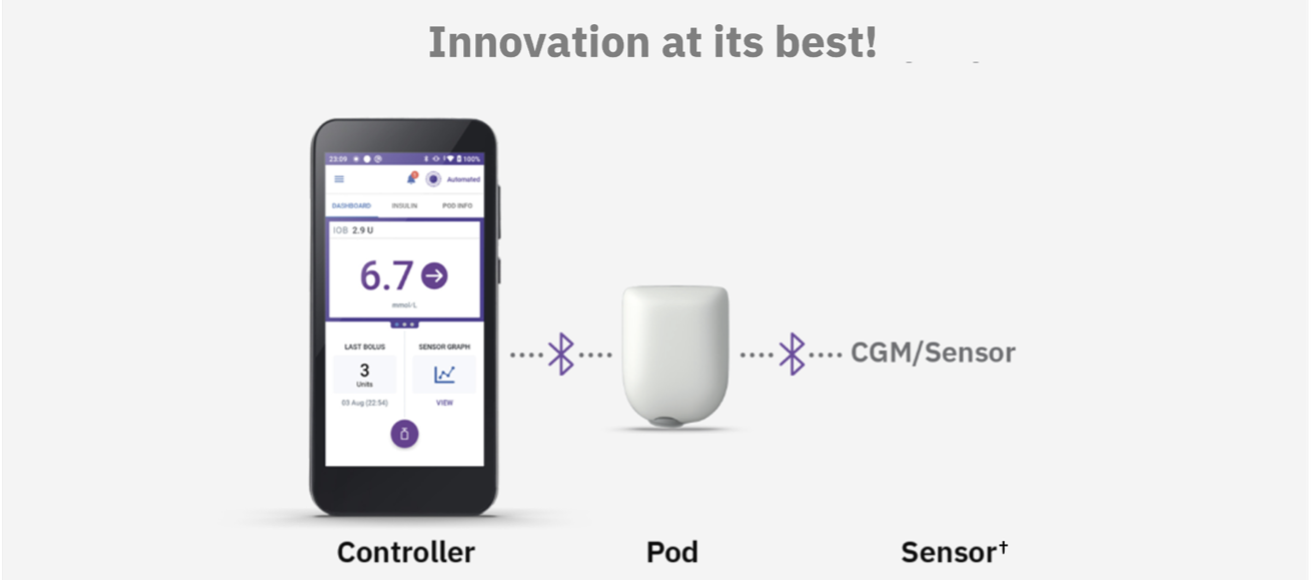
The Omnipod 5 is a tubeless AID system, designed to improve glycaemic control through continuous and automated insulin adjustments every 5 minutes.

The system consists of two main components:

  1. A Pod (tubeless and waterproof*)
  2. The Omnipod 5 App on the dedicated Controller

And it is compatible with leading Sensors.†

Unlike traditional insulin pumps, Omnipod 5 does not require tubing, making it a more discreet option for your patients. Read more about the key features.

Pod and Sensors shown without necessary adhesive Pod and Sensors shown without necessary adhesive
Screen image is an example for illustrative purposes only. Pod and Sensors shown without necessary adhesive. Sensors sold separately and require a separate prescription.

2. Understanding the Efficacy and Safety Data From the Omnipod 5 Pivotal Trials

The pivotal trials for Omnipod 5 evaluated the efficacy and safety of the system in a cohort of 320 participants aged 2 to 70 years. Across all age groups, the Omnipod 5 system demonstrated significant improvements in HbA1c and Time in Range (TIR) with minimal hypoglycaemia.1,2

Notably, Omnipod 5 patient group aged 2-5.9 years experienced a mean HbA1c reduction of 0.55% compared to standard therapy, while those aged 6-13 and 14-70 years saw reductions of 0.71% and 0.38%, respectively.1,2

In a 3-month clinical study, 3 cases of severe hypoglycaemia and 1 case of diabetic ketoacidosis (DKA) were reported in participants aged 6-70 years during Omnipod 5 System use. These cases were not related to automated insulin delivery malfunction.

Access a detailed overview of the trial results

3. Understanding the Real-World Evidence of Performance in Daily Practice

While clinical trials provide critical insights into the efficacy of new therapies, real-world evidence offers a more comprehensive picture of how these systems function in everyday use.

In a retrospective analysis of real-world data, 6,901 Omnipod 5 users who utilised the 110 mg/dL or 6.1 mmol/L glucose target had 80% TIR or greater.*

*Forlenza G, et al. Diabetes Technol Ther (2024). Retrospective analysis of real-world data of the 37,640 Omnipod 5 users with type 1 diabetes who utilised the 110 mg/dl or 6.1 mmol/L glucose target 6,901 (18.3%) had 80% Time in Range or greater. Omnipod 5 results based on users with ≥90 days CGM data, ≥75% of days with ≥220 readings available.

Learn more about the real-world evidence for Omnipod 5.

4. Customising Glucose Targets for Your Patients

One of the key features of Omnipod 5 is the ability to set customisable glucose targets ranging from 110 to 150 mg/dL (6.1 to 8.3 mmol/L), which can be adjusted based on the patient’s daily routine.

5. Leveraging the Activity feature during Physical Activities

The Activity feature is another valuable tool for your patients who experience fluctuations in insulin needs during exercise or other physical activities. When enabled, the Activity feature raises the glucose target to 150 mg/dL (8.3 mmol/L) and reduces automated insulin delivery. You should educate patients on when and how to use this feature, particularly in preparation for exercise, as starting the Activity feature 60 to 120 minutes prior to activity to reduce automated insulin delivery during exercise.

6. Ensuring Proper Bolusing at Mealtimes

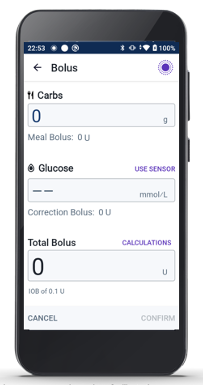
While Omnipod 5 automates much of the insulin delivery process, patient engagement remains crucial, especially for bolusing at mealtimes. The SmartBolus Calculator, which considers sensor trends, carbohydrate intake, and insulin on board, helps patients determine the appropriate bolus dose. This is an important feature in improving your patient’s glycaemic control.

The SmartBolus Calculator The SmartBolus Calculator
All Screen images are examples and are for illustrative purposes only.

7. Properly Training and Onboarding Patients

The transition to AID systems like Omnipod 5 can be daunting for some of your patients, which is why structured training is essential. How To videos are available on the website, designed to help train users with the Omnipod 5 system, boosting their confidence and ensuring smoother onboarding.

Looking to apply these strategies in your practice? 

Use these Omnipod 5 best practices to simplify diabetes care for your patients now. Watch the full webinar where HCPs such as yourself share their real-world experiences with Omnipod 5.

The Omnipod 5 Automated Insulin Delivery System is a single hormone insulin delivery system intended to deliver U-100 insulin subcutaneously for the management of type 1 diabetes in persons aged 2 and older requiring insulin. The Omnipod 5 System is intended for single patient use. The Omnipod 5 System is indicated for use with NovoLog®/NovoRapid®, Humalog®, Trurapi®/Truvelog®/Insulin aspart Sanofi®, Kirsty®, and Admelog/Insulin lispro Sanofi U-100 insulin.

Refer to the Omnipod 5 Automated Insulin Delivery System User Guide and www.omnipod.com/safety for complete safety information including indications, contraindications, warnings, cautions, and instructions.

*The Pod has an IP28 rating for up to 7.6 metres (25 feet) for up to 60 minutes. The Omnipod 5 Controller is not waterproof. Please consult sensor manufacturer user guide for sensor waterproof rating.

Sensors requires a separate prescription and compatible sensors vary by country. Sensor is sold separately.

1. Brown S. et al. Diabetes Care. 2021;44:1630-1640. Prospective pivotal trial in 240 participants with T1D aged 6 - 70 yrs. Study included a 14-day standard therapy (ST) phase followed by a 3-month Omnipod 5 hybrid closed-loop (HCL) phase. Mean time in range (3.9-10.0 mmol/L or 70-180mg/dL) in adults/adolescents as measured by CGM: ST = 64.7%, 3-mo Omnipod 5 = 73.9%, P<0.0001. Mean time in range (3.9-10.0 mmol/L or 70-180mg/dL) in children as measured by CGM: ST = 52.5%, 3-mo Omnipod 5 = 68.0%, P<0.0001. Mean HbA1c: ST vs. Omnipod 5 use in adults/adolescents (14-70 yrs) and children (6-13.9 yrs), respectively (7.16% vs 6.78% or 55 mmol/mol vs. 51 mmol/mol, P<0.0001; 7.67% vs 6.99% or 60mmol/mol vs 53 mmol/mol), P<0.0001). Mean time in hypoglycaemic range in adults/adolescents (<3.9 mmol/L or <70mg/dL as measured by CGM) as measured by CGM: ST = 1.89%, 3-mo Omnipod 5 = 1.32%, P<0.0001. Mean time in hypoglycaemic range in children (<3.9 mmol/L or <70mg/dL as measured by CGM): ST = 2.21%, 3-mo Omnipod 5 = 1.78%, P<0.0456.

2. Sherr J. et al. Diabetes Care. 2022; 45:1907-1910. Single-arm multicenter clinical trial in 80 pre-school children (aged 2-5.9 yrs) with T1D. Study included a 14-daystandard therapy (ST) phase followed by a 3-month AID phase with Omnipod 5system. Mean HbA1c as measured in very young children, ST vs. Omnipod 5 use:7.4% vs 6.9% or 57 mmol/ml vs. 53 mmol/mol; (P<0.0001). Mean time in range (3.9-10.0 mmol/L or 70-180mg/dL) as measured by CGM in children ST vs. 3-mo Omnipod 5: 57.2% vs 68.1%, P<0.0001. Mean time in hypoglycaemic range (<3.9mmol/L or <70 mg/dL as measured by CGM) ST = 3.43% vs Omnipod 5: 2.46%, P<0.0001.