About Omnipod® Products
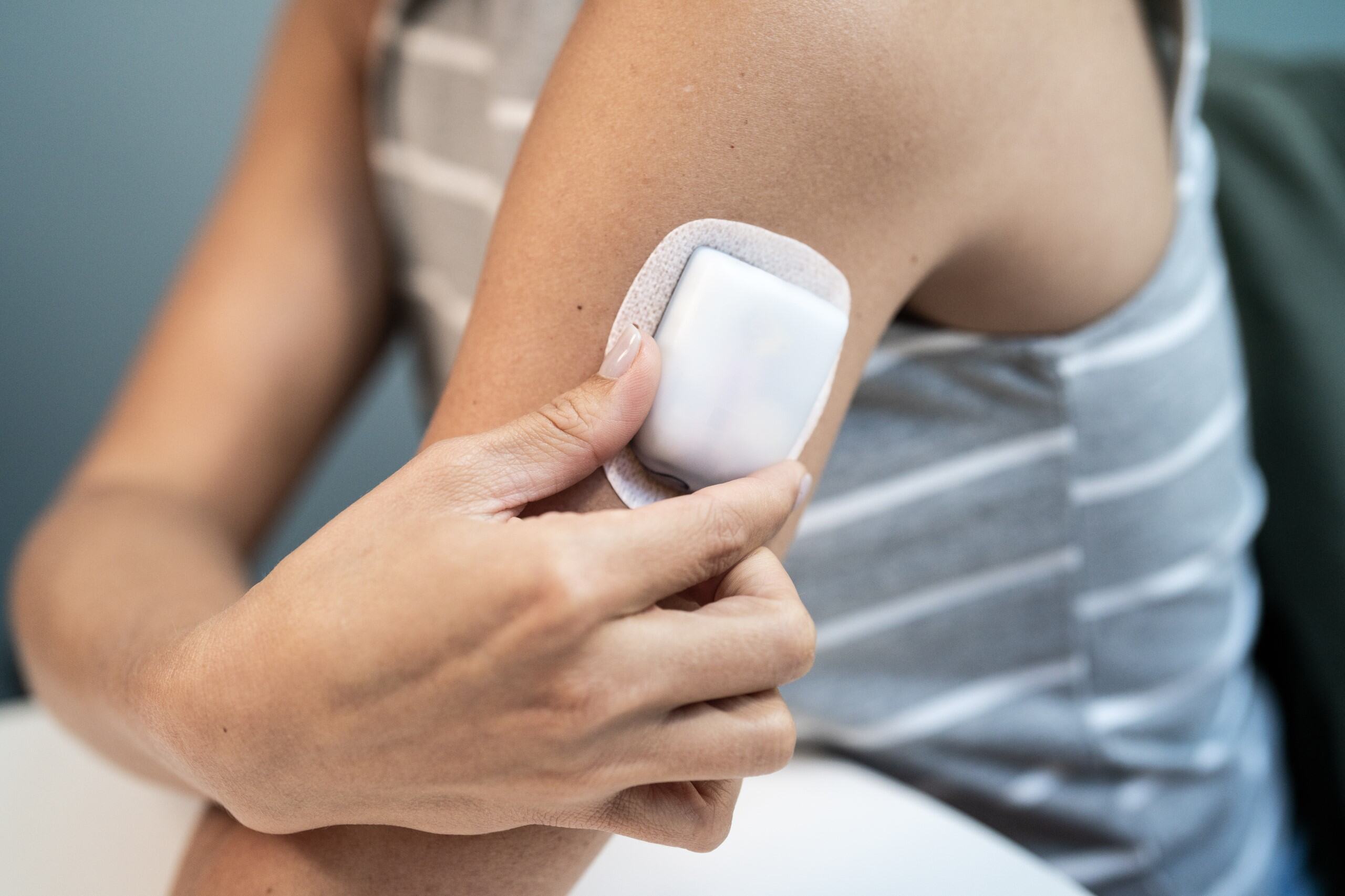
Previously unmet needs
Many people living with T1D lose healthy years when they don’t have the right tools.1
Glycaemic goals vs. the reality for patients on MDI
≤7% HbA1c
An HbA1c of <7% is an appropriate glycaemic goal for most people living with diabetes 2
vs.
9.2% HbA1c
Average HbA1c for patients with T1D using MDI 3
57% of people with diabetes in a US survey reported skipping insulin injections they knew they should take.4
Australian guidelines recommend AID systems
Australian clinical guidelines and national expert consensus increasingly recommend automated insulin delivery (AID) systems as an effective option for improving glycaemic outcomes and reducing the daily burden of managing type 1 diabetes.5,6
Australian consensus identifies AID as standard of care
The national AID Consensus Statement recognises AID as the standard of care for Australians with T1D who wish to use these technologies.5
It highlights improvements in time in range (TIR), hypoglycaemia reduction, and the overall management burden.5
“Australian and international guidelines now recommend AID systems as the standard of care for people with T1D who wish to use them.”
— AID Access Summit Consensus Statement, Diabetes Australia5
Clinical guidelines recommend AID systems over non-AID systems
Australian Evidence-Based Clinical Guidelines recommend automated continuous subcutaneous insulin infusion (AutoCSII) over non-automated pump therapy to optimise glycaemic outcomes for people with T1D.6
The guideline cites improvements in HbA1c and TIR with hybrid closed-loop systems.6
“Use of AutoCSII results in further improvements to glycaemia compared to non-automated CSII.”
— Australian Evidence-Based Clinical Guidelines for Diabetes6
Australian evidence-based clinical guidelines are advocating for AID
ADA and EASD 2021 report2
“Hybrid closed loop systems are the most effective means of maintaining glucose in the normal range in people with type 1 diabetes.”
Endocrine Society’s AID consensus report7
Strongly consider recommending AID systems to all people with T1D to improve glycaemic control:
- School-aged children (7-14 years)
- Adolescents/adults
Why AID is a game changer
Improved glycaemic results
Compared to non-AID pump and sensor, AID systems significantly increased and significantly reduced time-below-range.8
Simplified T1D management
AID systems, compared to MDI, make it easier to manage diabetes so more people can reach their glycaemic goals.9
Patient confidence
Adult users and parents of children felt more confident in staying safe from the risk of hypoglycaemia compared to prior therapy.10,11
Improved QoL
Parents of children reported improved quality of life and mental well‑being compared to prior therapy.10
Watch leading clinicians discuss AID system features and benefits
Omnipod 5 simplifies AID technology for all patient types
A closer look at Omnipod 5’s indications, features, and components.
Who is Omnipod 5 for?
The Omnipod 5 AID System is the first wearable, tubeless, and hybrid closed loop system for people with T1D aged 2 years and older requiring insulin.
The Omnipod 5 is a single hormone insulin delivery system intended to deliver U-100 insulin subcutaneously for the management of type 1 diabetes in persons aged 2 and older requiring insulin. The Omnipod 5 System is indicated for use with NovoLog®/NovoRapid®, Humalog® / Liprolog®, Admelog® / Insulin lispro Sanofi®, Trurapi® / Insulin aspart Sanofi®, and Kirsty® U-100 insulin.
Refer to the Omnipod 5 Automated Insulin Delivery System User Guide for complete safety information including indications, contraindications, warnings, cautions, and instructions.
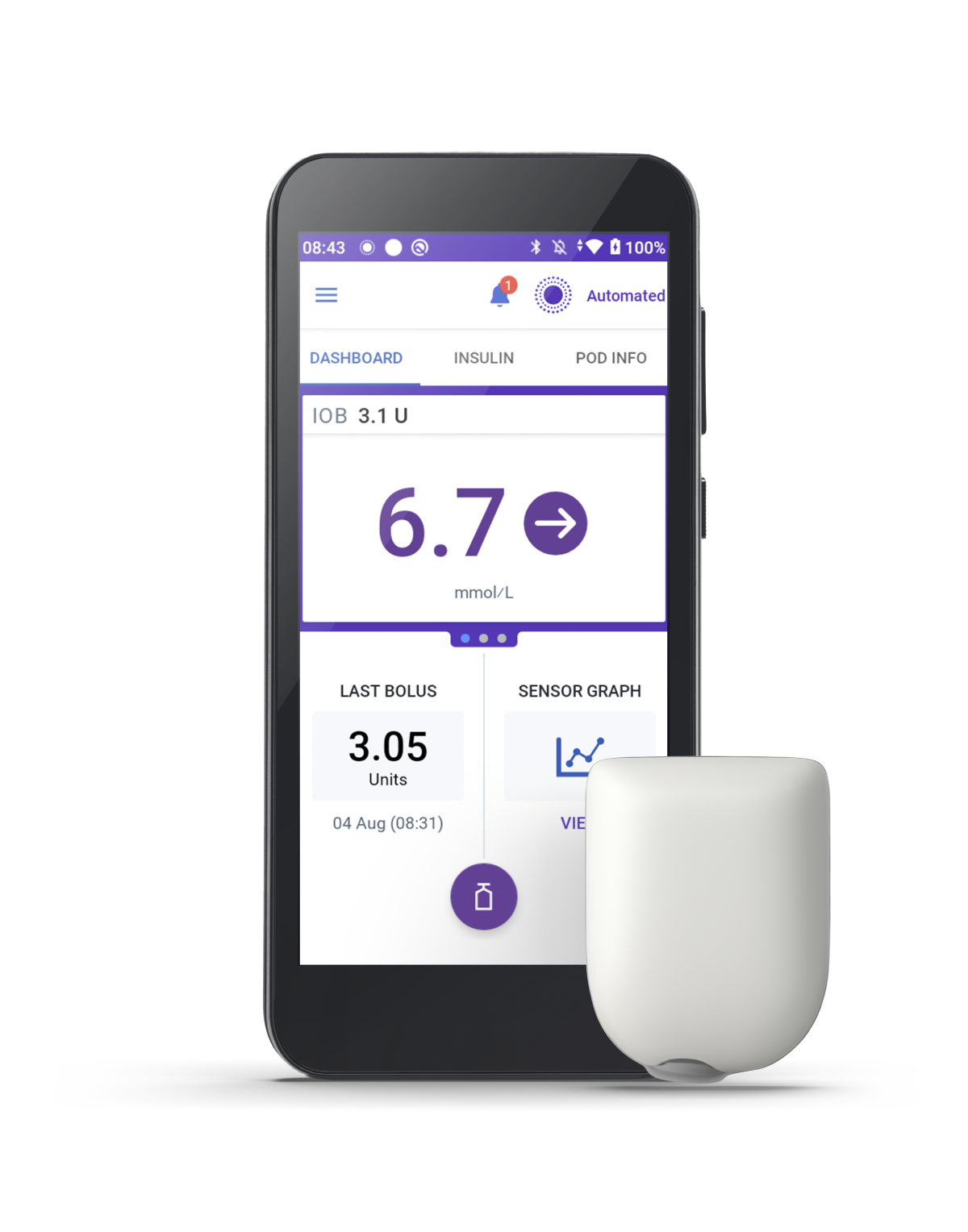
Key benefits of Omnipod 5

Proven to improve clinical outcomes including TIR versus MDI for both adults and children12

Integrates seamlessly with the leading sensor brands

A tubeless and waterproof* AID system to further simplify life with diabetes
Omnipod 5 works with 3 simple parts
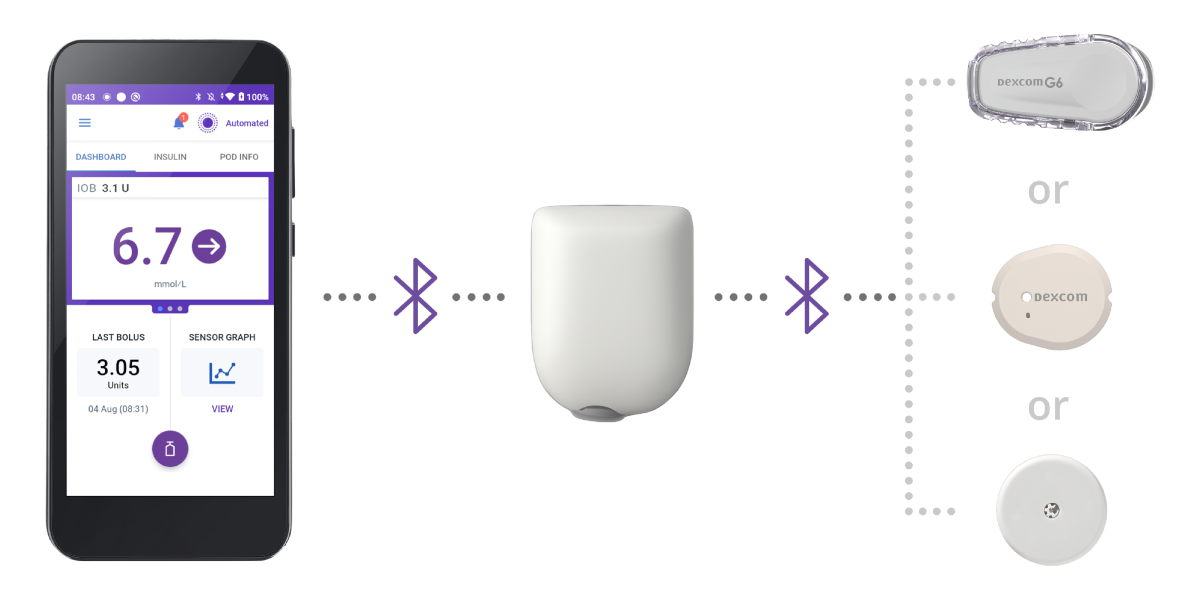
Dexcom is in the process of discontinuing Dexcom G6 to focus on delivering the next generation of sensor. Omnipod 5 will continue to support integration with Dexcom G6 for as long as this sensor remains available. For more information, please visit www.dexcom.com or contact Dexcom support.
Screen image is an example for illustrative purposes only. Pod and sensors shown without necessary adhesive. Sensors sold separately and require a separate prescription. Refer to the sensor manufacturer user guide.
Controller
The Omnipod 5 Controller allows you to select a basal profile, target glucose and bolus settings, activate and deactivate the Pod, connect with a compatible glucose Sensor, and select insulin delivery mode.
Pod
Tubeless, wearable, and waterproof*, the Pod sits right on your patient’s body and automatically† adjusts insulin delivery every 5 minutes for up to 3 days (72 hours).
Sensor
Sends glucose values to the Pod every 5 minutes, so your patients can get real-time data without fingerpricks.‡
Learn more about the Omnipod 5 system
Omnipod 5’s SmartAdjust™ algorithm automatically manages insulin delivery
SmartAdjust™ Technology automatically increases, decreases, or pauses basal insulin delivery every five minutes to fit the patient’s needs correcting highs and protecting from lows.13,14

†Automated Mode requires compatible CGM Sensor.
‡Fingerpricks required for diabetes treatment decisions if symptoms or expectations do not match readings.
Omnipod 5 is proven to improve clinical outcomes
Review the latest clinical studies, real-world data, and patient-HCP experiences demonstrating Omnipod 5’s effectiveness and safety.
Clinical studies
Omnipod 5 improves glycaemic control
Key Findings13,14,*,†:
- Significantly improved HbA1c vs. baseline
- Significantly improved TIR vs. standard therapy therapy
Omnipod 5 improves quality of life
Key Findings10,11,‡:
- Reduced diabetes distress
- Increased confidence in staying safe from the risk of hypoglycaemia
- 38% improvement in caregiver sleep quality
*Omnipod 5 significantly improved HbA1c and TIR in users from 2 years of age in pivotal trials. Omnipod 5 reduced HbA1c by 0.5% or 6 mmol/mol in very young children and 53% of children and 66% of adults/adolescents had an HbA1c of less than 7% or 53 mmol/mol. Required a Dexcom G6 sensor. Results are compared to baseline (MDI or continuous subcutaneous insulin infusion (CSII), HbA1c only) or standard therapy (MDI or CSII, other outcomes).13,14
†The Omnipod 5 pivotal trials were multicentre, single-arm outpatient studies in the US. A total of 321 participants were enrolled: very young children aged 2–5.9 years, diagnosed with T1D for any duration, and participants aged 6–70 years, diagnosed with T1D for ≥6 months. Additionally, patients were included if they had HbA1c <10.0% or 86 mmol/mol at screening visit. Prior insulin therapy with either CSII or MDI was permitted, with no minimum requirement for total daily dose of insulin. There were no restrictions on eating or exercise throughout the study period.13,14
‡Adults reported reduced diabetes distress compared to prior therapy—mean diabetes distress scale (T1-DDS) score of 1.48 vs. 1.64. Adults reported lower stress when eating compared to prior therapy—eating distress survey (T1-DDS Eating Distress Subscale) score of 1.74 vs. 1.97. Parents of children reported improved quality of life and mental well-being compared to prior therapy. Adult users and parents of children felt confident in staying safe from the risk of hypoglycaemia compared to prior therapy—mean hypoglycaemia confidence survey (HCS) score of 3.59 vs. 3.34 and 3.65 vs. 3.52, respectively. Parents of children reported a 38% improvement in sleep quality compared to prior therapy—mean PSQI Overall Sleep Quality Subscore of 0.70 vs. 1.13, (comparison is relative change).10,11
Omnipod 5 is changing real-world diabetes management
For real-world insights, listen to the Omnipod 5 podcast, Within Range: Demystifying Diabetes Tech
Learn more and optimise your approach to Omnipod 5 with practical tips from diabetes experts.
Hear directly from Omnipod 5 Podders
Lydia
Lea
Timothie
Consistent support for you and your practice
Insulet is commited to simplifying diabetes care, sustainability efforts, and providing you with the resources to best onboard and support your patients.
Insulet’s mission
Our mission is to improve the lives of people with diabetes and enable people with diabetes to enjoy simplicity, freedom, and healthier lives through innovative technology.
Training and Onboarding
Simulator App
Download the Simulator App for an interactive simulation and system overview of the Omnipod 5 AID System.
Expert-led webinar
Get expert insights on AID training, virtual education data, and how to streamline your clinic with Omnipod 5.
Book a meeting
Want to book product training or speak with your local Omnipod Specialist?
View pricing information and access the order form
Omnipod 5 Order Form
Learn how to get your patients started
Explore practical tools, training, and prescribing steps for Omnipod 5
References:
1. Type 1 Diabetes Index. https://www.t1dindex.org Accessed 1 Feb 2025.
2. Holt RIG, DeVries JH, Hess-Fischl A, et al. The management of type 1 diabetes in adults. A consensus report by the American Diabetes Association and the European Association for the Study of Diabetes (EASD). Diabetologia. 2021;64(12):2609-2652. doi:10.1007/s00125-021-05568-3
3. Gandhi K, Ebekozien O, Noor N, et al. Insulin Pump Utilization in 2017–2021 for More Than 22,000 Children and Adults With Type 1 Diabetes: A Multicenter Observational Study. Clin Diabetes. 2024;42(1):56-64. doi:10.2337/cd23-0055
4. Peyrot M, Rubin RR, Lauritzen T, et al. Resistance to insulin therapy among patients and providers: results of the Cross-National Diabetes Attitudes, Wishes and Needs (DAWN) study. Diabetes Care. 2010;33(2):240-245. doi:10.2337/dc09-0918
5. AID Access Summit Consensus Group. Consensus Statement on Automated Insulin Delivery for Type 1 Diabetes in Australia. July 2024.
6. Living Evidence for Diabetes Consortium. Australian Evidence-Based Clinical Guidelines for Diabetes 2020. Melbourne, Australia: Living Evidence for Diabetes Consortium; 2020.
7. Phillip M, Nimri R, Bergenstal RM, et al. Consensus recommendations for the use of automated insulin delivery technologies in clinical practice. Endocr Rev. 2023;44(2):254-280. doi:10.1210/endrev/bnac022
8. Renard E, Weinstock RS, Aleppo G, et al. Efficacy and Safety of a Tubeless AID System Compared With Pump Therapy With CGM in the Treatment of Type 1 Diabetes in Adults With Suboptimal Glycemia: A Randomized, Parallel-Group Clinical Trial. Diabetes Care. 2024;47(12):2248-2257. doi:10.2337/dc24-1550
9. Forlenza GP, DeSalvo DJ, Aleppo G, et al. Real-World Evidence of Omnipod® 5 Automated Insulin Delivery System Use in 69,902 People with Type 1 Diabetes. Diabetes Technol Ther. 2024;26(8):514-525. doi:10.1089/dia.2023.0578
10. Hood KK, et al. Pediatr Diabetes. 2023;2023:8867625. Single-arm, multicentre prospective study in 125 paediatric participants with T1D (83 children 6–11.9 yrs; 42 adolescents 12–17.9 yrs). All used Omnipod 5 for 3 months; validated age- and role-specific questionnaires (PAID, HCS, WHO-5, PSQI, IDSS, SUS) were completed by participants and caregivers at baseline and study end to evaluate psychosocial outcomes. Parents of children reported improved quality of life and mental well-being compared to prior therapy. Parents of children felt confident in staying safe from the risk of hypoglycaemia compared to prior therapy—mean hypoglycaemia confidence survey (HCS) score of 3.65 vs. 3.52. Parents of children reported a 38% improvement in sleep quality compared to prior therapy—mean PSQI Overall Sleep Quality Subscore of 0.70 vs. 1.13, (comparison is relative change).
11. Polonsky WH, Hood KK, Levy CJ, et al. How introduction of automated insulin delivery systems may influence psychosocial outcomes in adults with type 1 diabetes: Findings from the first investigation with the Omnipod® 5 System. Diabetes Res Clin Pract. 2022;190:109998. doi:10.1016/j.diabres.2022.109998
12. Wilmot E, et al. Presented at: ATTD; March 19-22, 2025; Amsterdam, NL. A 13-week randomized, parallel-group clinical trial conducted among 188 participants (age 4-70) with type 1 diabetes in France, Belgium, and the U.K., comparing the safety and effectiveness of the Omnipod 5 System versus multiple daily injections with CGM. Data on File RF-042025-00015.
13. Brown S. et al. Diabetes Care. 2021;44:1630-1640. Prospective pivotal trial in 240 participants with T1D aged 6 – 70 yrs, including 128 participants aged 14-70 yrs, with 20 participants aged 14-70 years and 13 participants aged 6-13.9 years on MDI at baseline. Study included a 14-day standard therapy (ST) phase followed by a 3-month Omnipod 5 hybrid closed-loop (HCL) phase. Mean time in range (3.9 -180mg/dL or 70-180mg/dL) during average Target Glucose use of 6.1mmol/L or 110mg/dL in adults/adolescents (n=121) = 75.6%. Mean HbA1c%, ST vs 3-mo Omnipod 5 in children, and adolescents and adults. respectively: 7.7% vs 7.0% or 61 mmol/mol vs 50 mmol/mol, 7.1 vs. 6.7% or 60 mmol/mol vs 53 mmol/mol. Mean time in range (3.9-10.0 mmol/L or 70-180mg/dL) as measured by CGM, ST vs 3-mo Omnipod 5 in children, and adolescents and adults, respectively: 52% vs 69%, P=0.0010; 60% vs 72%, P=0.0006. Mean time in hyperglycaemic range (>10.0 mmol/L or >180mg/dL) as measured by CGM in adults/adolescents and children ST vs. 3-mo Omnipod 5: 28.9% vs. 22.8%; 44.8% vs 29.7%, P<0.0001, respectively. Mean time in hypoglycaemic range (<3.9 mmol/L or <70 mg/dL) as measured by CGM in adults/adolescents and children ST vs. 3-mo Omnipod 5: 2.89% vs. 1.32%, P<0.0001; 2.21% vs. 1.78, P=0.8153, respectively. Study funded by Insulet
14. Sherr J. et al. Diabetes Care. 2022; 45:1907-1910. Single-arm multicenter clinical trial in 80 pre-school children (aged 2-5.9 yrs) with T1D. Study included a 14-day standard therapy (ST) phase followed by a 3-month AID phase with Omnipod 5 system. Mean time in hyperglycaemic range (>10.0 mmol/L or >180mg/dL) as measured by CGM in children ST vs. 3-mo Omnipod 5: 39.4% vs. 29.5%, P<0.0001, respectively. Mean time in hypoglycaemic range (<3.9 mmol/L or <70 mg/dL) as measured by CGM in children ST vs. 3-mo Omnipod 5: 3.43% vs. 2.46%, P=0.0204. Mean time 3.9-10.0 mmol/L or 70-180mg/dL (12AM-6AM) as measured by CGM: ST = 58.2%, 3-mo Omnipod 5 =81.0%, P<0.0001. Study funded by Insulet Study funded by Insulet