Les pompes à insuline, expliquées
Are you thinking about using an insulin pump to manage your diabetes?
There’s a lot to consider, and terms like ‘patch pump’ and ‘closed-loop’ might be new to you. Let’s find out what an insulin pump is, and how insulin pump therapy works.
What’s an insulin pump?
An insulin pump is a small, wearable device that can deliver insulin continuously throughout the day and night, often in very small doses. This can help with blood glucose control1.
Insulin pumps are an alternative way to deliver insulin for people with diabetes, in place of multiple daily injections (MDI).
Having different insulin delivery options means you can choose what suits your health and lifestyle needs best. This may change over time.
Although insulin pumps eliminate the need for injections, it is still recommended to carry back-up supplies in case of emergencies.
Different types of insulin pump
There is more than one type of insulin pump. What’s the difference?
Tethered pumps
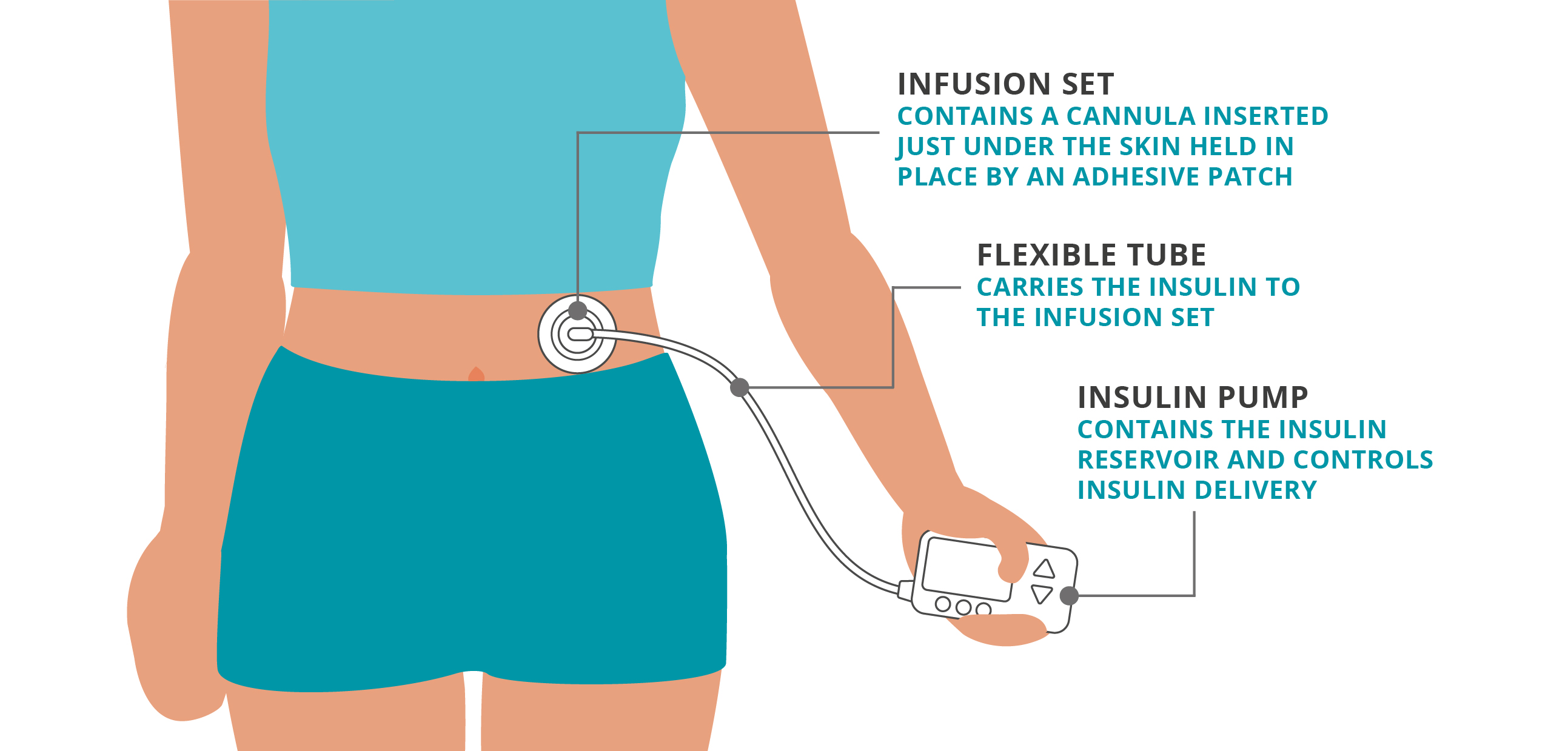
A traditional tethered or tubed pump contains the insulin in the pump itself. The insulin flows through a tube into the body through an infusion set. The pump is kept somewhere on the body, usually in a pocket, or clipped to a bra/belt.

Patch pumps
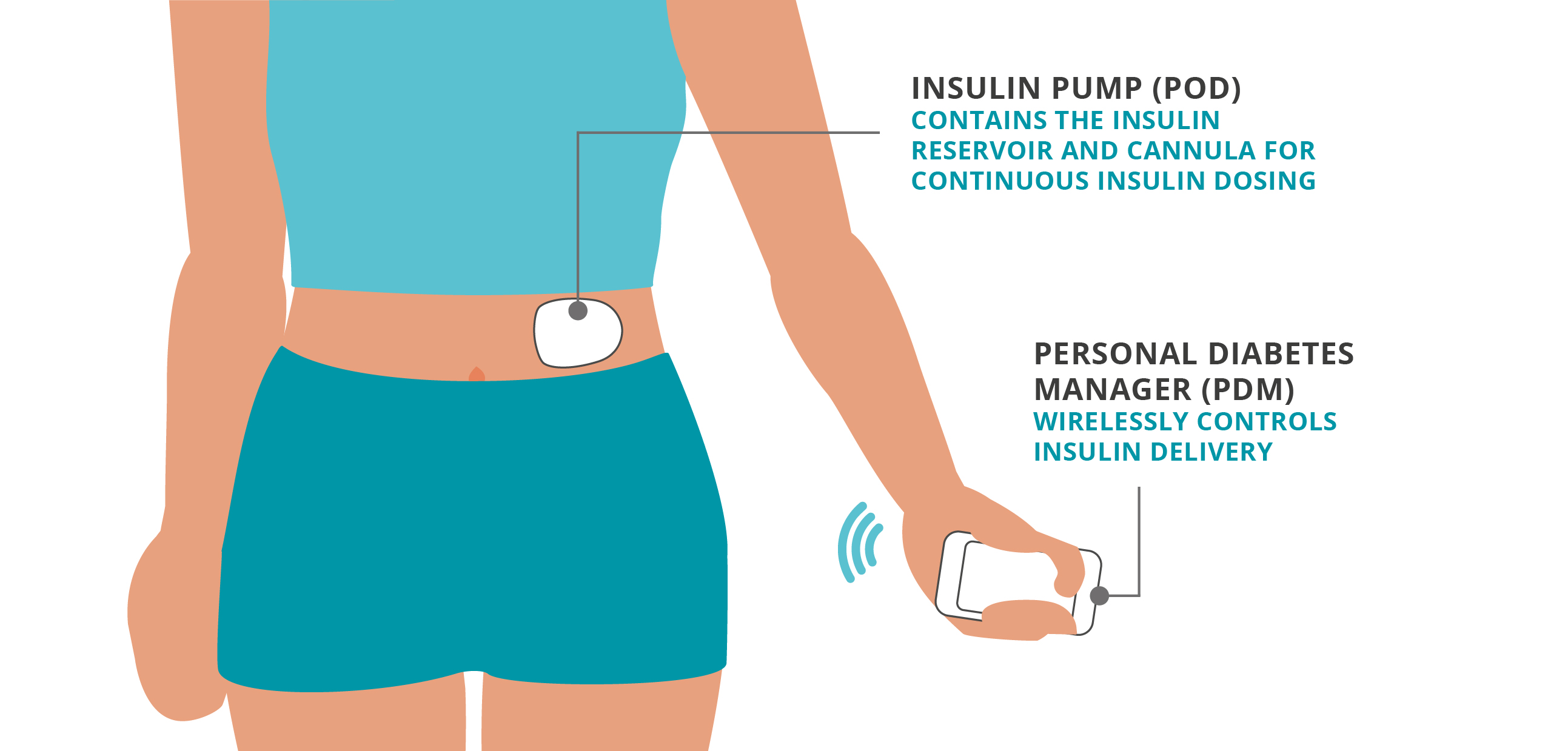
A patch pump is sometimes called a tubeless or wireless pump. The part that contains the insulin sticks directly to the skin with adhesive, so there is no external connecting tube. Insulin is programmed from a separate device, like a remote or controller, which wirelessly communicates to the patch pump to deliver the insulin via a thin tube, called a cannula, inserted directly under the skin.
How does an insulin pump work?
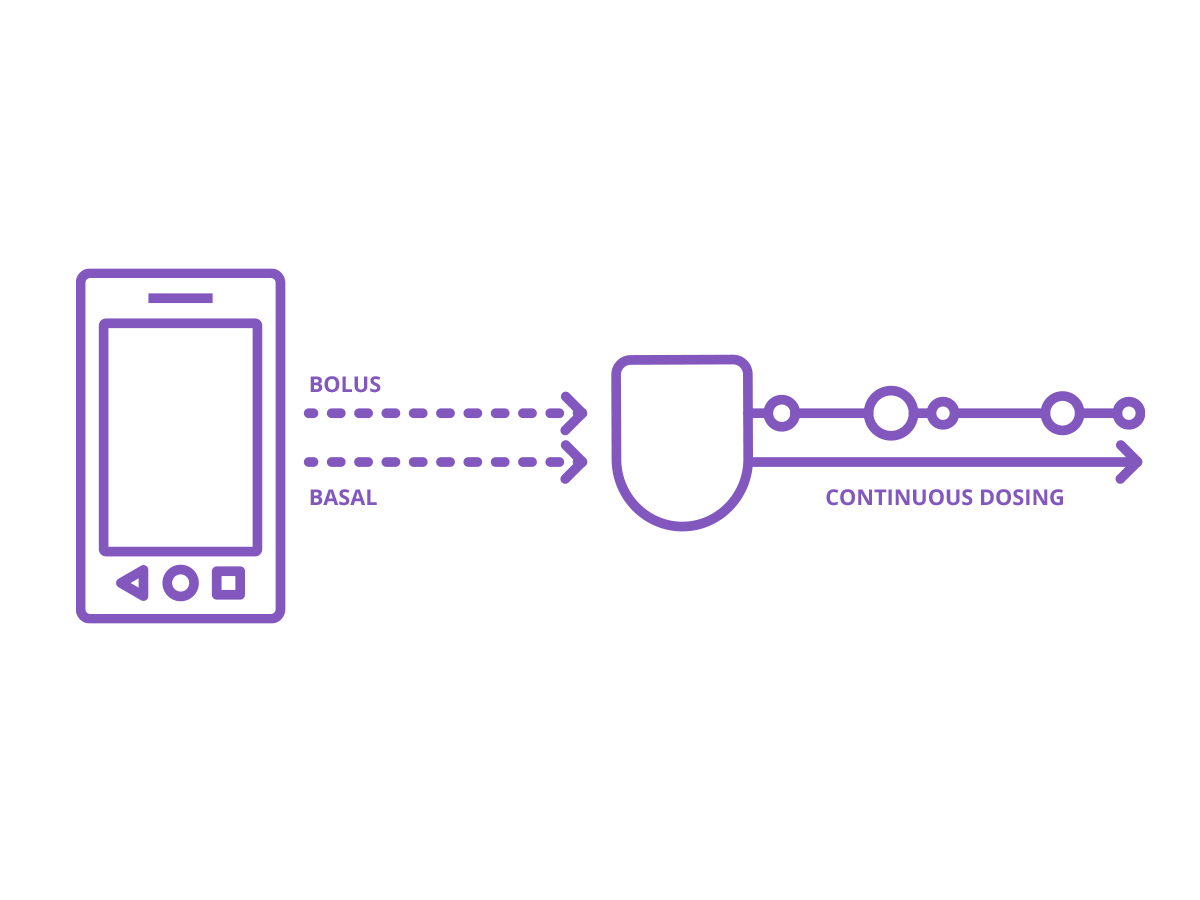
A continuous amount of insulin is delivered 24 hours a day through a cannula placed under the skin. This is known as basal, or background insulin.
Additional insulin is delivered for meals and blood glucose corrections - these are known as bolus doses2.
Traditional pumps
Tubeless pumps
Insulin pumps can help you calculate your bolus doses. These will be based on a combination of your personal settings, glucose readings and the carbohydrate values for any food you’re eating.
You only need one type of insulin with an insulin pump, commonly known as fast-acting insulin. This is used for both your basal and bolus doses.
Don’t worry - if you or your child starts on an insulin pump, you will receive extensive training, either as an inpatient or outpatient3.
Understanding basal rates
Bolus insulin doses
Insulin pumps and glucose sensors
Insulin pump technology is moving - fast! This progress is positive for people with diabetes.
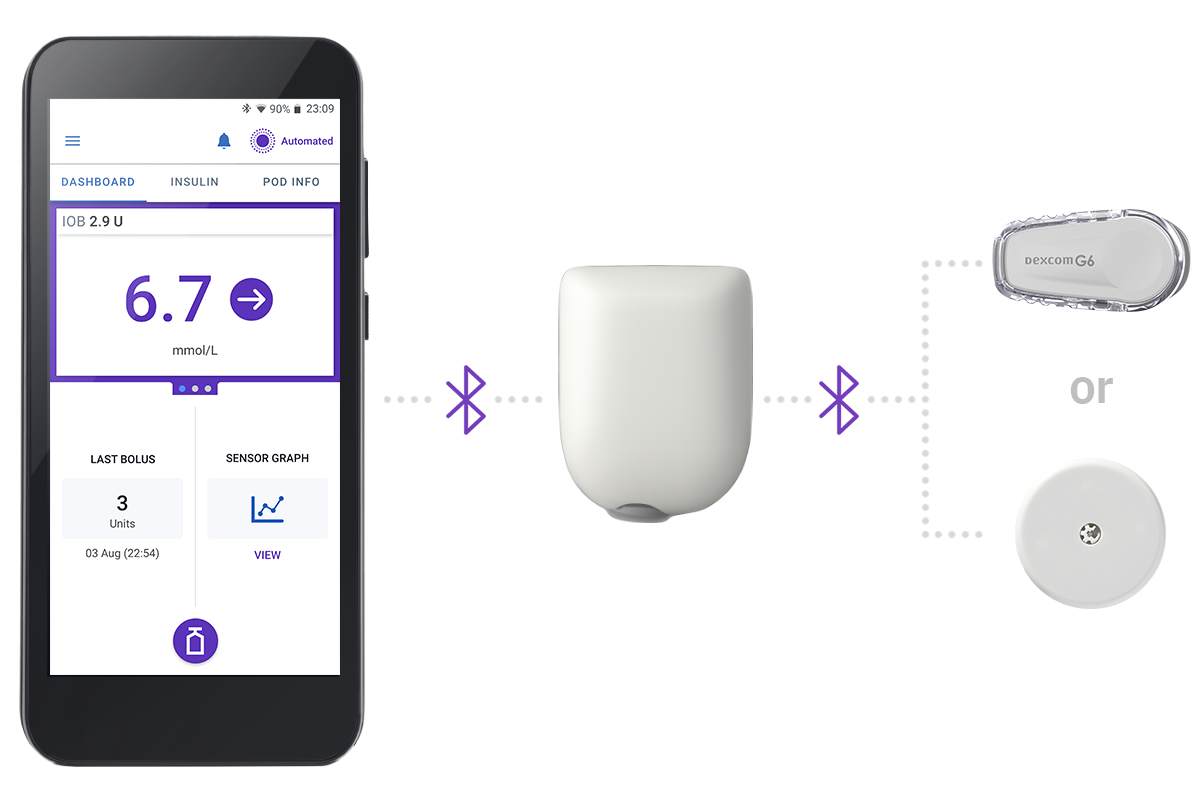
Some insulin pumps can integrate with certain glucose sensors (also known as continuous glucose monitors, or CGMs) to continuously adapt and automatically deliver basal insulin according to your personal needs.
This is what’s known as an Automated Insulin Delivery System (AID), which you may know as a Hybrid Closed Loop System (HCL).
We’ll look at this in more detail in a different module.
Other Frequently Asked Questions
Who qualifies for an insulin pump?
Are insulin pumps painful?
Can I shower with an insulin pump?
Do you sleep with an insulin pump?
Do I still need both types of insulin?
How much does it cost?
Continue reading:

Articles connexes



Autres sujets
Références et avis de non-responsabilité
Les renseignements et autres contenus présentés dans cet article, ou dans tout document lié, n’ont pas pour but de servir de conseils médicaux et ne doivent pas être interprétés comme tels, et ne remplacent pas l’expertise d’un professionnel de la santé ou un traitement médical. Si vous ou une autre personne avez des questions ou des préoccupations d’ordre médical, vous devez consulter votre professionnel de la santé. N’ignorez jamais les conseils médicaux professionnels et ne tardez pas à vous renseigner auprès d’un professionnel de la santé en raison de renseignements que vous avez lus dans ce blogue ou dans tout autre document lié. Si vous croyez être en situation d’urgence médicale, appelez immédiatement votre médecin ou les services d’urgence. Les opinions et les points de vue exprimés sur ce blogue et ce site Web n’ont aucun lien avec ceux de tout établissement d’enseignement, hôpital, organisme de santé ou autre établissement.
1. Ravi Retnakaran, Jackie Hochman, J. Hans DeVries, Hélène Hanaire-Broutin, Robert J. Heine, Vincent Melki, Bernard Zinman; Continuous Subcutaneous Insulin Infusion Versus Multiple Daily Injections : The impact of baseline A1c. Diabetes Care. 1er novembre 2004; 27 (11) 2590-2596. https://doi.org/10.2337/diacare.27.11.2590>
2. Walsh J, Roberts R. Pumping Insulin. 6th ed. San Diego, CA: Torrey Pines Press; 2017.
3. JDRF. (22 août 2023). Insulin pumps. jdrf.org.uk/information-support/treatments-technologies/insulin-pumps. Consulté le 13 mars 2024 à l’adresse : https://jdrf.org.uk/information-support/treatments-technologies/insulin-pumps/#:~:text=What%20is%20an%20insulin%20pump,down%20high%20blood%20glucose%20levels.
4. Jill Weissberg-Benchell, Jeanne Antisdel-Lomaglio, Roopa Seshadri; Insulin Pump Therapy : A meta-analysis. Diabetes Care. 1er avril 2003; 26 (4). 1079-1087. https://doi.org/10.2337/diacare.26.4.1079