The Omnipod® 5 Knowledge Hub

Tools to help healthcare professionals and their patients get started with Omnipod®
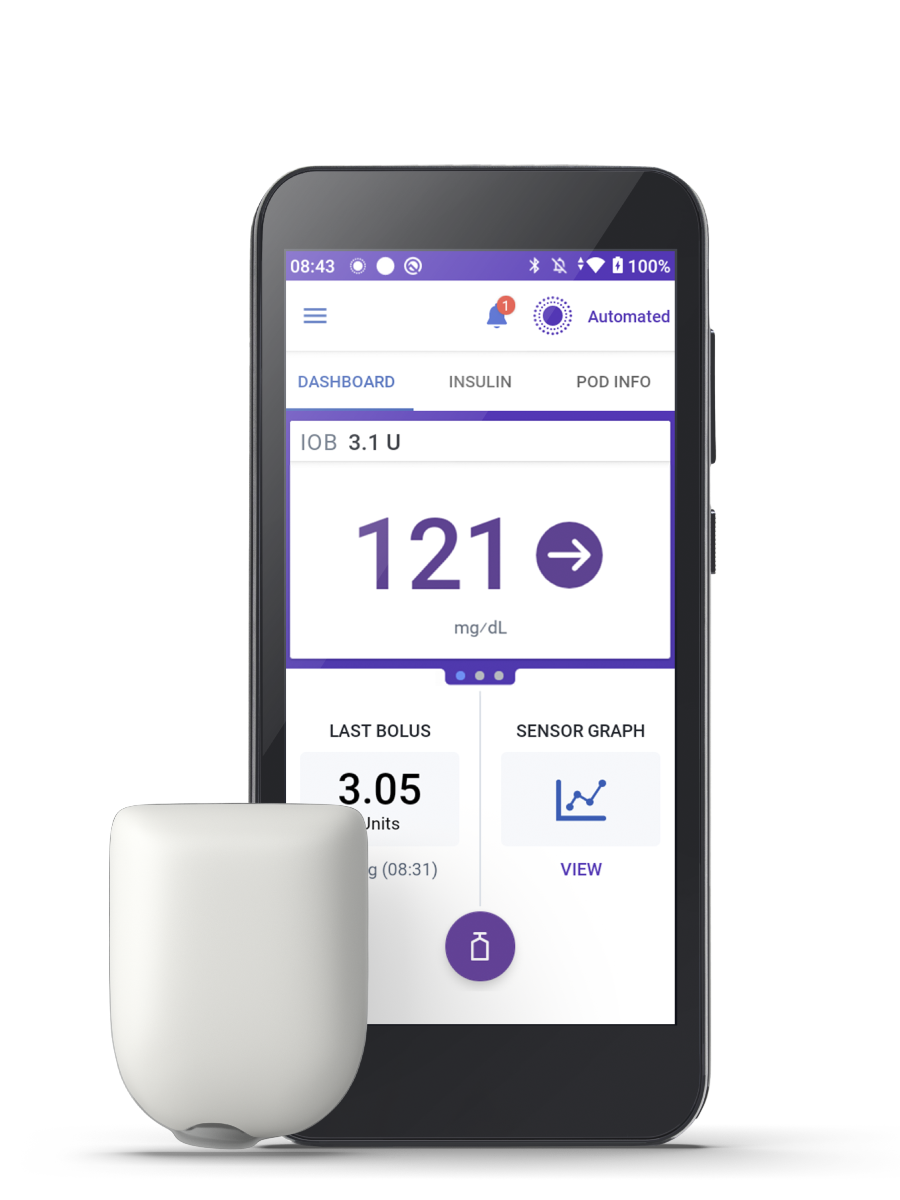
Help your patients get the most from their Omnipod® 5 Automated Insulin Delivery (AID) system with these downloadable resources, guides, videos, and more.
Omnipod® 5 Guides
- Omnipod® 5 User Guide: (View guide),
- Omnipod® 5 Technical User Guide: (View guide)
- Omnipod® 5 Caregiver Guide: (View guide)
- Omnipod Discover™ Key information: (View guide)
Getting started on Omnipod® 5
Thank you for choosing to prescribe the Omnipod® 5 Automated Insulin Delivery system, integrated with Dexcom G7 and FreeStyle Libre 2 Plus* sensors.
For more information to support patient start-up, see Omnipod 5 training prep.
If you require a hard copy of the Omnipod® 5 User Guide or Omnipod® 5 Technical user guide give us a call at 800 811 0504* or +966 558491266 if calling from abroad. We'll be happy to help you.
these calls.
Getting started on the Omnipod® 5 Automated Insulin Delivery System
Frequently Asked Questions
We have heard from many people in the community regarding their interest in the Omnipod® 5 system. Here are answers to some of the community’s most frequently asked questions.
Getting started on Omnipod® 5: Videos
These videos tutorials help you and your patients gain a better understanding of the information included in the Omnipod® System training. These can be shared with patients to help them prepare for their training.
Omnipod® 5: The Algorithm Explained
SmartAdjust™ Technology
SmartAdjust™ Technology automatically increases, decreases, or pauses basal insulin delivery, every five minutes, to personal needs which may help to correct highs and protect from lows‡1,2. Watch this video to learn more.
Initialisation: Learn how SmartAdjust™ works and tips for initialisation with your patients.
Optimisation: Once your patient has successfully started using the system, learn how to optimise it for best results.
Additional Resources

SmartAdjust™ Technology
SmartAdjust™ Technology automatically increases, decreases, or pauses insulin delivery, every five minutes, to patients’ personal needs which may help to correct highs and protect against lows.1,2 Read more.

Safety and Glycaemic Outcomes
Safety and Glycaemic Outcomes with a Tubeless Automated Insulin Delivery System in Very Young Children With Type 1 Diabetes: A Single-Arm Multicenter Clinical Trial. Read more.

Multicenter Trial of a Tubeless System
Multicenter Trial of a Tubeless, On-Body Automated Insulin Delivery System With Customizable Glycaemic Targets in Paediatric and Adult Participants With Type 1 Diabetes. Read more.

Omnipod® 5 Webinars
Join our monthly Virtual Omnipod® Academy webinars to get a comprehensive overview of Omnipod® 5 and gain insight on best practices from key opinion leaders. Sign up
‡As with all hybrid closed loop (HCL) systems, you still need to bolus for meals. With Omnipod 5, this is done with the Omnipod 5 Controller.
§The Simulator app is for informational and educational purposes only, hence, the functions are limited in scope and cannot fully depict the Omnipod System’s capabilities. All data is for simulation purposes only and should not be used for therapy decisions. The Simulator app does not control the Omnipod 5 System, does not deliver insulin, and cannot be used for treatment.
1. Brown S. et al. Diabetes Care. 2021;44:1630-1640. Prospective pivotal trial in 240 participants with T1D aged 6 - 70 yrs. Study included a 14-day standard therapy (ST) phase followed by a 3-month Omnipod 5 hybrid closed-loop (HCL) phase. Mean time >10.0 mmol/L or >180mg/dL (12AM-<6AM) as measured by CGM in adults/adolescents and children ST vs. 3-mo Omnipod 5: 32.1% vs. 20.7%; 42.2% vs 20.7%, P<0.0001, respectively. Mean time >10.0 mmol/L or >180mg/dL (6AM-<12AM) as measured by CGM in adults/adolescents and children ST vs. 3-mo Omnipod 5: 32.6% vs. 26.1%; 46.4% vs 33.4%, P<0.0001, respectively. Mean time <3.9 mmol/L or <70 mg/dL (12AM-<6AM) as measured by CGM in adults/adolescents and children ST vs. 3-mo Omnipod 5: 3.64% vs. 1.17%, P<0.0001; 2.51% vs. 1.78, P=0.0456, respectively. Mean time <3.9 mmol/L or <70 mg/dL (6AM-<12AM) as measured by CGM in adults/adolescents and children ST vs. 3-mo Omnipod 5: 2.64% vs. 1.37%, P<0.0001; 2.13% vs. 1.98%, P=0.2545, respectively.
2. Sherr J. et al. Diabetes Care. 2022; 45:1907-1910. Single-arm multicenter clinical trial in 80 pre-school children (aged 2-5.9 yrs) with T1D. Study included a 14-day standard therapy (ST) phase followed by a 3-month AID phase with Omnipod 5 system. Mean time >10.0 mmol/L or >180mg/dL (12AM-<6AM) as measured by CGM in children ST vs. 3-mo Omnipod 5: 38.4% vs. 16.9%, P<0.0001, respectively. Mean time >10.0 mmol/L or >180mg/dL (6AM-<12AM) as measured by CGM in children ST vs. 3-mo Omnipod 5: 39.7% vs. 33.7%, P<0.0001, respectively. Mean time <3.9 mmol/L or <70 mg/dL (12AM-<6AM) as measured by CGM in children ST vs. 3-mo Omnipod 5: 3.41% vs. 2.13%, P=0.0185. Mean time <3.9 mmol/L or <70 mg/dL (6AM-<12AM) as measured by CGM in children ST vs. 3-mo Omnipod 5: 3.44% vs. 2.57%, P=0.0799.